Tsjaikovski
Your profile, built from Spotify + Wikipedia/Wikidata + your indexed library.
Born / died
1840-1893
Movement
Romantic
Location
Worked in Saint Petersburg, Moscow
Friends / contemporaries
Pyotr Ilyich Tchaikovsky, Sergei Prokofiev, Sergei Rachmaninoff +3 more

role: unknown · 20%era: Romanticmovement: Romantic1840–1893
Movement
Romantic
How this movement sounds
rubatochromatic harmonybig climaxesricher timbrelong lyrical linesnarrative feel
Romantic listening cues: heightened emotion, longer lyrical melodies, and more freedom with rubato (flexible timing) in performance.
Harmony is often more chromatic, with colorful chords and side-steps that create tension and release over longer spans. You may hear more delayed resolutions and more 'yearning' harmonic motion.
Dynamics and texture often expand: thicker sonorities, bigger climaxes, and a strong sense of narrative or character (even in purely instrumental music).
In piano music, listen for the use of pedaling and resonance to create a halo around harmony; in orchestral music, listen for richer timbre and denser voicing (inner lines matter).
A useful trick: follow the bass line. In Romantic music it often shapes the drama, pulling the harmony through longer arcs rather than short phrase punctuation.
How Tsjaikovski sounds
rubatorich harmonylong melodybig dynamicscoloristic pedal
Romantic music tends to foreground emotion and color: long singing melodies, flexible tempo (rubato), and harmony that stretches and sighs.
You often hear thicker textures, wider dynamic range, and a more "orchestral" use of the piano with deep bass and resonant pedaling.
Look for heightened contrast and personal voice: the same musical gesture can feel intimate one moment and heroic the next.
Wikipedia
Pyotr Ilyich Tchaikovsky ( chy-KOF-skee; 7 May 1840 – 6 November 1893) was a Russian composer of the Romantic period.Wikipedia
He was the first Russian composer whose music made a lasting impression internationally. Tchaikovsky wrote some of the most popular concert and theatrical music in the classical repertoire, including the 1812 Overture, his First Piano Concerto, the Violin Concerto, the Romeo and Juliet Overture-Fantasy, several symphonies, the opera Eugene Onegin, and the ballets Swan Lake, The Sleeping Beauty and The Nutcracker.Wikipedia
Although musically precocious, Tchaikovsky was educated for a career as a civil servant as there was little opportunity for a musical career in Russia at the time and no institutional music education system. When an opportunity for such an education arose, he entered the nascent Saint Petersburg Conservatory, from which he graduated in 1865. The formal Western-oriented teaching Tchaikovsky received there set him apart from composers of the contemporary nationalist movement embodied by the Russian composers of The Five, with whom his professional relationship was mixed.Wikipedia
Despite his many popular successes, Tchaikovsky's life was punctuated by personal crises and depression. Contributory factors included his early separation from his mother for boarding school followed by her early death, the death of his close friend and colleague Nikolai Rubinstein,…Wikipedia
Study resources & scores
Curated study material and indexed score links related to Tsjaikovski.
No related study resources yet. As more lectures, transcripts, and scores are indexed, they will show up here.
Local matches
Matches your current indexed library (videos table). This will be sparse until connectors run.
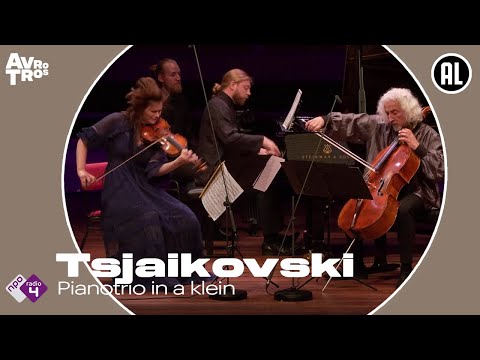 Play video
YouTube · published 2021-09-19 · 52m
Tsjaikovski: Pianotrio in a klein - Janine Jansen, Mischa Maisky & Denis Kozhukhin - IKFU - Live HD
FreeFull concertLongLive
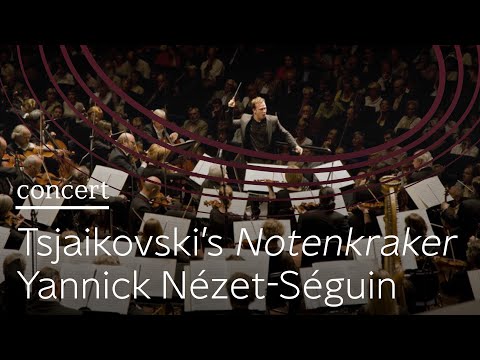 Play video
YouTube · published 2011-08-09 · 2h 7m
Tsjaikovski - De Notenkraker | Yannick Nézet-Séguin | Concert
FreeFull concertLongLive
Saved playlist songs
Tracks from your saved Spotify playlist that are attributable to Tsjaikovski.
No Spotify playlist is seeded yet.
No attributable tracks for this person in your saved playlist songs yet.