Yannick Nézet-Séguin
Your profile, built from Spotify + Wikipedia/Wikidata + your indexed library.
Born / died
1975
Movement
Contemporary classical
Location
Born in Montreal
Friends / contemporaries
Akira Kosemura, Alexandra Streliski, Alon Sariel +3 more
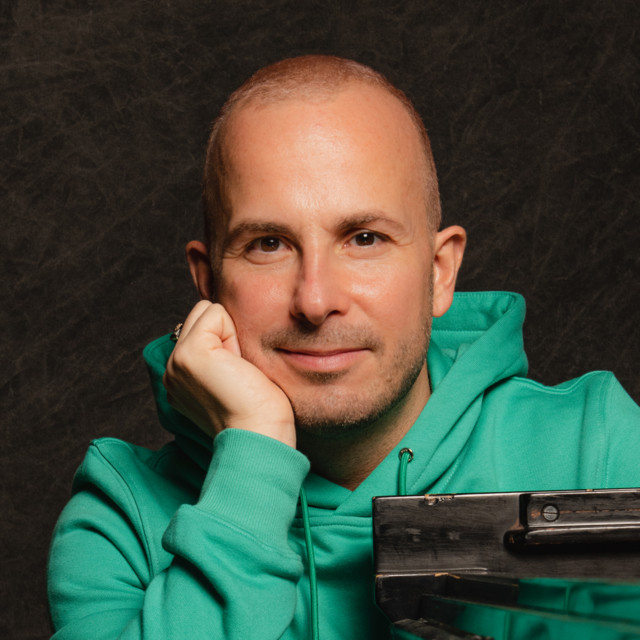
Conductor Yannick Nézet-Séguin has had one of the most meteoric rises of any conductor of the early 21st century.Spotify
Since conducting virtually all of the major Canadian orchestras while still in his twenties, he has established a substantial international career. Nézet-Séguin was born in Montreal on March 6, 1975.Spotify
He began studying piano at age five and decided on a career as a conductor at age ten after attending a performance by the Orchestre Symphonique de Montréal under Charles Dutoit. He studied piano, chamber music, conducting, and composition at the Conservatoire de Musique du Québec, and he studied choral conducting at Westminster Choir College. When he was 14, he began leading rehearsals of the Chœur polyphonique de Montréal at the Montréal Cathedral; he became the group's conductor in 1994, at age 19.Spotify
That same year, Nézet-Séguin, who had a lifelong admiration for the work of Carlo Maria Giulini, was invited to follow the famed conductor for a year, observing rehearsals and concerts and working extensively with Giulini during his final year of public performances. In 1995, Nézet-Séguin founded Le Chapelle de Montréal, a vocal and instrumental group that began with a focus on the Baroque. He continued performing with this group until 2002.Spotify
From 1998 until 2002, Nézet-Séguin was the chorus master and assistant conductor of L'Opéra de Montréal. In 2000, he was named the artistic director and principal conductor of Orchestre Métropolitain du Montréal. From 2008 until 2018, he served as conductor of the Rotterdam Philharmonic Orchestra, succeeding Valery Gergiev.Spotify
From 2008 until 2014, he was the principal guest conductor of the London Philharmonic Orchestra. In 2012, Nézet-Séguin succeeded Dutoit as the music director of the Philadelphia Orchestra. In 2018, he was named the music director of the Metropolitan Opera, following annual appearances leading the company.Spotify
He also took on the title of Honorary Conductor with the Rotterdam Philharmonic in 2018. The following year, after extending his contract several times, the Orchestre Métropolitain du Montréal awarded Nézet-Séguin a lifetime contract. Nézet-Séguin records mainly for Deutsche Grammophon, but he has also recorded for several other labels.Spotify
In addition, he is active as a pianist and is featured on a number of discs as a soloist or accompanist. In 2019, he released several albums, including Verdi, with the Orchestre Métropolitain du Montréal and soloist Ildar Abdrazakov. An unusually active 2021 saw eight releases, including his first-ever solo piano album, Introspection, and a Grammy Award-winning recording of Florence Price's first and third symphonies with the Philadelphia Orchestra.Spotify
That year, he was the subject of Patrick Delisle-Crevier's book about his life and career, Raconte-moi Yannick Nézet-Séguin. The following year, he led the Chamber Orchestra of Europe in a cycle of Beethoven's symphonies, and he backed Lisa Batiashvili on her album Secret Love Letters, once again with the Philadelphia Orchestra.Spotify
~ Stephen Eddins & Keith Finke, Rovi
role: interpreter · 90%instrument: conductorera: Contemporarymovement: Contemporary classical1975
Movement
Contemporary classical
How this movement sounds
texture-firstextended techniqueshybrid stylessound colorspace/silencemicro-detail
Contemporary classical listening cues: sound color and texture can matter as much as melody and harmony. Sometimes the 'main theme' is a texture rather than a tune.
You may hear extended techniques (unusual ways of playing), hybrid influences (film, jazz, folk, electronics), or very sparse, spacious writing where silence and resonance carry meaning.
Because styles vary widely, try to identify the piece's 'rules': what repeats, what changes gradually, and what counts as a structural event (a new texture, a new register, a new pulse).
A useful mindset: contemporary music can be about attention, not just about singable melody. Treat tiny changes (a new bow pressure, a shifted harmony color, a new layer) as the 'plot'.
If it feels unfamiliar, focus on one layer (a repeating figure, a bass pulse, a timbre) and track its evolution. Contemporary music often rewards close listening to small changes.
How Yannick Nézet-Séguin sounds
new harmonyrhythmic bitecolor & textureminimal patternsextended techniques
Modern/contemporary music varies wildly, but you will often hear experimentation with harmony, rhythm, and sound color as primary material.
Some strands emphasize rhythmic bite and sharp contrasts; others explore timbre and atmosphere; minimalism builds from repeating patterns and gradual change.
If the music feels less about singable melody and more about texture, pulse, or color, you are probably hearing a modern idiom.
Wikipedia
Yannick Nézet-Séguin, CC (French pronunciation: [ja.nik ne.zɛ se.ɡɛ̃]; born Yannick Séguin; 6 March 1975) is a Canadian conductor and pianist.Wikipedia
He is the music director of the Orchestre Métropolitain (Montréal), the Metropolitan Opera (New York City), and the Philadelphia Orchestra. He was the principal conductor of the Rotterdam Philharmonic Orchestra from 2008 to 2018.Wikipedia
YouTube (channel bio)
Interview highlights
Built from indexed interview/masterclass transcripts (podcasts / YouTube). Quotes are direct excerpts with source links.
Interview highlights for Yannick Nézet-Séguin from 6 sources. Quotes below are direct excerpts; open the source link for context.
Topics that recur (auto): Music, Know, Think, Yeah, More, Then, Okay, Orchestra.
Source: youtube_captions · fTg503YXxzs · 0:10 · published 2015-06-22 · Open source
Source: youtube_captions · L7KWyeMIVzI · 2:47 · published 2021-03-15 · Open source
Source: youtube_captions · cDfyR9pZQys · 1:06 · published 2023-09-03 · Open source
Source: youtube_captions · jLQ8VzeTxgg · 0:00 · published 2023-02-27 · Open source
Source: youtube_captions · s3k72l9bKZk · 0:08 · published 2019-01-13 · Open source
Source: youtube_captions · gZEFMYfOuAI · 0:47 · published 2012-06-15 · Open source
Transcript sources (16)
Study resources & scores
Curated study material and indexed score links related to Yannick Nézet-Séguin.
No related study resources yet. As more lectures, transcripts, and scores are indexed, they will show up here.
Local matches
Matches your current indexed library (videos table). This will be sparse until connectors run.

France Musique · published 2026-08-31
BBC Proms de Londres : Joyce DiDonato, Yannick Nézet-Séguin et l'Orchestre du Met de New York au cœur de Mahler
FreeFull concert

France Musique · published 2026-08-30
BBC Proms 2026 : Yannick Nézet-Séguin dirige l'Orchestre du Metropolitan Opera de New York dans un programme Strauss
2026
FreeFull concert

France Musique · published 2026-06-27
Siegfried de Richard Wagner au Théâtre des Champs-Elysées
2026
FreeFull concert

France Musique · published 2026-03-20
Yannick Nézet-Séguin dirige les Symphonies de Schumann
2026
FreeFull concert
 Play video
Carnegie Hall · published 2026-02-19 · 3m
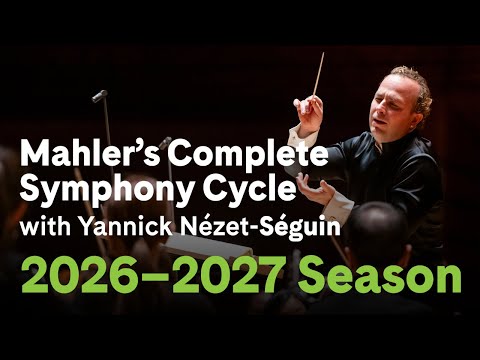
Mahler Symphony Cycle with Yannick Nézet-Séguin
2026Symphony3m
Free
 Play video
YouTube · published 2024-05-16 · 24m
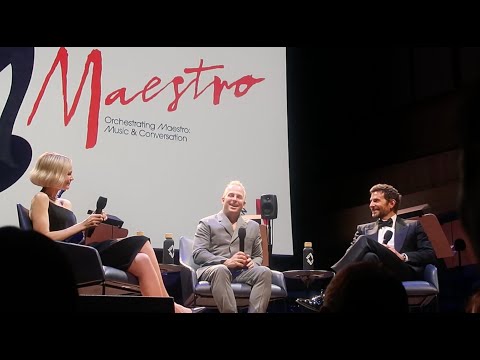
Bradley Cooper, Carey Mulligan and Yannick Nézet-Séguin on Maestro Live Concert & Conversation
202424m
FreeLongLive
 Play video
Carnegie Hall · published 2024-05-16 · 0m
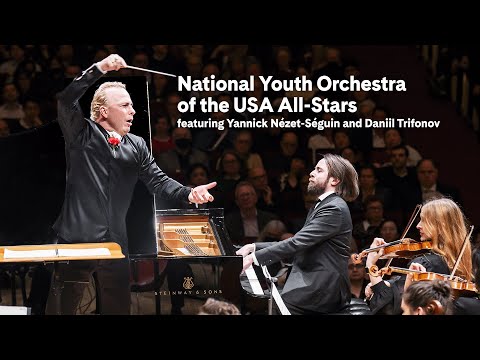
NYO-USA All-Stars featuring Yannick Nézet-Séguin and Daniil Trifonov | Carnegie Hall+
20240m
Free
 Play video
Carnegie Hall · published 2024-05-16 · 3m
NYO-USA All-Stars with Yannick Nézet-Séguin: Shostakovich’s “Leningrad” Symphony | Carnegie Hall+
2024Symphony3m
Free
 Play video
YouTube · published 2021-02-12 · 31m
Alexander Malofeev、Yannick Nézet-Séguin |The Philadelphia Orchestra|S.Prokofiev Piano Concerto No. 3
2021Concerto31m
FreeLongLive
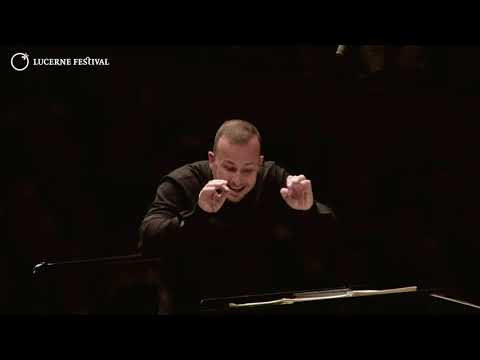 Play video
YouTube · published 2020-08-06 · 32m
Lucerne Festival Orchestra, Yannick Nézet-Séguin | Shostakovich
FreeLongLive
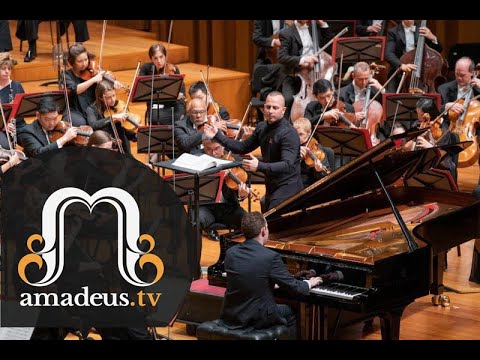 Play video
YouTube · published 2020-02-13 · 3h 1m
2019 CIMC Final with Yannick Nézet-Séguin and the Philadelphia Orchestra
20193h 1m
FreeFull concertLongLive
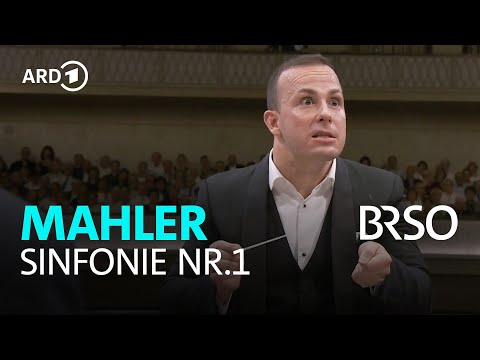 Play video
YouTube · published 2019-02-13 · 59m
Gustav Mahler: Symphony No. 1 D major (Yannick Nézet-Séguin) | BR-KLASSIK
FreeFull concertLongLive
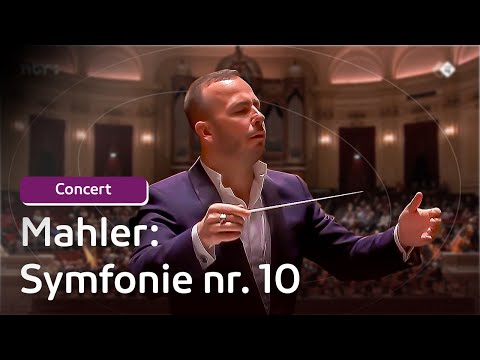 Play video
YouTube · published 2016-08-07 · 1h 26m
Mahler - Symfonie nr. 10 - Yannick Nézet-Séguin | Concert
20161h 26m
FreeFull concertLongLive
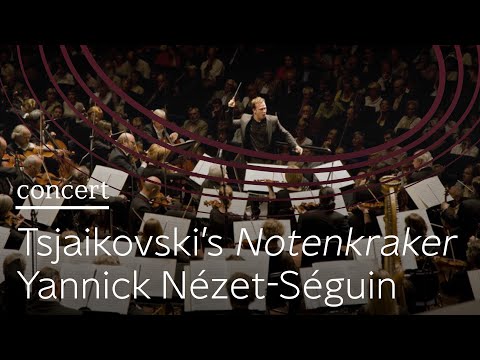 Play video
YouTube · published 2011-08-09 · 2h 7m
Tsjaikovski - De Notenkraker | Yannick Nézet-Séguin | Concert
FreeFull concertLongLive
Saved playlist songs
Tracks from your saved Spotify playlist that are attributable to Yannick Nézet-Séguin.
No Spotify playlist is seeded yet.
No attributable tracks for this person in your saved playlist songs yet.