Igor Stravinsky
Your profile, built from Spotify + Wikipedia/Wikidata + your indexed library.
Born / died
1882-1971
Movement
Romantic
Location
Lived in Paris, Biarritz +2 more
Friends / contemporaries
Anton Webern, Bedrich Smetana, Charles-Valentin Alkan +3 more
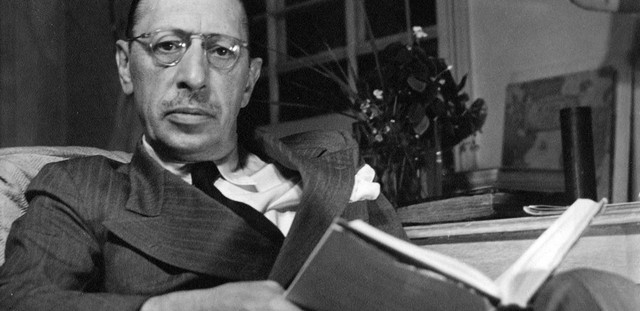
Igor Stravinsky was one of music's truly epochal innovators; no other composer of the 20th century exerted such a pervasive influence or dominated his art in the way that Stravinsky did during his seven-decade musical career.Spotify
Aside from purely technical considerations such as rhythm and harmony, the most important hallmark of Stravinsky's style is, indeed, its changing face. Emerging from the spirit of late Russian nationalism and ending his career with a thorny, individual language steeped in 12-tone principles, Stravinsky assumed a number of aesthetic guises throughout the course of his development while always retaining a distinctive, essential identity.Spotify
Although he was the son of one of the Mariinsky Theater's principal basses and a talented amateur pianist, Stravinsky had no more musical training than that of any other Russian upper-class child. He entered law school but also began private composition and orchestration studies with Nicolai Rimsky-Korsakov. By 1909, the orchestral works Scherzo fantastique and Fireworks had impressed Sergei Diaghilev enough for him to ask Stravinsky to orchestrate -- and subsequently compose -- ballets for his company.Spotify
Stravinsky's triad of early ballets -- The Firebird (1909-1910), Petrushka (1910-1911), and most importantly, The Rite of Spring (1911-1913) -- did more to establish his reputation than any of his other works; indeed, the riot which followed the premiere of The Rite is one of the most notorious events in music history. Stravinsky and his family spent the war years in Switzerland, returning to France in 1920. His jazz-inflected essays of the 1910s and 1920s -- notably, Ragtime (1918) and The Soldier's Tale (1918) -- gave way to one of the composer's most influential aesthetic turns.Spotify
The neo-Classical tautness of works as diverse as the ballet Pulcinella (1919-1920), the Symphony of Psalms (1930), and, decades later, the opera The Rake's Progress (1948-1951) made a widespread impact and had a special influence upon the fledgling school of American composers that looked to Stravinsky as its primary model. He had begun touring as a conductor and pianist, generally performing his own works. In the 1930s, he toured the Americas and wrote several pieces fulfilling American commissions, including the Concerto in E flat, "Dumbarton Oaks." After the deaths of his daughter, his wife, and his mother within a period of less than a year, Stravinsky emigrated to America, settling in California with his second wife in 1940.Spotify
His works between 1940 and 1950 show a mixture of styles but still seem centered on Russian or French traditions. Stravinsky's cultural perspective changed after Robert Craft became his musical assistant, handling rehearsals for Stravinsky, traveling with him, and later, co-authoring his memoirs. Craft is credited with helping Stravinsky accept 12-tone composition as one of the tools of his trade.Spotify
Characteristically, though, he made novel use of such principles in his own music, producing works in a highly original vein: Movements (1958-1959) for piano and orchestra, Variations: Aldous Huxley in Memoriam (1963), and the Requiem Canticles (1965-1966) are among the most striking. Craft prepared the musicians for the exemplary series of Columbia Records LPs Stravinsky conducted through the stereo era, covering virtually all his significant works. Despite declining health in his last years, Stravinsky continued to compose until just before his death in April 1971.Spotify
~ TiVo Staff, Rovi
role: composer · 65%instrument: conductorera: Romanticmovement: Romantic1882–1971
Movement
Romantic
How this movement sounds
rubatochromatic harmonybig climaxesricher timbrelong lyrical linesnarrative feel
Romantic listening cues: heightened emotion, longer lyrical melodies, and more freedom with rubato (flexible timing) in performance.
Harmony is often more chromatic, with colorful chords and side-steps that create tension and release over longer spans. You may hear more delayed resolutions and more 'yearning' harmonic motion.
Dynamics and texture often expand: thicker sonorities, bigger climaxes, and a strong sense of narrative or character (even in purely instrumental music).
In piano music, listen for the use of pedaling and resonance to create a halo around harmony; in orchestral music, listen for richer timbre and denser voicing (inner lines matter).
A useful trick: follow the bass line. In Romantic music it often shapes the drama, pulling the harmony through longer arcs rather than short phrase punctuation.
How Igor Stravinsky sounds
rubatorich harmonylong melodybig dynamicscoloristic pedal
Romantic music tends to foreground emotion and color: long singing melodies, flexible tempo (rubato), and harmony that stretches and sighs.
You often hear thicker textures, wider dynamic range, and a more "orchestral" use of the piano with deep bass and resonant pedaling.
Look for heightened contrast and personal voice: the same musical gesture can feel intimate one moment and heroic the next.
Wikipedia
Igor Fyodorovich Stravinsky (17 June [O.S.Wikipedia
5 June] 1882 – 6 April 1971) was a Russian composer and conductor with French (from 1934) and American citizenship (from 1945). He is widely considered one of the most important and influential composers of the 20th century and a pivotal figure in modernist music.Wikipedia
Born into a musical family in Saint Petersburg, Stravinsky grew up taking piano and music theory lessons. While studying law at the University of Saint Petersburg, he met Nikolai Rimsky-Korsakov and studied music under him until the latter's death in 1908. Soon after, Stravinsky met impresario Sergei Diaghilev, who commissioned him to write three ballets for the Ballets Russes's Paris seasons: The Firebird (1910), Petrushka (1911), and The Rite of Spring (1913), the last of which caused a near-riot at the premiere due to its avant-garde nature and later changed the way composers understood rhythmic structure.Wikipedia
Stravinsky's compositional career is often divided into three main periods: his Russian period (1913–1920), his neoclassical period (1920–1951), and his serial period (1954–1968). During his Russian period, Stravinsky was heavily influenced by Russian styles and folklore. Works such as Renard (1916) and Les noces (1923) drew upon Russian folk poetry, while compositions like L'Histoire du soldat (1918) integrated these folk elements with popular musical forms, including…Wikipedia
Interview highlights
Built from indexed interview/masterclass transcripts (podcasts / YouTube). Quotes are direct excerpts with source links.
Interview highlights for Igor Stravinsky from 5 sources. Quotes below are direct excerpts; open the source link for context.
Topics that recur (auto): Music, Piece, First, Then, Time, Right, More, Know.
Source: youtube_captions · jtz-J0g-aCM · 10:21 · published 2026-04-21 · Open source
Source: youtube_captions · 4LaXnJDnf_E · 0:38 · published 2016-06-12 · Open source
Source: youtube_captions · 0SUnYQ50tRo · 0:39 · published 2016-12-08 · Open source
Source: youtube_captions · XgGdiskqA68 · 6:09 · Open source
Source: youtube_captions · nr_0ve2KFuk · 21:32 · published 2020-08-06 · Open source
Source: youtube_captions · 4LaXnJDnf_E · 1:14 · published 2016-06-12 · Open source
Transcript sources (6)
Study resources & scores
Curated study material and indexed score links related to Igor Stravinsky.
No related study resources yet. As more lectures, transcripts, and scores are indexed, they will show up here.
Local matches
Matches your current indexed library (videos table). This will be sparse until connectors run.

France Musique · published 2026-09-17
Coco Chanel, Igor Stravinsky et Misia Sert : petites embrouilles entre amis
2026
Free

France Musique · published 2026-09-08
Les compositeurs face à eux-mêmes
2026
Free

France Musique · published 2026-06-15
Stravinsky : Fairy Tales – Orchestre philharmonique de Buffalo, JoAnn Falletta
2026Stravinsky
FreeFull concert

France Musique · published 2026-06-12
Une heure et plus, un compositeur : Igor Stravinsky
2026
Free

France Musique · published 2026-05-26
Ernest Ansermet, précision et musicalité
2026
FreeFull concert
 Play video
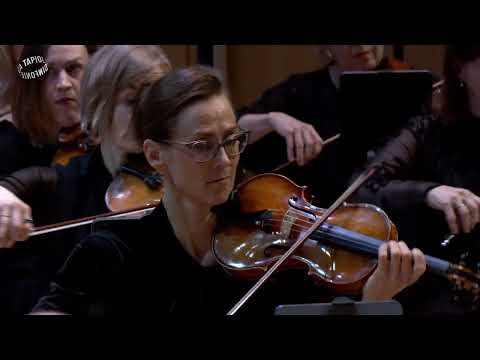
YouTube · published 2026-04-30 · 14m
Igor Stravinsky: Concerto for String Orchestra in D Major, K074, "Basel"
FreeLive
 Play video
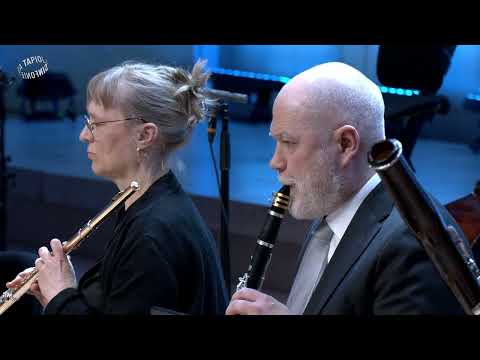
YouTube · published 2026-04-27 · 15m
Igor Stravinsky: Concerto for Chamber Orchestra in Eb Major, "Dumbarton Oaks”
FreeLive

France Musique · published 2026-04-11
Olivier Borre et Dario Rudy : "Robert Craft & Igor Stravinsky : Souvenirs et commentaires" (Éditions Allia)
2026
Free
 Play video
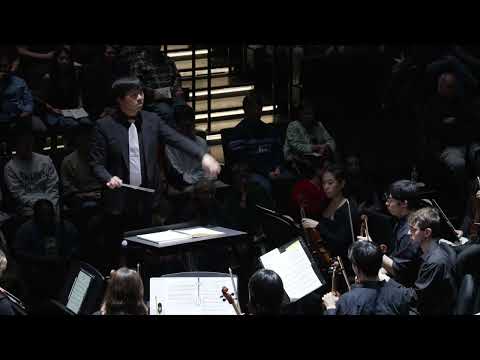
YouTube · published 2025-12-08 · 36m
Brown University Orchestra // Igor Stravinsky: Rite of Spring // October 18, 2025
202536m
FreeLongLive
 Play video
YouTube · published 2025-11-03 · 12m
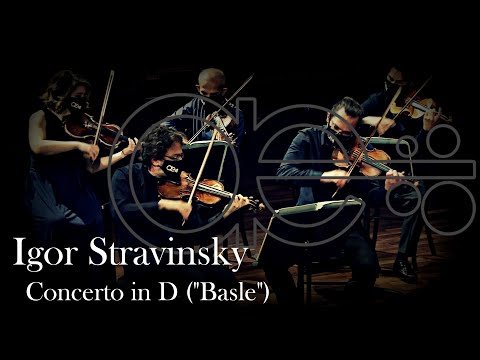
Igor Stravinsky-Concerto in D ("Basle") for String Orchestra [concertmaster: Alexander Sitkovetsky]
2025Concerto12m
FreeLive
 Play video
YouTube · published 2025-08-05 · 31m
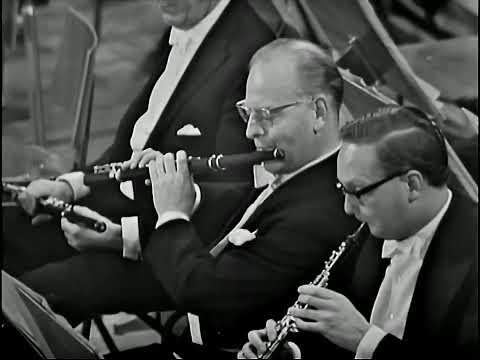
Igor Stravinsky - The Firebird Suite (Royal Festival Hall London 1965)
1965Suite31m
FreeLongLive
 Play video
YouTube · published 2024-08-01 · 11m
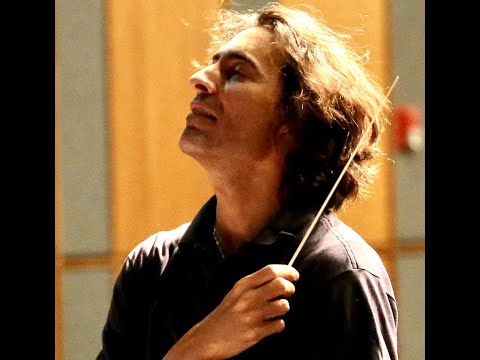
Igor Stravinsky (1882 -1971), Concerto in D for String Orchestra
1971Concerto11m
FreeLive
 Play video
YouTube · published 2024-02-12 · 35m
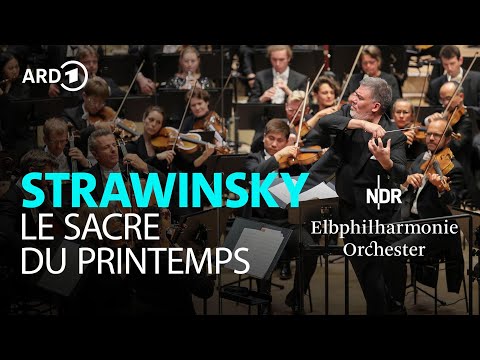
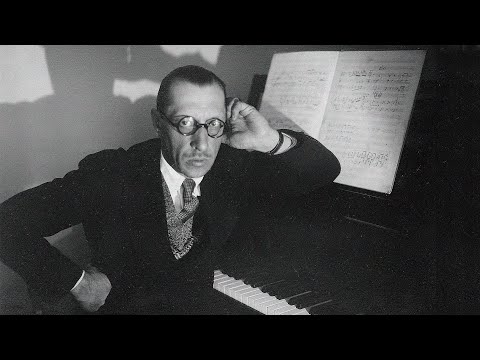
Igor Stravinsky: Le sacre du printemps | Alan Gilbert | NDR Elbphilharmonie Orchestra
FreeLongLive
 Play video
YouTube · published 2023-08-03 · 17m
Stravinsky: Capriccio for piano and orchestra - Igor Stravinsky, piano; Ernest Ansermet, direttore
FreeLive
 Play video
YouTube · published 2023-08-01 · 10m
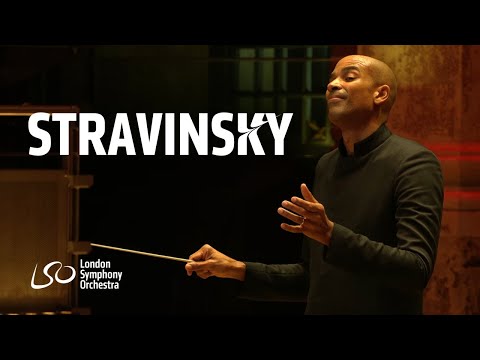
Igor Stravinsky Petrushka (1947 version) Scene 1 // London Symphony Orchestra & Kevin John Edusei
1947Symphony10m
FreeLive
 Play video
YouTube · published 2023-02-12 · 17m
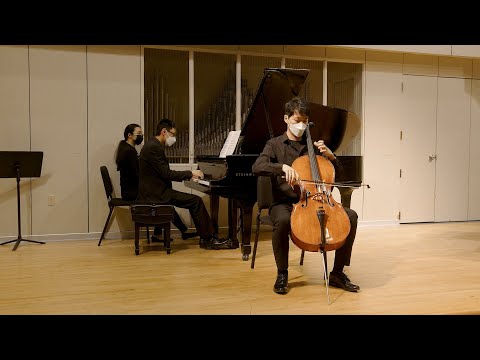
[Live] Igor Stravinsky - Suite Italienne
2023Suite17m
FreeLive
 Play video
YouTube · published 2023-02-12 · 18m
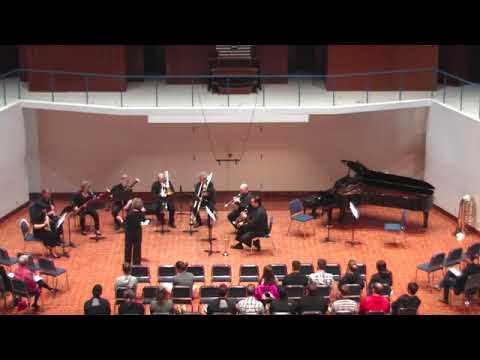
Igor Stravinsky Octet for Winds (1923), Texas Tech University Faculty Recital
202318m
FreeLive
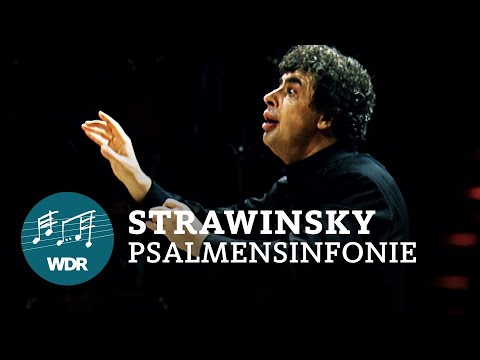 Play video
YouTube · published 2022-02-12 · 22m
Igor Stravinsky - Symphony of Psalms | Semyon Bychkov | WDR Radio Choir | WDR Symphony Orchestra
FreeLongLive
 Play video
YouTube · published 2021-08-06 · 10m
Igor Stravinsky: Symphonies of Wind Instruments, K036 | Turku Philharmonic Orchestra
FreeLive
 Play video
YouTube · published 2021-02-12 · 45m
Igor Stravinsky: La consagración de la primavera - Festival Barenboim | Centro Cultural Kirchner
FreeFull concertLongLive
 Play video
YouTube · published 2020-08-06 · 21m
UMich Symphony Band - Igor Stravinsky - Concerto for Piano and Wind Instruments (1924, rev. 1950)
1950ConcertoSymphony21m
FreeLongLive
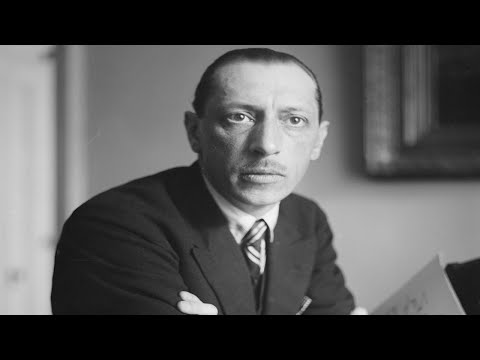 Play video
YouTube · published 2020-08-06 · 1h 46m
Keeping Score | Igor Stravinsky: The Rite of Spring (FULL DOCUMENTARY AND CONCERT)
20201h 46m
FreeFull concertLongLive
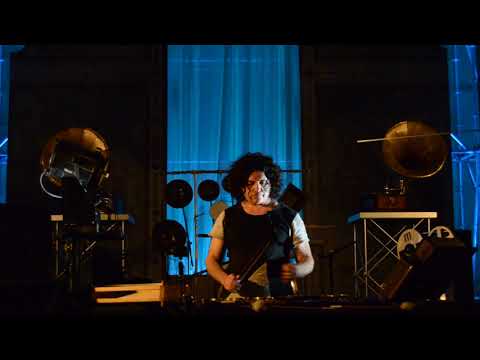 Play video
YouTube · published 2020-03-18 · 59m
Harmograph / Matteo Scaioli /Tribute to Igor Stravinsky Ravenna Festival Giugno 2019
201959m
FreeFull concertLongLive
 Play video
YouTube · published 2020-02-13 · 1h 15m
Igor Stravinsky - PETRUSHKA. Piano Solo Recital. TONY AMORE. 2019
20191h 15m
FreeFull concertLongLive
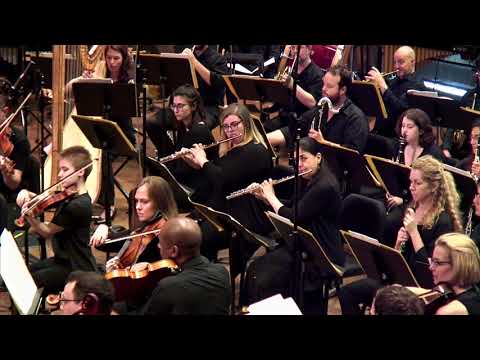 Play video
YouTube · published 2019-06-03 · 23m
Symphony in Three Movements - Igor Stravinsky | Mostly Modern Festival
FreeLongLive
 Play video
YouTube · published 2018-08-07 · 11m
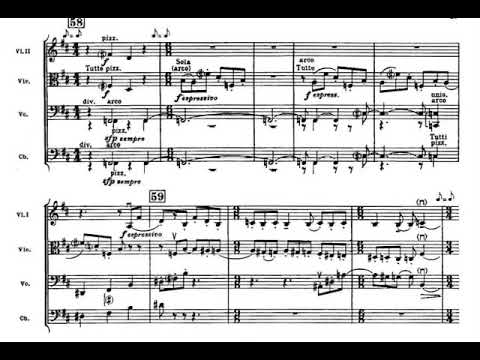
Igor Stravinsky - Concerto in D ("Basle") for String Orchestra (1946) [Score-Video]
1946Concerto11m
FreeLive
 Play video
YouTube · published 2016-06-26 · 22m
Kira Engle Senior Recital Igor Stravinsky DU May 2015 720p
201522m
FreeLongLive
 Play video
YouTube · published 2012-08-08 · 10m
Igor Stravinsky: Concerto per violino e orchestra (1931) (1/2)
FreeLive
Saved playlist songs
Tracks from your saved Spotify playlist that are attributable to Igor Stravinsky.
No Spotify playlist is seeded yet.
No attributable tracks for this person in your saved playlist songs yet.