Semyon Bychkov
Your profile, built from Spotify + Wikipedia/Wikidata + your indexed library.
Born / died
1952
Movement
20th-century classical
Location
Born in Saint Petersburg
Friends / contemporaries
Daniela Ruso, Valery Gergiev, Sergei Prokofiev +3 more
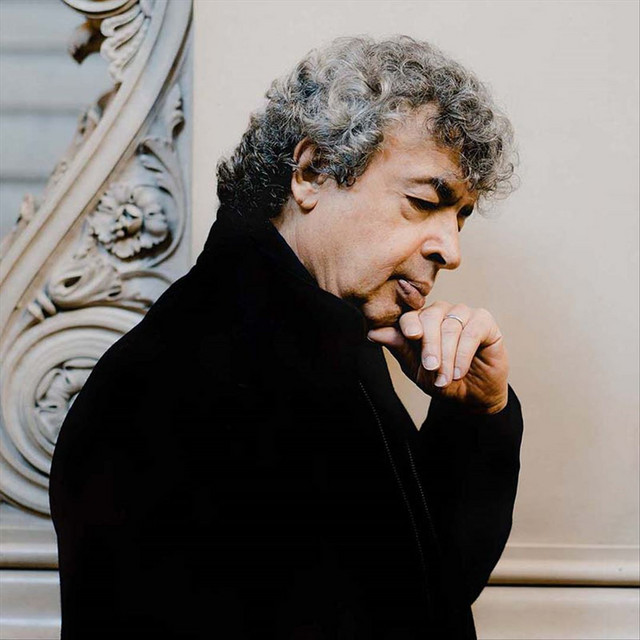
Semyon Bychkov's conducting is admired for its clarity, unexaggerated expression, and frankness in conveying the intent of the music, regardless of what he is conducting.Spotify
He has led orchestras and opera companies across the globe and has had a successful recording career. Bychkov was born on November 30, 1952, in Leningrad, U.S.S.R. (now St.Spotify
Petersburg, Russia). His first studies were of the piano, but he spent ten years (from the age of seven) at the Glinka Choir School in St. Petersburg, singing in the choir and learning conducting.Spotify
Bychkov then studied with Ilya Musin at the Leningrad Conservatory, earning such respect for his skills that he won the 1973 Rachmaninov Conducting Competition and was invited to conduct the Leningrad Philharmonic before his graduation. However, the concert and his graduation never happened. Bychkov had not been discreet about his views of Soviet policies, and due to this, the concert was canceled.Spotify
In 1974, the KGB handed him an exit visa. After a few months in Vienna and Italy, he found himself in New York, studying conducting at the Mannes College of Music. He then became the conductor of the Grand Rapids Symphony in Michigan from 1980 until 1984 and took American citizenship in 1983.Spotify
At the same time, he was the principal guest conductor of the Buffalo Philharmonic in New York, eventually becoming its music director in 1985. However, it was a series of guest conducting jobs -- including with the Berlin Philharmonic and filling in for Bernard Haitink with the Concertgebouw and Rafael Kubelik with the New York Philharmonic -- in 1984 that brought him international attention. Around the same time, his first recording, Rossini's Stabat Mater on Philips, met with great success.Spotify
Leaving the Buffalo position, Bychkov was named music director of the Orchestre de Paris in 1989, principal guest conductor of the St. Petersburg Philharmonic in 1990, principal guest conductor of Florence's Maggio Musicale in 1992, and chief conductor of the Dresden Semperoper in 1997. In addition to the operas conducted in Dresden, Bychkov has also conducted Elektra at the Wiener Staatsoper, Tristan und Isolde at the Chicago Lyric Opera, and Jenufa in Florence.Spotify
Bychkov's debut at New York's Metropolitan Opera occurred in June 2004, with Mussorgsky's Boris Godunov. He stepped down from his Paris position in 1998 after being appointed conductor of the WDR Symphony Orchestra in Cologne. He remained in Cologne until 2010.Spotify
With that ensemble, he began a recording series of Shostakovich's symphonies, expanded its touring schedule, and premiered many new works by composers such as Magnus Lindberg and Nicholas Maw. In 2012, he was appointed the position of Günter Wand Conducting Chair for the BBC Symphony Orchestra. Bychkov began guest conducting the Czech Philharmonic Orchestra in 2013 and led the group in concerts and recordings.Spotify
In 2017, the Czech Philharmonic announced Bychkov's appointment as its chief conductor and music director beginning in 2018. Bychkov has had a very successful recording career, including a ten-year contract with the Philips label. He's also recorded for Decca, Avie, and Profil, among others.Spotify
In 2019, Decca released the box set for The Tchaikovsky Project, an exploration into the composer's music by Bychkov and the Czech Philharmonic that began in 2015. Focusing on Mahler's symphonic works on tour and in recordings in the early 2020s, Bychkov and the Czech Philharmonic kicked off a new cycle on the PentaTone Classics label with a recording of Mahler's Symphony No. 4 in 2022.Spotify
Bychkov is married to pianist Marielle Labèque.Spotify
~ Patsy Morita & Keith Finke, Rovi
role: unknown · 20%era: Modernmovement: 20th-century classical1952
Movement
20th-century classical
How this movement sounds
new harmoniesnew rhythmsneoclassicismatonalityminimalismsharp contrasts
20th-century classical listening cues: variety and experimentation. Some music keeps older forms (neoclassicism) but with sharper harmonies, leaner textures, and motoric rhythms.
Other strands move toward atonality (no clear tonal center) or explore new scales and sonorities; rhythm can become more complex, more mechanical, or more jagged.
Timbre and texture are often treated as structural elements: changes in sound color can function like 'harmonic' events.
A practical way to listen: instead of expecting a 'tune', track motives (tiny cells), rhythm, and register. Modern pieces often build form by transforming small units rather than by long melodies.
Minimalism is another common thread: repetition, gradual change, and a focus on pulse and process over long spans.
How Semyon Bychkov sounds
new harmonyrhythmic bitecolor & textureminimal patternsextended techniques
Modern/contemporary music varies wildly, but you will often hear experimentation with harmony, rhythm, and sound color as primary material.
Some strands emphasize rhythmic bite and sharp contrasts; others explore timbre and atmosphere; minimalism builds from repeating patterns and gradual change.
If the music feels less about singable melody and more about texture, pulse, or color, you are probably hearing a modern idiom.
Study resources & scores
Curated study material and indexed score links related to Semyon Bychkov.
No related study resources yet. As more lectures, transcripts, and scores are indexed, they will show up here.
Local matches
Matches your current indexed library (videos table). This will be sparse until connectors run.

France Musique · published 2026-09-12
France Musique est à vous du samedi 12 septembre 2026
2026
FreeFull concert

France Musique · published 2026-05-18
Semyon Bychkov, le lyrisme et la générosité
2026
FreeFull concert
 Play video
Carnegie Hall · published 2025-05-16 · 2m
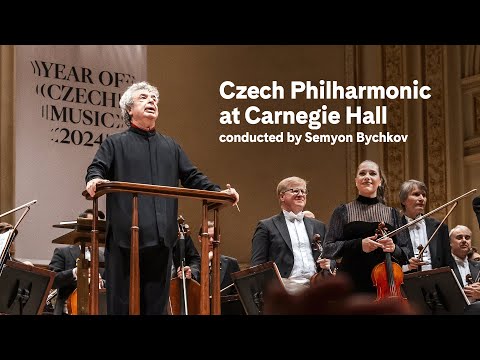
The Czech Philharmonic at Carnegie Hall conducted by Semyon Bychkov (excerpt) | Carnegie Hall+
20252m
Free
 Play video
Carnegie Hall · published 2025-05-16 · 2m
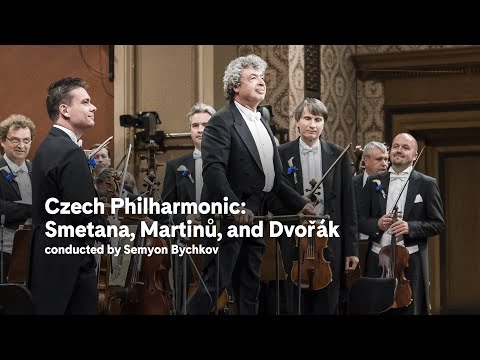
Czech Philharmonic and Semyon Bychkov: Smetana, Martinů, and Dvořák (excerpt) | Carnegie Hall+
20252m
Free
 Play video
Carnegie Hall · published 2025-05-16 · 2m
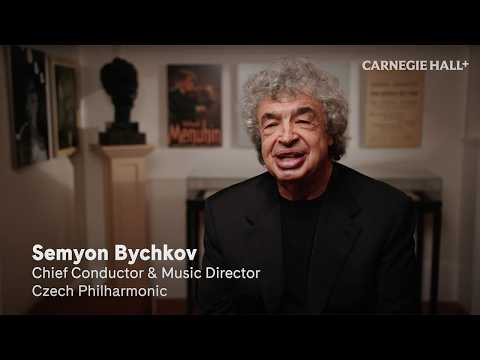
Interview with Semyon Bychkov: Year of Czech Music | Carnegie Hall+
Free
 Play video
YouTube · published 2023-02-12 · 36m
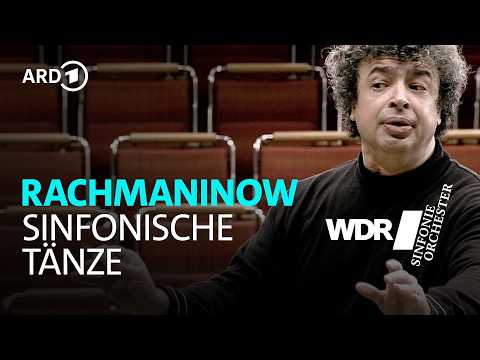
Sergei Rachmaninoff - Symphonic Dances op. 45 | Semyon Bychkov | WDR Symphony Orchestra
FreeLongLive
 Play video
YouTube · published 2022-02-12 · 22m
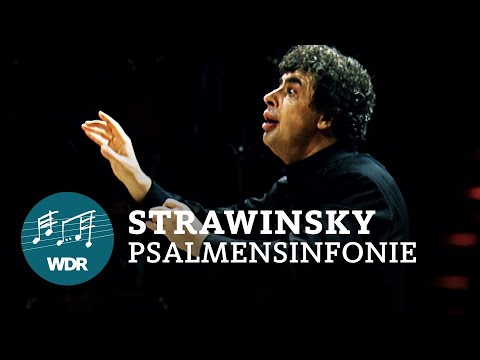
Igor Stravinsky - Symphony of Psalms | Semyon Bychkov | WDR Radio Choir | WDR Symphony Orchestra
FreeLongLive
 Play video
YouTube · published 2021-06-03 · 50m
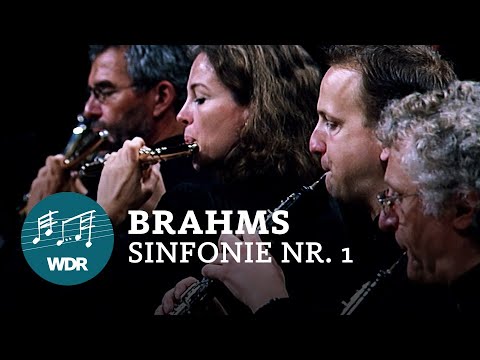
Johannes Brahms - Symphony No. 1 in C minor op. 68 | Semyon Bychkov | WDR Sinfonieorchester
FreeFull concertLongLive
 Play video
YouTube · published 2021-02-12 · 52m
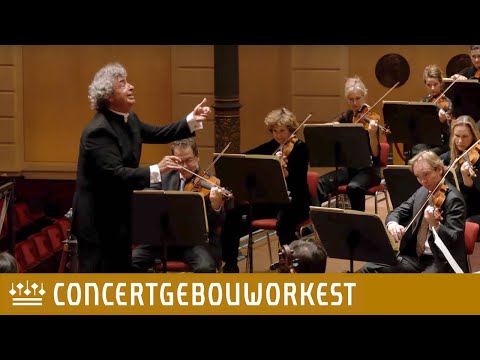
Tchaikovsky - Symphony No. 5 - Semyon Bychkov | Concertgebouworkest
FreeFull concertLongLive
 Play video
YouTube · published 2021-02-12 · 1h 4m
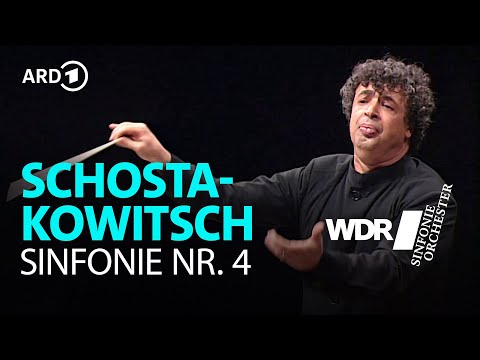
Shostakovich - Symphony No. 4 | Semyon Bychkov | WDR Symphony Orchestra
FreeFull concertLongLive
Saved playlist songs
Tracks from your saved Spotify playlist that are attributable to Semyon Bychkov.
No Spotify playlist is seeded yet.
No attributable tracks for this person in your saved playlist songs yet.