Gidon Kremer
Your profile, built from Spotify + Wikipedia/Wikidata + your indexed library.
Born / died
1947
Movement
20th-century classical
Location
Born in Riga
Friends / contemporaries
Alexander Melnikov, Alexander Vedernikov, Vladimir Ashkenazy +3 more
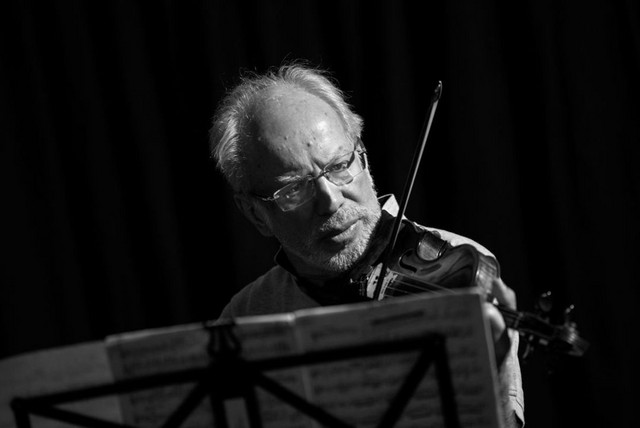
Gidon Kremer's technical brilliance, inward but passionate playing, and commitment to both new works and new interpretations of old works have made him one of the most respected violinists in the world today.Spotify
He is widely known as the director of his own ensemble, Kremerata Baltica, which has explored a wide range of new music from the Baltic region and other areas. Kremer was born on February 27, 1947, in Riga, Latvia, then part of the Soviet Union.Spotify
The Latvian form of his name is Gidons Krēmers. His parents were both professional violinists (his father, a Jew, survived the Holocaust), and, as with so many virtuosi, Kremer's gift was apparent almost immediately after a violin was put in his hands. His grandfather, Georg Bruckner, concertmaster of the Riga Opera, is credited with having guided the development of his formidable talent.Spotify
Kremer won the first prize of the Latvian Republic at age 16 and entered the Moscow Conservatory to study under the legendary violinist David Oistrakh, who eventually offered him a position as an assistant after he graduated. By that time, however, Kremer had already won numerous violin competitions (most notably the 1970 Tchaikovsky Competition), and his star was rising as a soloist. Kremer had been denied permission to travel abroad but was finally allowed to leave the country in 1975.Spotify
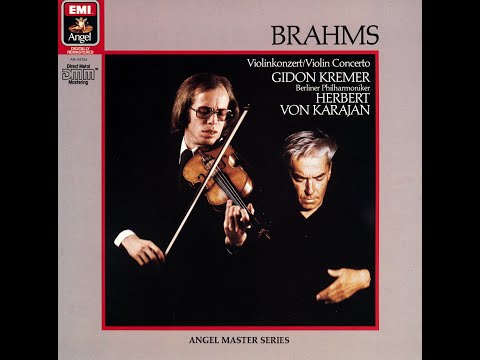
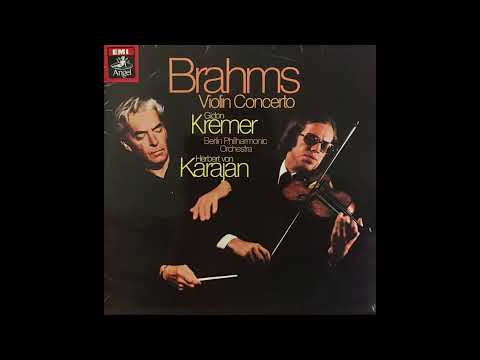
He became a sensation in the West when conductor Herbert von Karajan in 1976 proclaimed Kremer the greatest violinist in the world after recording the Brahms violin concerto with him. A remarkably versatile player, Kremer has a repertory encompassing the standard Baroque, Classical, and Romantic literature, as well as new works by composers such as Stockhausen, Henze, and Adams, and music from the Baltic countries. Always a champion of the new and the rare, he has rhetorically asked: "Why ride the same old warhorses to success?" He also enjoys thumbing his nose at conventional wisdom, regularly creating radical reinterpretations of the classics, as in his 1980 recording of the Beethoven Violin Concerto with somewhat bizarre cadenzas by Schnittke.Spotify
He disdains virtuosity for virtuosity's sake but is nonetheless one of the most technically proficient violinists in the world. His playing tends toward a thoughtful austerity rather than the extroversion of a Jascha Heifetz, but when he is in top form, he is a mesmerizing performer. Kremer has kept apartments around the world but became particularly fond of the Austrian town of Lockenhaus.Spotify
He founded the Lockenhaus Chamber Music Festival there in 1981 but ended the festival in 1990, deciding to stop before the task became too exhausting. In the late '90s, he created the punningly named Kremerata Baltica with a group of young Latvian players; the group's recordings of Arvo Pärt and Astor Piazzolla placed them out in front of two of the hottest trends of the 20th century's end. His recordings with the group have won numerous international awards, including a Grammy in 2002.Spotify
In the early 2010s, Kremer withdrew from several high-profile appearances, citing weariness with the machinery of musical celebrity. His recording career, however, has possibly become even more prolific, encompassing chamber music, recordings of mainstream repertory, and continued exploration with Kremerata Baltica, on the ECM label, of contemporary music from the Slavic countries, his native Baltic region, and the Russian sphere. He has devoted a pair of albums to Shostakovich's protégé Mieczyslaw Weinberg; one was honored with a Grammy nomination in 2015, and a second, devoted to the composer's chamber symphonies, appeared in 2017.Spotify
He was once again nominated for a Grammy in 2019 for a recording of Weinberg's Symphonies Nos. 2 & 21 under Mirga Gražinytė-Tyla. Kremer's more mainstream recordings, such as a 2012 album devoted to Vivaldi's Four Seasons, have appeared on Deutsche Grammophon and Decca.Spotify
His recording pace slowed hardly at all, as he issued several recordings annually during the late 2010s and early 2020s, by which time he was in his mid-70s. Kremer is not known as a chamber music player but has issued recordings with younger performers whose careers he has helped along; in 2020, he released an album of trios by Beethoven (an arrangement of the Triple Concerto, Op. 56) and Chopin with cellist Giedré Dirvanauskaité and pianist Georgijs Osokins.Spotify
In 2022, Kremer issued a recording of Weinberg's difficult Sonatas for violin solo. By that time, his catalog contained nearly 200 recordings.Spotify
~ Andrew Lindemann Malone & James Manheim, Rovi
role: interpreter · 90%instrument: conductorera: Modernmovement: 20th-century classical1947
Movement
20th-century classical
How this movement sounds
new harmoniesnew rhythmsneoclassicismatonalityminimalismsharp contrasts
20th-century classical listening cues: variety and experimentation. Some music keeps older forms (neoclassicism) but with sharper harmonies, leaner textures, and motoric rhythms.
Other strands move toward atonality (no clear tonal center) or explore new scales and sonorities; rhythm can become more complex, more mechanical, or more jagged.
Timbre and texture are often treated as structural elements: changes in sound color can function like 'harmonic' events.
A practical way to listen: instead of expecting a 'tune', track motives (tiny cells), rhythm, and register. Modern pieces often build form by transforming small units rather than by long melodies.
Minimalism is another common thread: repetition, gradual change, and a focus on pulse and process over long spans.
How Gidon Kremer sounds
new harmonyrhythmic bitecolor & textureminimal patternsextended techniques
Modern/contemporary music varies wildly, but you will often hear experimentation with harmony, rhythm, and sound color as primary material.
Some strands emphasize rhythmic bite and sharp contrasts; others explore timbre and atmosphere; minimalism builds from repeating patterns and gradual change.
If the music feels less about singable melody and more about texture, pulse, or color, you are probably hearing a modern idiom.
Wikipedia
Gidon Markusovich Kremer (Russian: Гидон Маркусович Кремер, Latvian: Gidons Krēmers; born 27 February 1947) is a Latvian classical violinist, artistic director, and founder of Kremerata Baltica.Wikipedia
YouTube (channel bio)
Share your videos with friends, family, and the worldYouTube
Interview highlights
Built from indexed interview/masterclass transcripts (podcasts / YouTube). Quotes are direct excerpts with source links.
Interview highlights for Gidon Kremer from 3 sources. Quotes below are direct excerpts; open the source link for context.
Topics that recur (auto): Music, Composers, Many, Something, Will, Feel, Great, Life.
Source: youtube_captions · 6W7CtRDeqY4 · 0:42 · published 2017-03-02 · Open source
Source: youtube_captions · jWfRsW_G5d0 · 0:54 · published 2022-01-16 · Open source
Source: youtube_captions · 24AFG_1a1MU · 4:29 · Open source
Source: youtube_captions · 6W7CtRDeqY4 · 0:56 · published 2017-03-02 · Open source
Source: youtube_captions · jWfRsW_G5d0 · 4:02 · published 2022-01-16 · Open source
Source: youtube_captions · 24AFG_1a1MU · 3:10 · Open source
Transcript sources (3)
Study resources & scores
Curated study material and indexed score links related to Gidon Kremer.
No related study resources yet. As more lectures, transcripts, and scores are indexed, they will show up here.
Local matches
Matches your current indexed library (videos table). This will be sparse until connectors run.

France Musique · published 2026-10-07
Le Bach du matin avec Gidon Kremer
2026
FreeFull concert

France Musique · published 2026-10-01
Tango Ballet : Piazzolla par Gidon Kremer et la Kremerata Baltica
2026Tango Ballet
FreeFull concert

France Musique · published 2026-10-01
Gidon Kremer, loin de tout conformisme
2026
Free

France Musique · published 2026-06-23
Le Premier quatuor avec piano de Johannes Brahms avec Martha Argerich
2026
FreeFull concert

France Musique · published 2026-03-24
Gidon Kremer joue les sonates pour violon d'Eugène Ysaÿe
2026
Free

France Musique · published 2026-03-20
Nikolaus Harnoncourt dirige Mendelssohn, Schumann et Brahms
2026
FreeFull concert
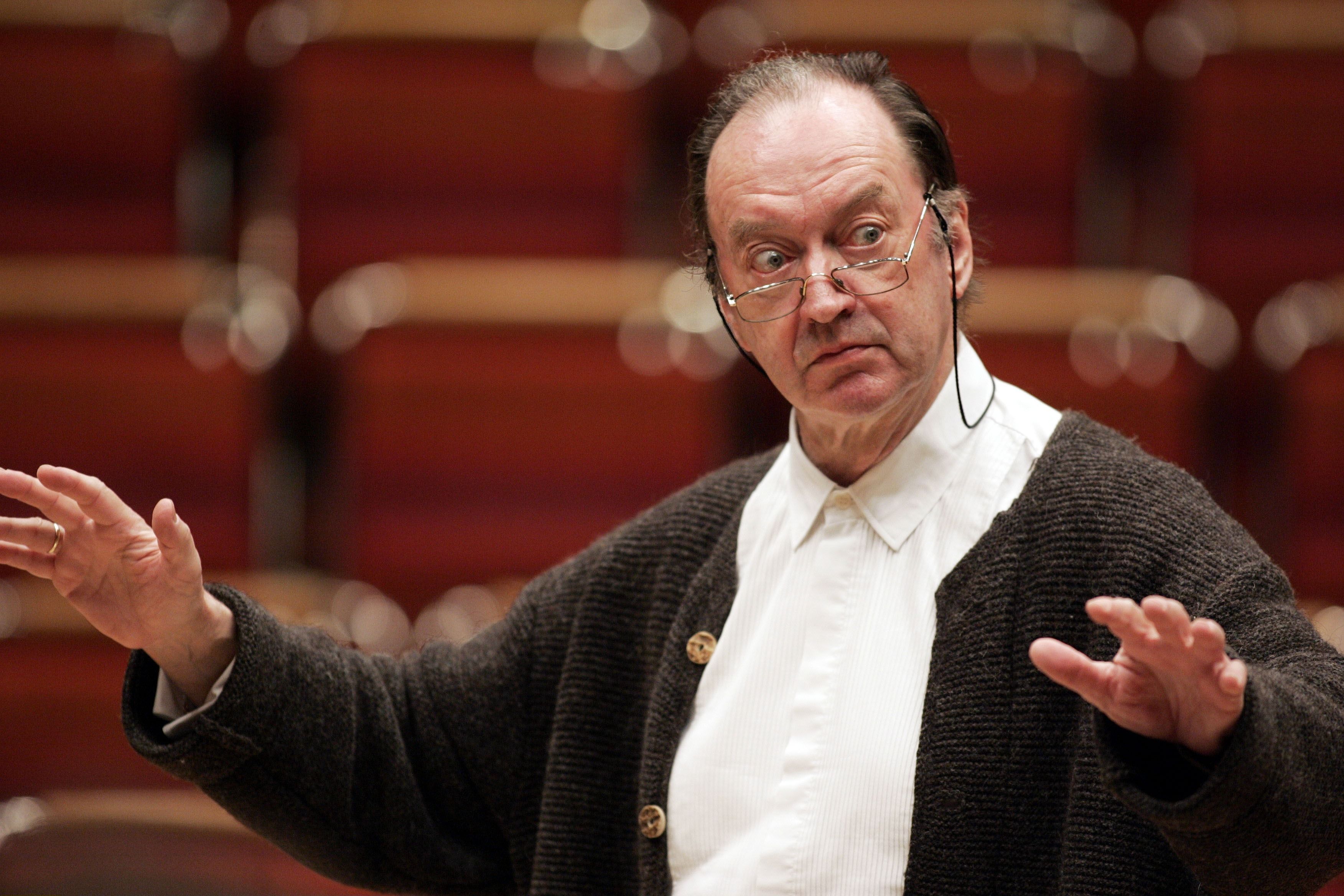
France Musique · published 2026-03-18
Nikolaus Harnoncourt dirige Mozart. La splendeur et la grâce
2026
Free
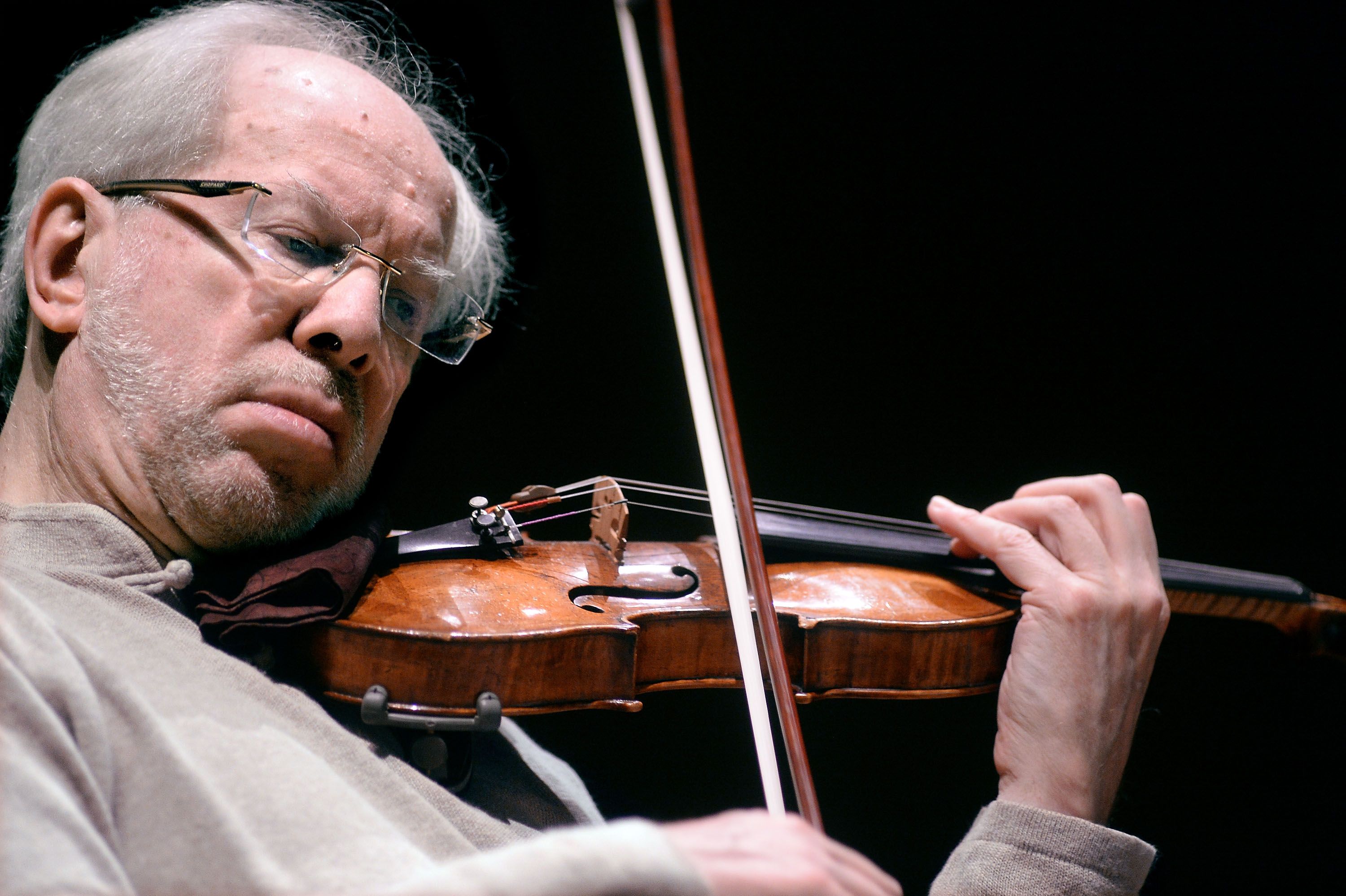
France Musique · published 2026-03-17
Le violoniste Gidon Kremer, le chef Kurt Sanderling et l’Orchestre National de France
2026
FreeFull concert
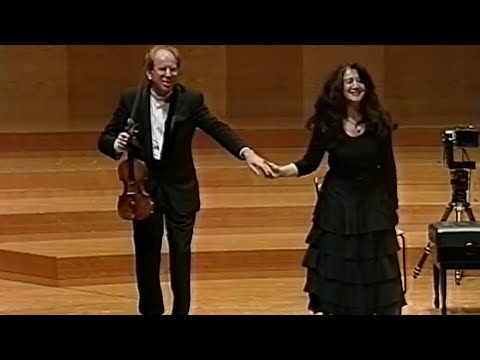 Play video
YouTube · published 2025-10-06 · 1h 38m
Martha Argerich Gidon Kremer Japan 1994 Recital
19941h 38m
FreeFull concertLongLive
 Play video
YouTube · published 2025-08-05 · 41m
Brahms: Violin Concerto in D major, Op. 77 - Gidon Kremer, Herbert von Karajan, Berlin Philharmonic
FreeLongLive
 Play video
YouTube · published 2025-08-05 · 31m
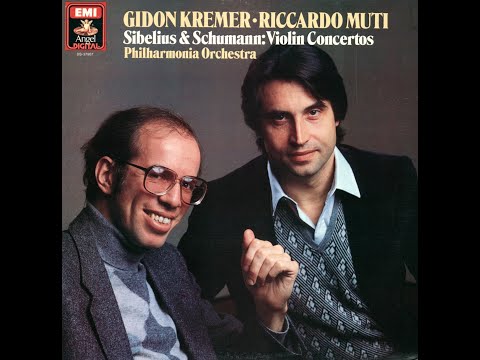
Sibelius: Violin Concerto in D minor, Op. 47 - Gidon Kremer, Riccardo Muti, Philharmonia Orchestra
FreeLongLive
 Play video
YouTube · published 2024-08-05 · 1h 52m
MEZZO VOD Concerto Budapest Symphony Orchestra Kremerata Baltica András Keller Gidon Kremer 04 12 19
2024ConcertoSymphony1h 52m
FreeFull concertLongLive
 Play video
YouTube · published 2024-08-05 · 43m
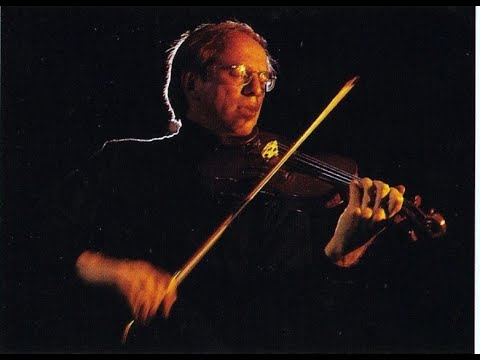
Tchaikovsky : Violin Concerto Gidon Kremer Live in Tokyo1996
FreeLongLive
 Play video
Carnegie Hall · published 2024-05-16 · 2m
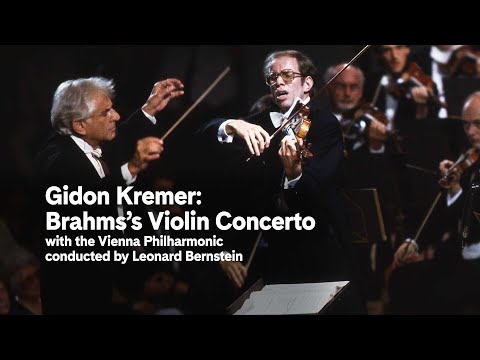
Gidon Kremer: Brahms's Violin Concerto conducted by Leonard Bernstein (excerpt) | Carnegie Hall+
Free
 Play video
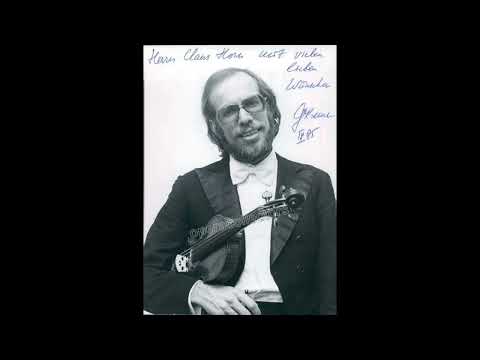
YouTube · published 2023-08-06 · 17m
Gidon Kremer, Sibelius Violin Concerto 1st Mov. Montreal International Competition 2nd Prize 1969
1969Concerto17m
FreeLive
 Play video
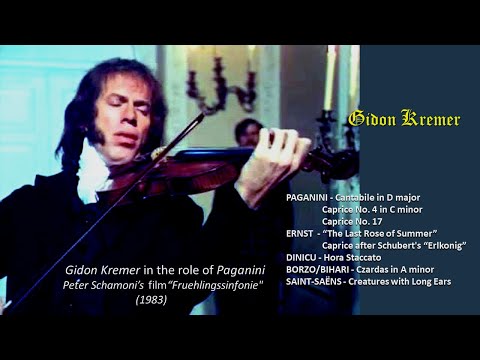
YouTube · published 2023-08-05 · 30m
GIDON KREMER - Violino: Paganini, Ernst, Dinicu, Borzo/Bihari, Saint-Saëns (live recording)
FreeLongLive
 Play video
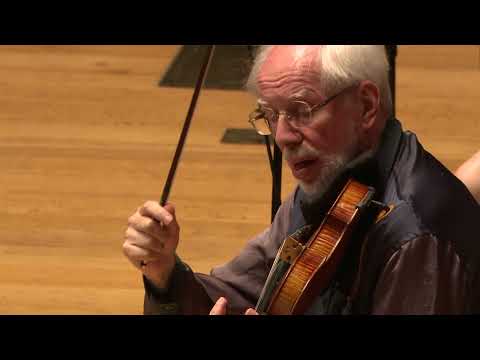
YouTube · published 2023-02-12 · 14m
MUSIC FOR THE FUTURE Solo: Gidon Kremer, violin - Live concert HD
202314m
FreeLive
 Play video
YouTube · published 2022-08-01 · 23m
Gidon Kremer - Brahms Concerto (1st mov't) w/Karajan - Berlin Philharmonic (1976 EMI recording)
1976Concerto23m
FreeLongLive
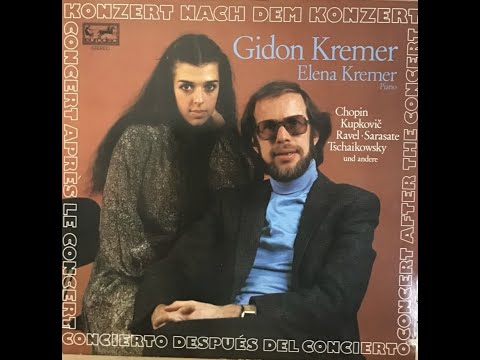 Play video
YouTube · published 2022-08-01 · 23m
Gidon Kremer and Elena Kremer 1979 (side A) studio recital (rare)
197923m
FreeLongLive
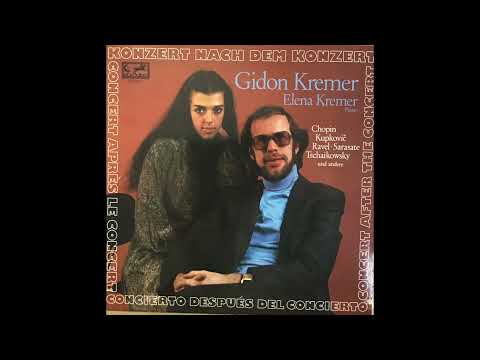 Play video
YouTube · published 2022-07-18 · 25m
Gidon Kremer and Elena Kremer 1979 (side B) studio recital (rare)
197925m
FreeLongLive
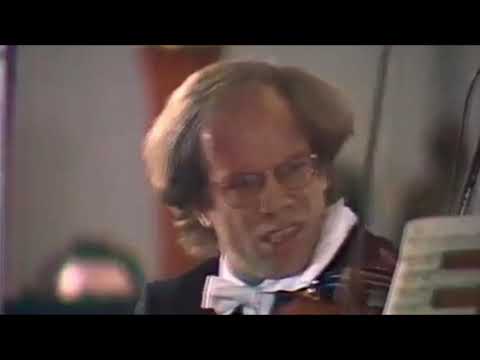
 Play video
YouTube · published 2021-08-06 · 25m
Gidon Kremer - Philip Glass - Concerto for Violin and Orchestra (Complete)
2021Concerto25m
FreeLongLive
 Play video
YouTube · published 2020-07-20 · 38m
Schnittke: Violin Concerto No. 4 - Gidon Kremer /Vladimir Ziva /Gorki State Philharmonic Orchestra
FreeLongLive
 Play video
YouTube · published 2019-08-06 · 29m
Gidon Kremer & Kremerata Baltica Live in Belgrade - Part One
201929m
FreeLongLive
 Play video
YouTube · published 2018-08-07 · 50m
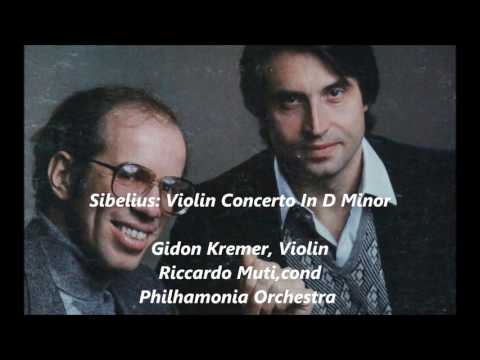
sibelius, violin concert, Gidon Kremer
201850m
FreeFull concertLongLive
 Play video
YouTube · published 2018-07-19 · 25m
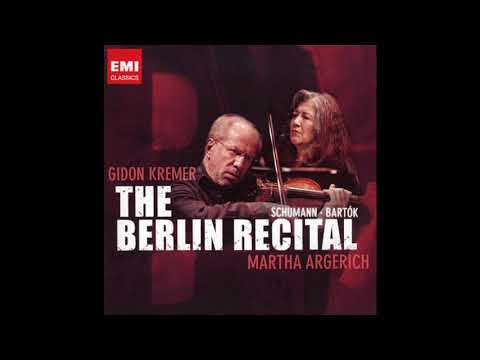
Bartók Solo Violin Sonata / The Berlin Recital, Gidon Kremer
2018Sonata25m
FreeLongLive
 Play video
YouTube · published 2018-02-13 · 34m
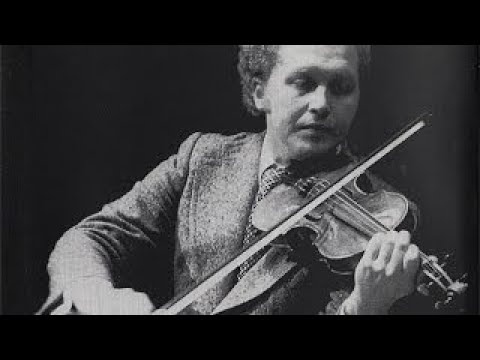
Alfred Schnittke: Violin Concerto No. 3 (Gidon Kremer live, 1981)
FreeLongLive
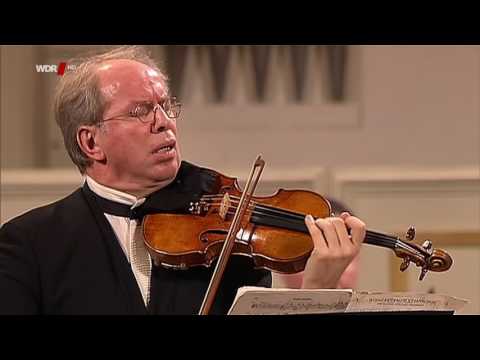 Play video
YouTube · published 2018-02-13 · 35m
Gidon Kremer und die Kremerata Baltica - Wolfgang Amadeus Mozart Sinfonie Concert
201835m
FreeLongLive
 Play video
YouTube · published 2017-08-07 · 33m
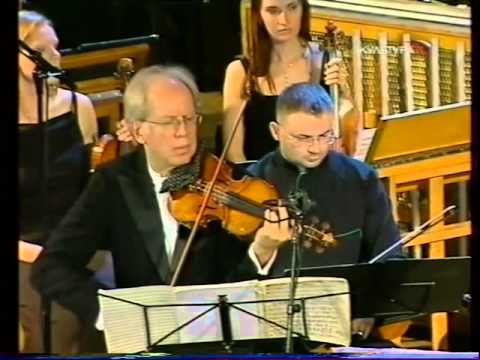
Sibelius Violin Concerto - Gidon Kremer / Skrowaczewski / PHO (Live)
2017Concerto33m
FreeLongLive
 Play video
YouTube · published 2015-08-08 · 28m
Alfred Schnittke - Concerto Grosso no. 1 - Gidon Kremer / Tatiana Grindenko - live video
2015Concerto28m
FreeLongLive
Saved playlist songs
Tracks from your saved Spotify playlist that are attributable to Gidon Kremer.
No Spotify playlist is seeded yet.
No attributable tracks for this person in your saved playlist songs yet.