Alfred Schnittke
Your profile, built from Spotify + Wikipedia/Wikidata + your indexed library.
Born / died
1934-1998
Movement
20th-century classical
Location
Born in Engels
Friends / contemporaries
Alexander Melnikov, Alexander Vedernikov, Gidon Kremer +3 more

role: unknown · 20%era: Modernmovement: 20th-century classical1934–1998
Movement
20th-century classical
How this movement sounds
new harmoniesnew rhythmsneoclassicismatonalityminimalismsharp contrasts
20th-century classical listening cues: variety and experimentation. Some music keeps older forms (neoclassicism) but with sharper harmonies, leaner textures, and motoric rhythms.
Other strands move toward atonality (no clear tonal center) or explore new scales and sonorities; rhythm can become more complex, more mechanical, or more jagged.
Timbre and texture are often treated as structural elements: changes in sound color can function like 'harmonic' events.
A practical way to listen: instead of expecting a 'tune', track motives (tiny cells), rhythm, and register. Modern pieces often build form by transforming small units rather than by long melodies.
Minimalism is another common thread: repetition, gradual change, and a focus on pulse and process over long spans.
How Alfred Schnittke sounds
new harmonyrhythmic bitecolor & textureminimal patternsextended techniques
Modern/contemporary music varies wildly, but you will often hear experimentation with harmony, rhythm, and sound color as primary material.
Some strands emphasize rhythmic bite and sharp contrasts; others explore timbre and atmosphere; minimalism builds from repeating patterns and gradual change.
If the music feels less about singable melody and more about texture, pulse, or color, you are probably hearing a modern idiom.
Wikipedia
Alfred Garrievich Schnittke (24 November 1934 – 3 August 1998) was a Soviet and Russian composer.Wikipedia
Among the most performed and recorded composers of late 20th-century classical music, he is described by musicologist Ivan Moody as a "composer who was concerned in his music to depict the moral and spiritual struggles of contemporary man in [...] depth and detail." Schnittke's early music shows the strong influence of Dmitri Shostakovich. He developed a polystylistic technique in works such as the epic Symphony No.Wikipedia
1 (1969–1972) and his first concerto grosso (1977). In the 1980s, Schnittke's music began to become more widely known abroad with the publication of his second (1980) and third (1983) string quartets and the String Trio (1985); the ballet Peer Gynt (1985–1987); the third (1981), fourth (1984), and fifth (1988) symphonies; and the viola concerto (1985) and first cello concerto (1985–1986). As his health deteriorated, Schnittke's music started to abandon much of the extroversion of his polystylism and retreated into a more withdrawn, bleak style.Wikipedia
Study resources & scores
Curated study material and indexed score links related to Alfred Schnittke.
No related study resources yet. As more lectures, transcripts, and scores are indexed, they will show up here.
Local matches
Matches your current indexed library (videos table). This will be sparse until connectors run.

France Musique · published 2026-05-01
Quelle musique entendez-vous sur "La Chute d'Icare" d'Henri Matisse ?
2026
Free
 Play video
YouTube · published 2022-10-10 · 25m
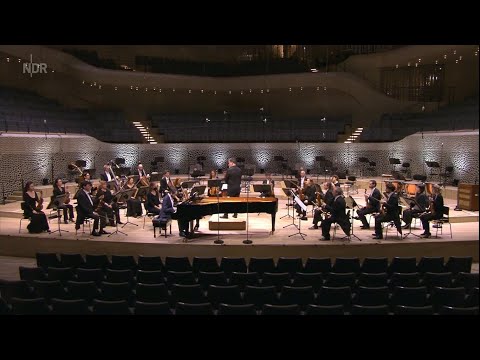
Alfred Schnittke - Concerto for Piano and String Orchestra (1979) I Daniil Trifonov, piano
1979Concerto25m
FreeLongLive
 Play video
YouTube · published 2018-02-13 · 34m
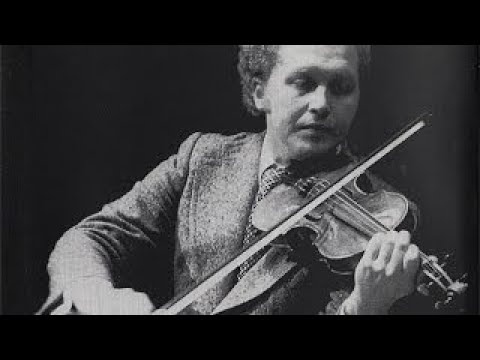
Alfred Schnittke: Violin Concerto No. 3 (Gidon Kremer live, 1981)
FreeLongLive
 Play video
YouTube · published 2015-08-08 · 28m
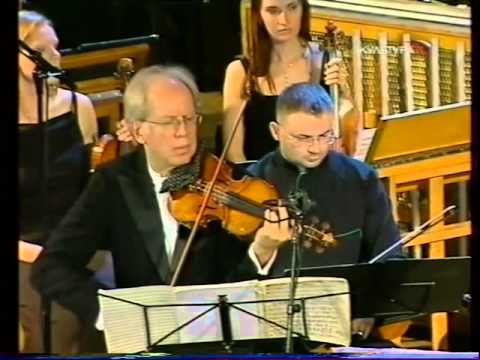
Alfred Schnittke - Concerto Grosso no. 1 - Gidon Kremer / Tatiana Grindenko - live video
2015Concerto28m
FreeLongLive
Saved playlist songs
Tracks from your saved Spotify playlist that are attributable to Alfred Schnittke.
No Spotify playlist is seeded yet.
No attributable tracks for this person in your saved playlist songs yet.