Dvorák
Your profile, built from Spotify + Wikipedia/Wikidata + your indexed library.
Born / died
1841-1904
Movement
Romantic
Location
Worked in New York City, Olomouc +2 more
Friends / contemporaries
Bedrich Smetana, Johannes Brahms, Anton Webern +3 more

role: composer · 90%era: Romanticmovement: Romantic1841–1904
Movement
Romantic
How this movement sounds
rubatochromatic harmonybig climaxesricher timbrelong lyrical linesnarrative feel
Romantic listening cues: heightened emotion, longer lyrical melodies, and more freedom with rubato (flexible timing) in performance.
Harmony is often more chromatic, with colorful chords and side-steps that create tension and release over longer spans. You may hear more delayed resolutions and more 'yearning' harmonic motion.
Dynamics and texture often expand: thicker sonorities, bigger climaxes, and a strong sense of narrative or character (even in purely instrumental music).
In piano music, listen for the use of pedaling and resonance to create a halo around harmony; in orchestral music, listen for richer timbre and denser voicing (inner lines matter).
A useful trick: follow the bass line. In Romantic music it often shapes the drama, pulling the harmony through longer arcs rather than short phrase punctuation.
How Dvorák sounds
rubatorich harmonylong melodybig dynamicscoloristic pedal
Romantic music tends to foreground emotion and color: long singing melodies, flexible tempo (rubato), and harmony that stretches and sighs.
You often hear thicker textures, wider dynamic range, and a more "orchestral" use of the piano with deep bass and resonant pedaling.
Look for heightened contrast and personal voice: the same musical gesture can feel intimate one moment and heroic the next.
Wikipedia
Antonín Leopold Dvořák (8 September 1841 – 1 May 1904) was a Czech composer.Wikipedia
He frequently employed rhythms and other aspects of the folk music of Moravia and his native Bohemia, following the Romantic era nationalist example of his predecessor Bedřich Smetana. Dvořák's style has been described as "the fullest recreation of a national idiom with that of the symphonic tradition, absorbing folk influences and finding effective ways of using them", and Dvořák has been described as "arguably the most versatile... composer of his time".Wikipedia
Dvořák displayed his musical gifts at an early age, being a talented violin student. The first public performances of his works were in Prague in 1872 and, with special success, in 1873, when he was 31 years old. Seeking recognition beyond the Prague area, he submitted scores of works including symphonies to competitions in Germany and Austria.Wikipedia
He first won a prize in 1874, with Johannes Brahms on the jury of the Austrian State Competition. In 1877, after his third win, Brahms recommended Dvořák to his publisher, Simrock, who commissioned what became the Slavonic Dances, Op. 46.Wikipedia
The sheet music's high sales and critical reception led to his international success. A London performance of Dvořák's Stabat Mater in 1883 led to many other performances in the United Kingdom, the United States, and eventually Russia in March 1890. The Seventh Symphony was…Wikipedia
Study resources & scores
Curated study material and indexed score links related to Dvorák.
No related study resources yet. As more lectures, transcripts, and scores are indexed, they will show up here.
Local matches
Matches your current indexed library (videos table). This will be sparse until connectors run.

France Musique · published 2026-10-03
France Musique est à vous junior du samedi 03 octobre 2026
2026
Free

France Musique · published 2026-07-23
Daniel Müller-Schott joue Dvorák au Festival Pablo Casals de Prades
2026
FreeFull concert
France Musique · published 2026-03-12
Les musiciens du National interprètent le Trio de Clara Schumann & le Quintette K452 de Mozart
2026Trio
FreeFull concert
 Play video
YouTube · published 2019-03-15 · 29m
Antonín Rejcha: Symphony in F Minor, Dvorák Chamber Orchestra, Petr Altrichter
FreeLongLive
 Play video
YouTube · published 2018-10-10 · 25m
Dvorák - Cello Concerto - B minor, Op. 104 - Kian Soltani - Zagreb Philharmonic - Elisabeth Fuchs
2018ConcertoOp.25m
FreeLongLive
 Play video
YouTube · published 2018-10-10 · 50m
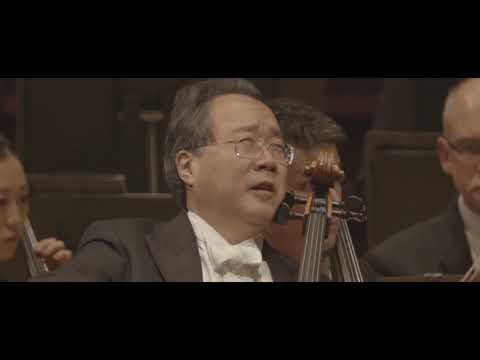
Dvorák: Cello Concerto in B Minor / Yo-Yo Ma, cello / Calgary Philharmonic Orchestra
FreeFull concertLongLive
Saved playlist songs
Tracks from your saved Spotify playlist that are attributable to Dvorák.
No Spotify playlist is seeded yet.
No attributable tracks for this person in your saved playlist songs yet.