Antonín Rejcha
Your profile, built from Spotify + Wikipedia/Wikidata + your indexed library.
Born / died
1770-1836
Movement
classical
Location
Born in Prague
Friends / contemporaries
Franz Liszt, Antoine Reicha, Ludwig van Beethoven +3 more

role: unknown · 20%era: Classicalmovement: classical1770–1836
Movement
classical
How this movement sounds
balanced phrasesclear cadencessonata formtheme contrastAlberti basstransparent texture
Classical-period listening cues: balance, clarity, and symmetry. Melodies often come in neat, singable phrases with obvious cadences (musical punctuation).
A common feeling is contrast and conversation: a theme in one mood, then a second theme in a different key/character, and a clear return later (sonata form thinking).
Harmony is usually goal-directed and stable; textures are often transparent so you can track the main line. In keyboard writing, Alberti bass (broken-chord accompaniment) is a frequent signature.
The drama is often in structure: the development section may fragment and recombine themes, wander through keys (modulation), then snap back to a satisfying return.
If you're unsure what to listen for: try counting phrase lengths (often 4 or 8 bars) and notice how the music 'sets up' a cadence, lands, then resets.
How Antonín Rejcha sounds
clear phrasesbalanced formcadenceslight texturetheme & variation
Classical-era style often emphasizes clarity: balanced phrases, transparent textures, and forms you can "hear" (sonata form, variations).
Expect crisp cadences, conversational dynamics, and melodic ideas that are stated, developed, and returned in a satisfying arc.
Drama comes from contrast and structure rather than sheer density: bright vs shadow, tension vs release, symmetry vs surprise.
Wikipedia
Anton (Antonín, Antoine) Joseph Reicha (Rejcha) (26 February 1770 – 28 May 1836) was a Bohemia-born, Bavarian-educated, later naturalized French composer and music theorist.Wikipedia
A contemporary and friend of Beethoven, he is now best remembered for his substantial early contributions to the wind quintet literature and his role as teacher of pupils including Franz Liszt, Hector Berlioz and César Franck. He was also an accomplished theorist, and wrote several treatises on various aspects of composition.Wikipedia
Some of his theoretical work dealt with experimental methods of composition, which he applied in a variety of works such as fugues and études for piano and string quartet. None of the advanced ideas he advocated in the most radical of his music and writings, such as polyrhythm, polytonality and microtonal music, were accepted or employed by other nineteenth-century composers. Due to Reicha's unwillingness to have his music published (like Michael Haydn before him), he fell into obscurity soon after his death and his life and work have yet to be intensively studied.Wikipedia
Study resources & scores
Curated study material and indexed score links related to Antonín Rejcha.
No related study resources yet. As more lectures, transcripts, and scores are indexed, they will show up here.
Local matches
Matches your current indexed library (videos table). This will be sparse until connectors run.
 Play video
YouTube · published 2023-03-14 · 44m
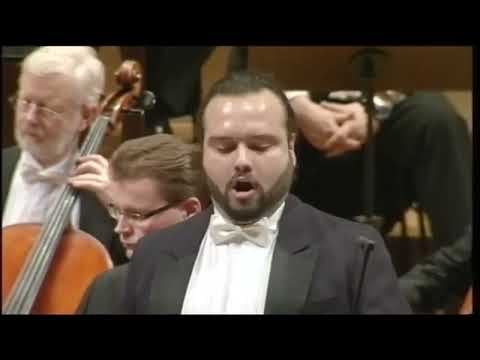
Antonín Rejcha Te Deum Prague Radio Symphony Orchestra Stanislav Vavřínek
2023Symphony44m
FreeLongLive
 Play video
YouTube · published 2021-03-14 · 28m
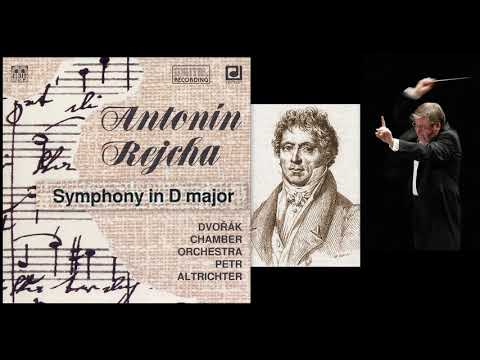
Antonín Rejcha: Symphony in D Major, Dvořák Chamber Orchestra, Petr Altrichter
FreeLongLive
 Play video
YouTube · published 2020-03-14 · 21m
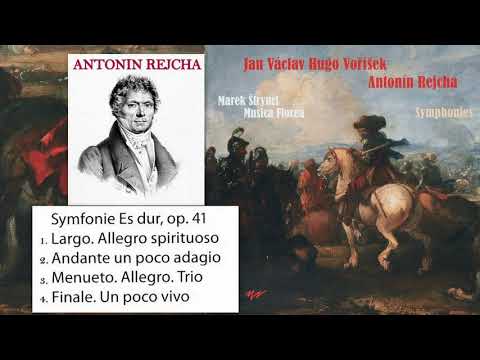
Antonín Rejcha (Reicha): Symphony in E Flat Major Op.41, Musica Florea Orchestra
2020SymphonyOp.21m
FreeLongLive
 Play video
YouTube · published 2019-03-15 · 29m
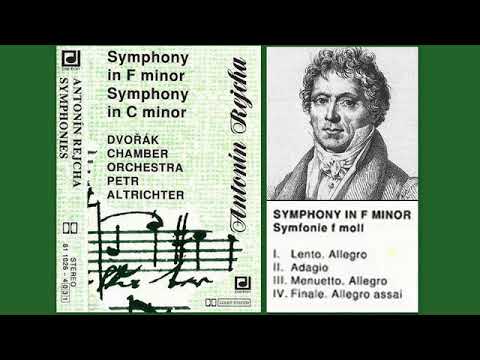
Antonín Rejcha: Symphony in F Minor, Dvorák Chamber Orchestra, Petr Altrichter
FreeLongLive
Saved playlist songs
Tracks from your saved Spotify playlist that are attributable to Antonín Rejcha.
No Spotify playlist is seeded yet.
No attributable tracks for this person in your saved playlist songs yet.