Wolfgang Amadeus Mozart
Your profile, built from Spotify + Wikipedia/Wikidata + your indexed library.
Born / died
1756-1791
Movement
Classical
Location
Worked in Salzburg, Vienna +1 more
Friends / contemporaries
Ludwig van Beethoven, Domenico Scarlatti, Antoine Reicha
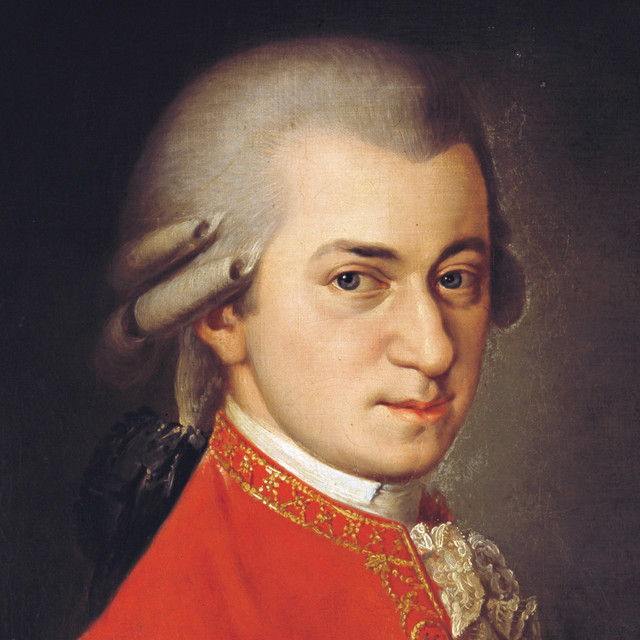
Wolfgang Amadeus Mozart was not only one of the greatest composers of the Classical period, but one of the greatest of all time.Spotify
Surprisingly, he is not identified with radical formal or harmonic innovations, or with the profound kind of symbolism heard in some of Bach's works. Mozart's best music has a natural flow and irresistible charm, and can express humor, joy or sorrow with both conviction and mastery.Spotify
His operas, especially his later efforts, are brilliant examples of high art, as are many of his piano concertos and later symphonies. Even his lesser compositions and juvenile works feature much attractive and often masterful music. Mozart was the last of seven children, of whom five did not survive early childhood.Spotify
By the age of three he was playing the clavichord, and at four he began writing short compositions. Young Wolfgang gave his first public performance at the age of five at Salzburg University, and in January 1762, he performed on harpsichord for the Elector of Bavaria. There are many astonishing accounts of the young Mozart's precocity and genius.Spotify
At the age of seven, for instance, he picked up a violin at a musical gathering and sight-read the second part of a work with complete accuracy, despite his never having had a violin lesson. In the years 1763-1766, Mozart, along with his father Leopold, a composer and musician, and sister Nannerl, also a musically talented child, toured London, Paris, and other parts of Europe, giving many successful concerts and performing before royalty. The Mozart family returned to Salzburg in November 1766.Spotify
The following year young Wolfgang composed his first opera, Apollo et Hyacinthus. Keyboard concertos and other major works were also coming from his pen now. In 1769, Mozart was appointed Konzertmeister at the Salzburg Court by the Archbishop.Spotify
Beginning that same year, the Mozarts made three tours of Italy, where the young composer studied Italian opera and produced two successful efforts, Mitridate and Lucio Silla. In 1773, Mozart was back in Austria, where he spent most of the next few years composing. He wrote all his violin concertos between 1774 and 1777, as well as Masses, symphonies, and chamber works.Spotify
In 1780, Mozart wrote his opera Idomeneo, which became a sensation in Munich. After a conflict with the Archbishop, Mozart left his Konzertmeister post and settled in Vienna. He received a number of commissions now and took on a well-paying but unimportant Court post.Spotify
In 1782 Mozart married Constanze Weber and took her to Salzburg the following year to introduce her to his family. 1782 was also the year that saw his opera Die Entführung aus dem Serail staged with great success. In 1784, Mozart joined the Freemasons, apparently embracing the teachings of that group.Spotify
He would later write music for certain Masonic lodges. In the early- and mid-1780s, Mozart composed many sonatas and quartets, and often appeared as soloist in the 15 piano concertos he wrote during this period. Many of his commissions were for operas now, and Mozart met them with a string of masterpieces.Spotify
Le nozze di Figaro came 1786, Don Giovanni in 1787, Così fan tutte in 1790 and Die Zauberflöte in 1791. Mozart made a number of trips in his last years, and while his health had been fragile in previous times, he displayed no serious condition or illness until he developed a fever of unknown origin near the end of 1791.Spotify
role: composer · 90%era: Classicalmovement: Classical1756–1791
Movement
Classical
How this movement sounds
balanced phrasesclear cadencessonata formtheme contrastAlberti basstransparent texture
Classical-period listening cues: balance, clarity, and symmetry. Melodies often come in neat, singable phrases with obvious cadences (musical punctuation).
A common feeling is contrast and conversation: a theme in one mood, then a second theme in a different key/character, and a clear return later (sonata form thinking).
Harmony is usually goal-directed and stable; textures are often transparent so you can track the main line. In keyboard writing, Alberti bass (broken-chord accompaniment) is a frequent signature.
The drama is often in structure: the development section may fragment and recombine themes, wander through keys (modulation), then snap back to a satisfying return.
If you're unsure what to listen for: try counting phrase lengths (often 4 or 8 bars) and notice how the music 'sets up' a cadence, lands, then resets.
How Wolfgang Amadeus Mozart sounds
clear phrasesbalanced formcadenceslight texturetheme & variation
Classical-era style often emphasizes clarity: balanced phrases, transparent textures, and forms you can "hear" (sonata form, variations).
Expect crisp cadences, conversational dynamics, and melodic ideas that are stated, developed, and returned in a satisfying arc.
Drama comes from contrast and structure rather than sheer density: bright vs shadow, tension vs release, symmetry vs surprise.
Wikipedia
Wolfgang Amadeus Mozart (27 January 1756 – 5 December 1791) was a Classical composer and musician.Wikipedia
He completed more than 800 works in his life—including outstanding examples of most of the genres of his time: symphonies, concertos, chamber music, opera, and choral music—and is regarded as one of the greatest composers in the history of Western music. Born in Salzburg, Mozart quickly emerged as a child prodigy under the training of his father Leopold, a skilled pedagogue.Wikipedia
At the age of five he was already competent on keyboard and violin, had begun to compose, and had performed before European royalty. His father took him on a grand tour of Europe and then three trips to Italy. At 17 he was a musician at the Salzburg court but grew restless and travelled in search of a better position.Wikipedia
A fruitless journey in search of employment (1777–1779) led him to Paris, Mannheim, Munich, and eventually back to Salzburg. During this time he wrote his five violin concertos, the Sinfonia Concertante, various masses, and the opera Idomeneo. While he was visiting Vienna in 1781, Mozart's quarrels with his Salzburg employers came to a head and he was dismissed.Wikipedia
He chose to remain in Vienna, where he stayed for the rest of his life, achieving fame and some financial success, but no long-term security. During Mozart's early years in Vienna he produced several notable works, such as the opera Die…Wikipedia
YouTube (channel bio)
Share your videos with friends, family, and the worldYouTube
Interview highlights
Built from indexed interview/masterclass transcripts (podcasts / YouTube). Quotes are direct excerpts with source links.
Interview highlights for Wolfgang Amadeus Mozart from 6 sources. Quotes below are direct excerpts; open the source link for context.
Topics that recur (auto): Music, Gang, Wolf, Leopold, Vienna, Years, Father, Opera.
Source: youtube_captions · Em6JpHSNPmo · 0:06 · published 2020-07-08 · Open source
Source: youtube_captions · 4oh5pIDQiUU · 10:14 · published 2014-11-23 · Open source
Source: youtube_captions · bdCMYjwzJgg · 10:54 · published 2020-03-17 · Open source
Source: youtube_captions · ppGU68ajUbM · 12:55 · published 2026-06-06 · Open source
Source: youtube_captions · eW9dSj75oi8 · 95:12 · published 2025-11-15 · Open source
Source: youtube_captions · DxpxHedTqxQ · 1:24 · published 2011-03-04 · Open source
Transcript sources (15)
Study resources & scores
Curated study material and indexed score links related to Wolfgang Amadeus Mozart.
Lecture 18. Piano Music of Mozart and Beethoven
Yale (YouTube) · lecture · youtube, transcript
Lecture 17. Mozart and His Operas
Yale (YouTube) · lecture · youtube, transcript
Lecture 6. Melody: Mozart and Wagner
Yale (YouTube) · lecture · youtube, transcript
Local matches
Matches your current indexed library (videos table). This will be sparse until connectors run.


France Musique · published 2026-06-19
« Historique » : la BnF découvre un manuscrit inédit de Mozart
2026
Free

 Play video
YouTube · published 2026-05-10 · 33m
Antonio Wolanin - Wolfgang Amadeus Mozart’s Concert Hall (2026)
202633m
FreeLongLive
 Play video
YouTube · published 2026-05-07 · 48m
S.T.E.P - Wolfgang Amadeus Mozart Concert Hall - Classical Music For All Ages (2026)
202648m
FreeFull concertLongLive

France Musique · published 2026-05-01
Quelle musique entendez-vous sur "La Chute d'Icare" d'Henri Matisse ?
2026
Free

 Play video
YouTube · published 2025-10-20 · 32m
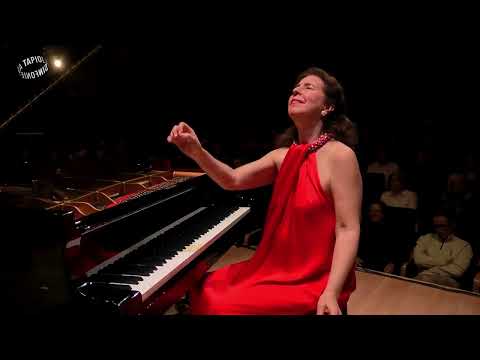
Wolfgang Amadeus Mozart: Concerto for Piano and Orchestra No. 21 C major, K.467
FreeLongLive
 Play video
YouTube · published 2025-08-05 · 54m
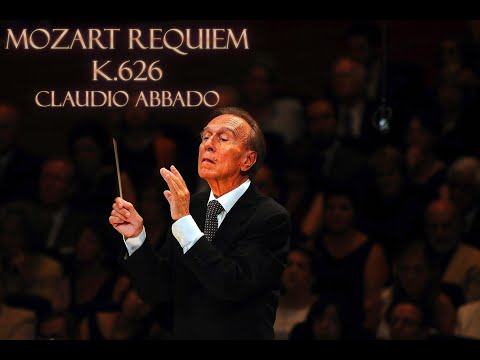
Wolfgang Amadeus Mozart - Requiem - Full Concert - Claudio Abbado
202554mRequiem
FreeFull concertLongLive
 Play video
YouTube · published 2021-07-11 · 47m
Wolfgang Amadeus Mozart - Requiem - Full Concert - English National Opera - Mark Wigglesworth
202147mRequiem
FreeFull concertLongLive
 Play video
YouTube · published 2018-02-13 · 35m
Gidon Kremer und die Kremerata Baltica - Wolfgang Amadeus Mozart Sinfonie Concert
201835m
FreeLongLive
 Play video
YouTube · 31m
Wolfgang Amadeus Mozart: Clarinet Concerto in A major, K.622
FreeLong
Saved playlist songs
Tracks from your saved Spotify playlist that are attributable to Wolfgang Amadeus Mozart.
No Spotify playlist is seeded yet.
No attributable tracks for this person in your saved playlist songs yet.