Sergei Rachmaninoff
Your profile, built from Spotify + Wikipedia/Wikidata + your indexed library.
Born / died
1873-1943
Movement
Romantic
Location
Born in Starorussky Uyezd
Friends / contemporaries
Pyotr Ilyich Tchaikovsky, Sergei Prokofiev, Alexander Scriabin +3 more

Sergey Rachmaninov was the last, great representative of the Russian Romantic tradition as a composer, but was also a widely and highly celebrated pianist of his time.Spotify
His piano concertos, the Rhapsody on a Theme of Paganini, and his preludes famously test pianists' skills. His Symphony No.Spotify
2, the tone poem Isle of the Dead, and his Cello Sonata are also notable. The passionate melodies and rich harmonies of his music have been called the perfect accompaniment for love scenes, but in a greater sense they explore a range of emotions with intense and compelling expression. Sergey Vasilyevich Rachmaninov, born in Semyonovo, Russia, on April 1, 1873, came from a music-loving, land-owning family; young Sergey's mother fostered the boy's innate talent by giving him his first piano lessons.Spotify
After a decline in the family fortunes, the Rachmaninovs moved to St. Petersburg, where Sergey studied with Vladimir Delyansky at the Conservatory. As his star continued to rise, Sergey went to the Moscow Conservatory, where he received a sound musical training: piano lessons from the strict disciplinarian Nikolay Zverev and Alexander Siloti (Rachmaninov's cousin), counterpoint with Taneyev, and harmony with Arensky.Spotify
During his time at the Conservatory, Rachmaninov boarded with Zverev, whose weekly musical Sundays provided the young musician the valuable opportunity to make important contacts and to hear a wide variety of music. As Rachmaninov's conservatory studies continued, his burgeoning talent came into full flower; he received the personal encouragement of Tchaikovsky, and, a year after earning a degree in piano, took the Conservatory's gold medal in composition for his opera Aleko (1892). Early setbacks in his compositional career -- particularly, the dismal reception of his Symphony No.Spotify
1 (1895) -- led to an extended period of depression and self-doubt, which he overcame with the aid of hypnosis. With the resounding success of his Piano Concerto No. 2 (1900-1901), however, his lasting fame as a composer was assured.Spotify
The first decade of the 20th century proved a productive and happy one for Rachmaninov, who during that time produced such masterpieces as the Symphony No. 2 (1907), the tone poem Isle of the Dead (1907), and the Piano Concerto No. 3 (1909).Spotify
On May 12, 1902, the composer married his cousin, Natalya Satina. By the end of the decade, Rachmaninov had embarked on his first American tour, which cemented his fame and popularity in the United States. He continued to make his home in Russia but left permanently following the Revolution in 1917; he thereafter lived in Switzerland and the United States between extensive European and American tours.Spotify
While his tours included conducting engagements (he was twice offered, and twice refused, leadership of the Boston Symphony Orchestra), it was his astounding pianistic abilities which won him his greatest glory. Rachmaninov was possessed of a keyboard technique marked by precision, clarity, and a singular legato sense. Indeed, the pianist's hands became the stuff of legend.Spotify
He had an enormous span -- he could, with his left hand, play the chord C-E flat-G-C-G -- and his playing had a characteristic power, which pianists have described as "cosmic" and "overwhelming." He is, for example, credited with the uncanny ability to discern, and articulate profound, mysterious movements in a musical composition which usually remain undetected by the superficial perception of rhythmic structures. Fortunately for posterity, Rachmaninov recorded much of his own music, including the four piano concerti and what is perhaps his most beloved work, the Rhapsody on a Theme of Paganini (1934). He became an American citizen a few weeks before his death in Beverly Hills, CA, on March 28, 1943.Spotify
role: composer · 90%era: Romanticmovement: Romantic1873–1943
Movement
Romantic
How this movement sounds
rubatochromatic harmonybig climaxesricher timbrelong lyrical linesnarrative feel
Romantic listening cues: heightened emotion, longer lyrical melodies, and more freedom with rubato (flexible timing) in performance.
Harmony is often more chromatic, with colorful chords and side-steps that create tension and release over longer spans. You may hear more delayed resolutions and more 'yearning' harmonic motion.
Dynamics and texture often expand: thicker sonorities, bigger climaxes, and a strong sense of narrative or character (even in purely instrumental music).
In piano music, listen for the use of pedaling and resonance to create a halo around harmony; in orchestral music, listen for richer timbre and denser voicing (inner lines matter).
A useful trick: follow the bass line. In Romantic music it often shapes the drama, pulling the harmony through longer arcs rather than short phrase punctuation.
How Sergei Rachmaninoff sounds
rubatorich harmonylong melodybig dynamicscoloristic pedal
Romantic music tends to foreground emotion and color: long singing melodies, flexible tempo (rubato), and harmony that stretches and sighs.
You often hear thicker textures, wider dynamic range, and a more "orchestral" use of the piano with deep bass and resonant pedaling.
Look for heightened contrast and personal voice: the same musical gesture can feel intimate one moment and heroic the next.
Wikipedia
Sergei Vasilyevich Rachmaninoff (1 April [O.S.Wikipedia
20 March] 1873 – 28 March 1943) was a Russian composer, virtuoso pianist, and conductor. Rachmaninoff is widely considered one of the finest pianists of his day and, as a composer, one of the last great representatives of Romanticism in Russian classical music.Wikipedia
Early influences of Tchaikovsky, Rimsky-Korsakov, and other Russian composers gave way to a thoroughly personal idiom notable for its song-like melodicism, expressiveness, dense contrapuntal textures, and rich orchestral colours. The piano is featured prominently in Rachmaninoff's compositional output and he used his skills as a performer to fully explore the expressive and technical possibilities of the instrument. Born into a musical family, Rachmaninoff began learning the piano at the age of four.Wikipedia
He studied piano and composition at the Moscow Conservatory, from which he graduated in 1892, having already written several compositions. In 1897, following the disastrous premiere of his Symphony No. 1, Rachmaninoff entered a four-year depression and composed little, until supportive therapy allowed him to complete his very well-received Piano Concerto No.Wikipedia
2 in 1901. Rachmaninoff went on to become conductor of the Bolshoi Theatre from 1904 to 1906, and relocated to Dresden, Germany, in 1906. He later embarked upon his first tour of the United States as a concert pianist in…Wikipedia
Interview highlights
Built from indexed interview/masterclass transcripts (podcasts / YouTube). Quotes are direct excerpts with source links.
Interview highlights for Sergei Rachmaninoff from 6 sources. Quotes below are direct excerpts; open the source link for context.
Topics that recur (auto): Music, Know, Think, Piano, Rahmanov, Russian, Some, First.
Source: youtube_captions · 48scUbPaH-Q · 0:01 · published 2021-12-16 · Open source
Source: youtube_captions · 1m5BLB7AX_E · 6:01 · published 2024-04-02 · Open source
Source: youtube_captions · HuccjWZKQEA · 7:12 · published 2026-05-22 · Open source
Source: youtube_captions · aNsUtzZQ5S0 · 7:05 · published 2026-03-27 · Open source
Source: youtube_captions · 8P79b17MDfE · 6:37 · Open source
Source: youtube_captions · XoPHzgEUsk4 · 6:34 · published 2026-03-23 · Open source
Transcript sources (11)
Study resources & scores
Curated study material and indexed score links related to Sergei Rachmaninoff.
No related study resources yet. As more lectures, transcripts, and scores are indexed, they will show up here.
Local matches
Matches your current indexed library (videos table). This will be sparse until connectors run.

France Musique · published 2026-05-18
Sergei Rachmaninoff - Vsevolod Zavidov
2026
Free
 Play video
YouTube · published 2026-04-08 · 12m
Sergei Rachmaninoff - Piano Concerto No. 2 in C Minor, Mvt. I | FSYO Symphonic Orchestra
FreeLive
 Play video
YouTube · published 2025-08-29 · 36m
Sergei Rachmaninoff's Symphonic Dances | Minnesota Orchestra | Thomas Søndergård
FreeLongLive
 Play video
YouTube · published 2025-08-02 · 24m
Sergei Rachmaninoff - Concerto No. 1 | Russian National Orchestra & Boris Berezovsky
2025Concerto24m
FreeLongLive
 Play video
YouTube · published 2024-07-14 · 1h 3m
Sergei Rachmaninoff: Symphony No. 2 // Andris Poga
FreeFull concertLongLive
 Play video
YouTube · published 2023-02-12 · 36m
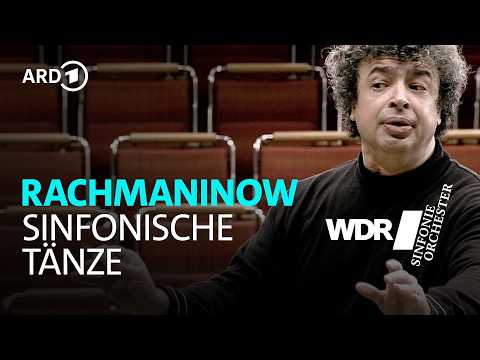
Sergei Rachmaninoff - Symphonic Dances op. 45 | Semyon Bychkov | WDR Symphony Orchestra
FreeLongLive
 Play video
YouTube · published 2022-10-10 · 36m
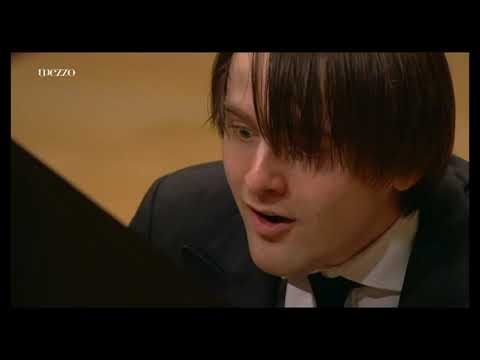
Daniil TRIFONOV - Sergei Rachmaninoff - concert for piano and orchestra No. 1 F Sharp Minor
202236m
FreeLongLive
 Play video
YouTube · published 2021-08-06 · 33m
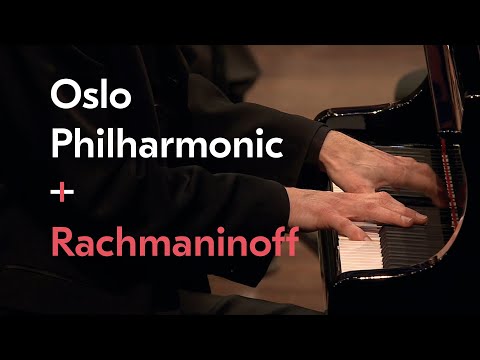
Piano Concerto No. 2 / Sergei Rachmaninoff / Håvard Gimse / Vasily Petrenko / Oslo Philharmonic
2021Concerto33m
FreeLongLive
 Play video
YouTube · published 2020-08-06 · 1h 1m
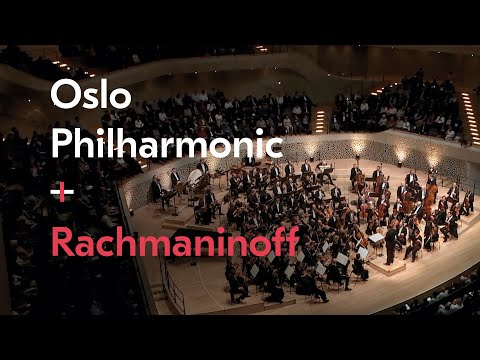
Symphony No. 2 / Sergei Rachmaninoff / Vasily Petrenko / Oslo Philharmonic
2020Symphony1h 1m
FreeFull concertLongLive
 Play video
YouTube · published 2020-08-06 · 55m
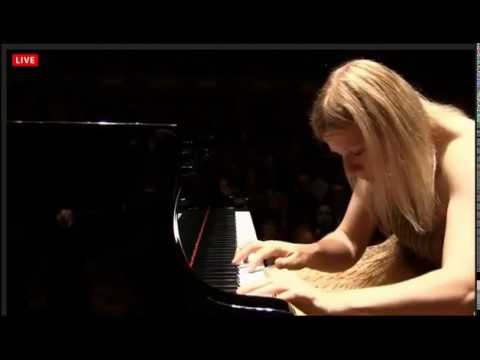
Valentina Lisitsa plays Sergei Rachmaninoff Piano Concerto #3 live in Rotterdam
2020Concerto55m
FreeFull concertLongLive
Saved playlist songs
Tracks from your saved Spotify playlist that are attributable to Sergei Rachmaninoff.
No Spotify playlist is seeded yet.
No attributable tracks for this person in your saved playlist songs yet.