Sergei Prokofiev
Your profile, built from Spotify + Wikipedia/Wikidata + your indexed library.
Born / died
1891-1953
Movement
Romantic
Location
Born in Sontsivka
Friends / contemporaries
Pyotr Ilyich Tchaikovsky, Sergei Rachmaninoff, Daniela Ruso +3 more

By breathing new life into the symphony, sonata, and concerto, Sergey Prokofiev emerged as one of the truly original musical voices of the 20th century.Spotify
Bridging the worlds of pre-revolutionary Russia and the Stalinist Soviet Union, Prokofiev enjoyed a successful worldwide career as a composer and pianist. As in the case of most other Soviet-era composers, his creative life and his music suffered under the duress of official Party strictures.Spotify
Despite the detrimental personal and professional effects of such outside influences, Prokofiev continued to produce music marked by a singular skill, inventiveness, and élan until the end of his career. As an only child (his sisters had died in infancy), Prokofiev lived a comfortable, privileged life, which gave him a heightened sense of self-worth and an indifference to criticism, an attitude that would change as he matured. His mother taught him piano, and he began composing around the age of five.Spotify
He eventually took piano, theory, and composition lessons from Reyngol'd Gliere, then enrolled at the St. Petersburg Conservatory when he was 13. He took theory with Lyadov, orchestration with Rimsky-Korsakov, and became lifelong friends with Nicolai Myaskovsky.Spotify
After graduating, he began performing in St. Petersburg and in Moscow, then in Western Europe, all the while writing more and more music. Prokofiev's earliest renown, therefore, came as a result of both his formidable pianistic technique and the works he wrote to show it off.Spotify
He sprang onto the Russian musical scene with works like the Sarcasms, Op. 17 (1912-1914) and Visions fugitives, Op. 22 (1915-1917), and his first few piano sonatas.Spotify
He also wrote orchestral works, concertos, and operas, and met with Diaghilev about producing ballets. The years immediately after the Revolution were spent in the U.S., where Prokofiev tried to follow Rachmaninov's lead and make his way as a pianist/composer. His commission for The Love for Three Oranges came from the Chicago Opera in 1919, but overall Prokofiev was disappointed by his American reception, and he returned to Europe in 1922.Spotify
He married singer Lina Llubera in 1923, and the couple moved to Paris. He continued to compose on commission, meeting with mixed success from both critics and the public. He had maintained contact with the Soviet Union, and even toured there in 1927.Spotify
The Love for Three Oranges was part of the Soviet opera repertory, and the government commissioned the music for the film Lieutenant Kijé and other pieces. In 1936, he decided to return to the Soviet Union with his wife and two sons. Most of his compositions from just after his return, including many for children, were written with the political atmosphere in mind.Spotify
One work which wasn't was the 1936 ballet Romeo and Juliet, which became an international success. He attempted another opera in 1939, Semyon Kotko, but was met with hostility from cultural ideologues. During World War II, Prokofiev and other artists were evacuated from Moscow.Spotify
He spent the time in various places within the U.S.S.R. and produced propaganda music, but also violin sonatas, his "War Sonatas" for piano, the String Quartet No. 2, the opera War and Peace, and the ballet Cinderella. In 1948, with the resolution that criticized almost all Soviet composers, several of Prokofiev's works were banned from performance.Spotify
His health declined and he became more insecure. The composer's last creative efforts were directed largely toward the production of "patriotic" and "national" works, typified by the cantata Flourish, Mighty Homeland (1947), and yet Prokofiev also continued to produce worthy if lesser-known works like the underrated ballet The Stone Flower (1943). In a rather bitter coincidence, Prokofiev died on March 5, 1953, the same day as Joseph Stalin.Spotify
~ TiVo Staff, Rovi
role: composer · 90%era: Romanticmovement: Romantic1891–1953
Movement
Romantic
How this movement sounds
rubatochromatic harmonybig climaxesricher timbrelong lyrical linesnarrative feel
Romantic listening cues: heightened emotion, longer lyrical melodies, and more freedom with rubato (flexible timing) in performance.
Harmony is often more chromatic, with colorful chords and side-steps that create tension and release over longer spans. You may hear more delayed resolutions and more 'yearning' harmonic motion.
Dynamics and texture often expand: thicker sonorities, bigger climaxes, and a strong sense of narrative or character (even in purely instrumental music).
In piano music, listen for the use of pedaling and resonance to create a halo around harmony; in orchestral music, listen for richer timbre and denser voicing (inner lines matter).
A useful trick: follow the bass line. In Romantic music it often shapes the drama, pulling the harmony through longer arcs rather than short phrase punctuation.
How Sergei Prokofiev sounds
rubatorich harmonylong melodybig dynamicscoloristic pedal
Romantic music tends to foreground emotion and color: long singing melodies, flexible tempo (rubato), and harmony that stretches and sighs.
You often hear thicker textures, wider dynamic range, and a more "orchestral" use of the piano with deep bass and resonant pedaling.
Look for heightened contrast and personal voice: the same musical gesture can feel intimate one moment and heroic the next.
Wikipedia
Sergei Sergeyevich Prokofiev (27 April [O.S.Wikipedia
15 April] 1891 – 5 March 1953) was a Russian composer, pianist, and conductor who later worked in the Soviet Union. As the creator of acknowledged masterpieces across numerous music genres, he is regarded as one of the major composers of the 20th century.Wikipedia
His works include such widely heard pieces as the March from The Love for Three Oranges, the suite Lieutenant Kijé, the ballet Romeo and Juliet—from which "Dance of the Knights" is taken—and Peter and the Wolf. Of the established forms and genres in which he worked, he created—excluding juvenilia—seven completed operas, seven symphonies, eight ballets, five piano concertos, two violin concertos, a cello concerto, a symphony-concerto for cello and orchestra, and nine completed piano sonatas. A graduate of the Saint Petersburg Conservatory, Prokofiev initially made his name as an iconoclastic composer-pianist, achieving notoriety with a series of ferociously dissonant and virtuosic works for his instrument, including his first two piano concertos.Wikipedia
In 1915, Prokofiev made a decisive break from the standard composer-pianist category with his orchestral Scythian Suite, compiled from music originally composed for a ballet commissioned by Sergei Diaghilev of the Ballets Russes. Diaghilev commissioned three further ballets from Prokofiev—Chout, Le pas d'acier and The Prodigal Son—which, at…Wikipedia
Interview highlights
Built from indexed interview/masterclass transcripts (podcasts / YouTube). Quotes are direct excerpts with source links.
Interview highlights for Sergei Prokofiev from 3 sources. Quotes below are direct excerpts; open the source link for context.
Topics that recur (auto): Music, Years, Procofiev, Later, First, Work, Russian, During.
Source: youtube_captions · bahCOcTiTKc · 0:59 · published 2021-03-12 · Open source
Source: youtube_captions · ekHdUBF4jqc · 44:14 · published 2025-10-05 · Open source
Source: youtube_captions · BOzPbLDfS_U · 4:35 · published 2014-11-12 · Open source
Source: youtube_captions · bahCOcTiTKc · 1:30 · published 2021-03-12 · Open source
Source: youtube_captions · ekHdUBF4jqc · 45:22 · published 2025-10-05 · Open source
Source: youtube_captions · BOzPbLDfS_U · 8:05 · published 2014-11-12 · Open source
Transcript sources (6)
Study resources & scores
Curated study material and indexed score links related to Sergei Prokofiev.
No related study resources yet. As more lectures, transcripts, and scores are indexed, they will show up here.
Local matches
Matches your current indexed library (videos table). This will be sparse until connectors run.
 Play video
YouTube · published 2026-08-02 · 45m
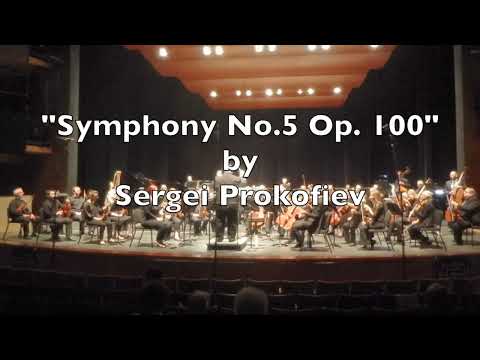
The Albuquerque Philharmonic Orchestra performs "Symphony No 5, Op 100" by Sergei Prokofiev.
2026Symphony45m
FreeFull concertLongLive
 Play video
YouTube · published 2026-06-27 · 36m
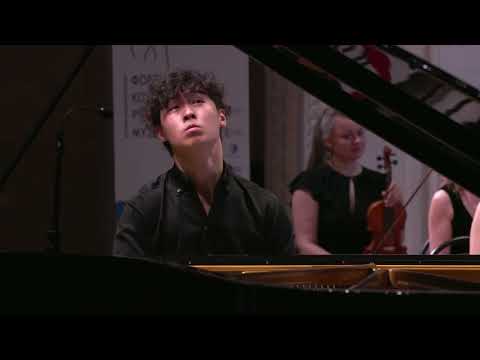
Sergei Prokofiev — Piano Concerto No. 2 in G minor, Op. 16 | Chenzhe Ni (Live, 2026)
2026ConcertoOp.36m
FreeLongLive
 Play video
YouTube · published 2026-05-12 · 10m
Berkshire Symphony Soloist Gala - Sergei Prokofiev Piano Concerto No. 3, op. 26
2026ConcertoSymphonyOp.10m
FreeLive
 Play video
YouTube · published 2026-03-31 · 39m
Sergei Prokofiev - Piano Concerto No. 3 / Sarcasms - London Royal Phil. Orchestra / Yuri Temirkanov
2026Concerto39m
FreeLongLive
 Play video
YouTube · published 2025-11-08 · 27m
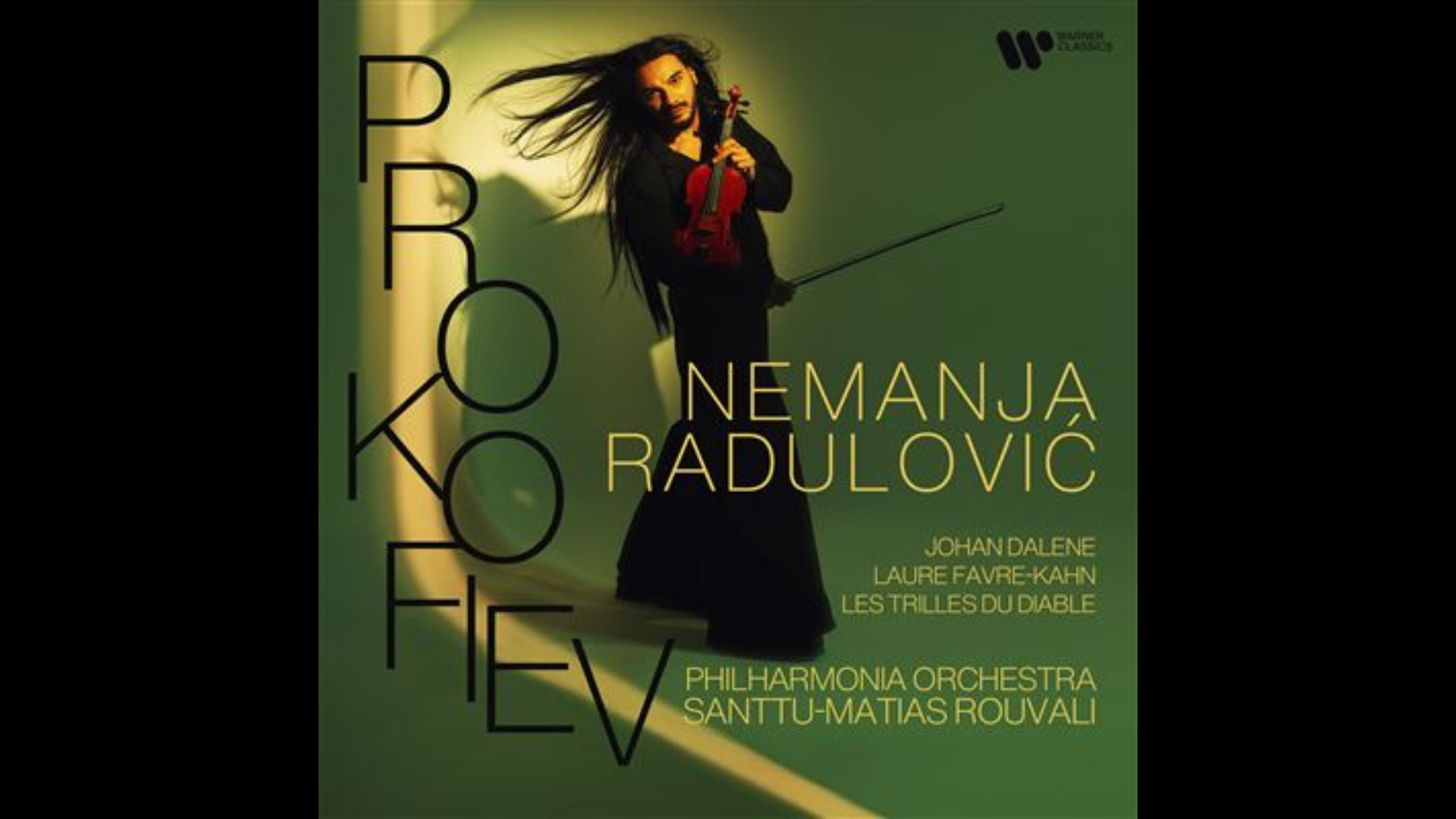
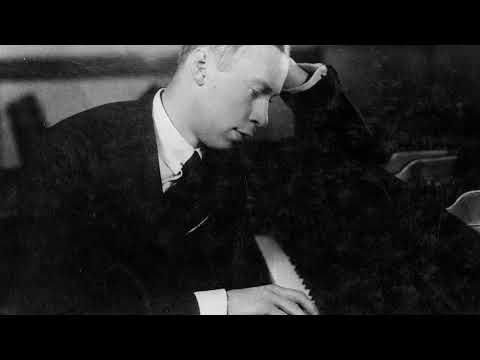
Sergei Prokofiev – Piano Concerto No. 3 – Maurizio Pollini, Maxim Shostakovich, NHK SO, 1974 (live)
1974Concerto27m
FreeLongLive
 Play video
YouTube · published 2025-08-05 · 36m
Sergei Prokofiev's Symphony No. 3 | Minnesota Orchestra | Paolo Bortolameolli
FreeLongLive
 Play video
YouTube · published 2025-06-23 · 2h 2m
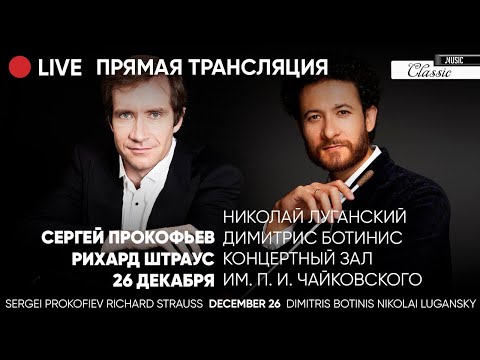
Richard STRAUSS Sergei PROKOFIEV I LIVE CONCERT Tchaikovsky Concert Hall CLASSIC MUSIC TV
20252h 2m
FreeFull concertLongLive
 Play video
YouTube · published 2025-03-18 · 42m
Sergei Prokofiev Recital
202542m
FreeLongLive
 Play video
YouTube · published 2023-08-06 · 23m
[Live] Sergei Prokofiev - Sonata for Cello and Piano in C major, Op. 119
2023SonataOp.23m
FreeLongLive
 Play video
YouTube · published 2023-07-11 · 28m
[Live] Sergei Prokofiev - Piano Sonata No. 6 in A major, Op. 82
2023SonataOp.28m
FreeLongLive
 Play video
YouTube · published 2023-04-13 · 54m
Ricardo Acosta - Sergei Prokofiev Sonatas nos 9 and 8 - Playtime Festival Bern 2023
202354m
FreeFull concertLongLive
 Play video
YouTube · published 2022-05-07 · 29m
Live Performance: Sergei Prokofiev's Piano Sonata No. 6 in A major, Op. 82
2022SonataOp.29m
FreeLongLive
 Play video
YouTube · published 2022-02-12 · 31m
Conor Stuart D.M.A. Recital - Sergei Prokofiev, Sonata for Violin and Piano in f op. 80
2022SonataOp.31m
FreeLongLive
 Play video
YouTube · published 2021-07-29 · 32m
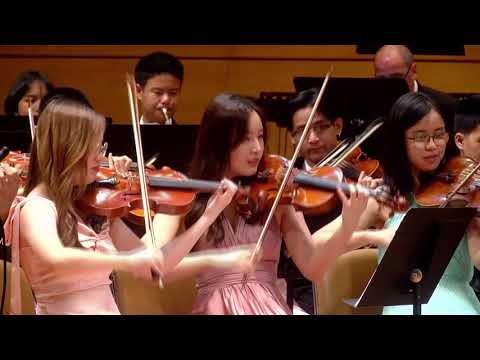
Sergei Prokofiev - Romeo and Juliet Suites - Thai Youth Orchestra
202132m
FreeLongLive
 Play video
YouTube · published 2021-02-12 · 10m
Junior Recital: Overture on Hebrew Themes By Sergei Prokofiev(1891–1953)
1953Overture10m
FreeLive
 Play video
YouTube · published 2020-08-06 · 2h 42m
Sergei Prokofiev - ROMEO & JULIET - Bolle & Copeland (Live La Scala - Milano)
20202h 42m
FreeFull concertLongLive
 Play video
YouTube · published 2020-08-06 · 29m
Sergei Prokofiev: Peter and the Wolf • Kaleidoscope Chamber Orchestra - Thomas Hudnut, narrator
FreeLongLive
 Play video
YouTube · published 2019-08-02 · 18m
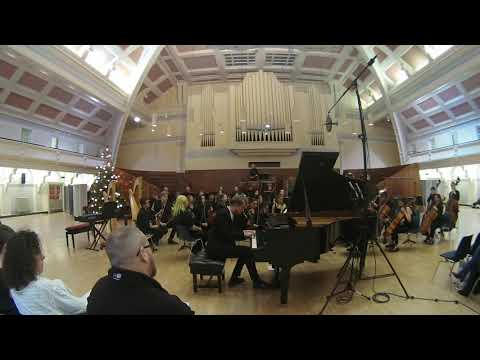
Sergei Prokofiev - Concerto for Piano and Orchestra No.1 - Mikhail Bozylev
2019Concerto18m
FreeLive
 Play video
YouTube · published 2019-02-13 · 27m
MUST Recital 1 Sergei Prokofiev's Violin Sonata No 1 in F minor, Op 80
2019Sonata27m
FreeLongLive
 Play video
YouTube · published 2017-08-07 · 1h 14m
Sergei Prokofiev Symphony Concerto op. 125 (Full)
2017ConcertoSymphonyOp.1h 14m
FreeFull concertLongLive
 Play video
YouTube · published 2017-07-14 · 29m
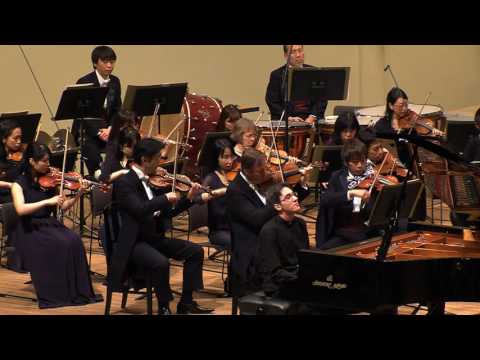
Alexander Gadjiev - Sergei Prokofiev Piano Concert n. 3 - Hamamatsu International Piano Competition
201729m
FreeLongLive
 Play video
YouTube · published 2016-02-14 · 39m
Sergei Prokofiev : Alexander Nevsky, Op.78 (Yuri Temirkanov / St Petersburg Philharmonic Orchestra)
FreeLongLive
 Play video
YouTube · published 2015-08-04 · 35m
Sergei Prokofiev - Concerto per Pianoforte e Orchestra n. 2 - Beatrice Rana (pf.)
2015Concerto35m
FreeLongLive
 Play video
YouTube · published 2013-02-14 · 29m
Sergei Prokofiev: Peter and the Wolf. Vancouver Symphony Orchestra.
FreeLongLive
Saved playlist songs
Tracks from your saved Spotify playlist that are attributable to Sergei Prokofiev.
No Spotify playlist is seeded yet.
No attributable tracks for this person in your saved playlist songs yet.