Robert Schumann
Your profile, built from Spotify + Wikipedia/Wikidata + your indexed library.
Born / died
1810-1856
Movement
Romantic
Location
Lived in Schumann Haus, Leipzig
Friends / contemporaries
Franz Liszt, Frederic Chopin, Bedrich Smetana +3 more

One of the great composers of the 19th century, Schumann was the quintessential artist whose life and work embody the idea of Romanticism in music.Spotify
Schumann was uncomfortable with larger musical forms, such as the symphony and the concerto (nevertheless, representative works in these genres contain moments of great beauty), expressing the full range of his lyrical genius in songs and short pieces for piano. Schumann's extraordinary ability to translate profound, delicate -- and sometimes fleeting -- states of the soul is exemplified by works such as the song cycle Dichterliebe (A Poet's Love), after Heinrich Heine, and his brilliant collections of short piano pieces, including Phantasiestücke (Fantastic Pieces), Kinderszenen (Scenes form Childhood), and Waldszenen (Forest Scenes).Spotify
In his songs, as critics have remarked, Schumann attained the elusive union of music and poetry which Romantic poets and musicians defined as the ultimate goal of art. Schumann's father was a bookseller who encouraged Robert's musical and literary talents. Robert started studying piano at age 10.Spotify
In 1828, he enrolled at the University of Leipzig as a law student, although he found music, philosophy, and Leipzig's taverns more interesting than the law. He also began studies with a prominent Leipzig piano teacher, Friedrich Wieck. There was serious mental illness in Schumann's family, and the composer, who most likely suffered from a manic-depressive condition, approached madness with the typical Romantic combination of fear and fascination.Spotify
A compulsive womanizer and a heavy drinker, Schumann led a life that aggravated his psychological problems. His efforts to become a concert pianist failed after he developed partial paralysis of his right hand. According to a conventional story, the injury resulted from Schumann's compulsive use of a finger-strengthening device, but newer research points to mercury poisoning due to treatment for syphilis.Spotify
Schumann settled on a career as a composer and musical writer, co-founding the influential Neue Zeitschrift für Musik and attracting attention early with his prophetic praise of Chopin. Many of his articles take the form of dialogues featuring the "League of David," young artists fighting the "Philistines," and headed by his alter egos "Florestan" and "Eusebius," intended to represent the two contrasting facets -- one ebullient, the other reserved -- of his personality. Schumann's music, with its sharp changes in mood, also reflects his tumultuous inner life.Spotify
Wieck's highly talented pianist daughter Clara grew up and fell in love with Schumann, to her father's horror. Despite Wieck's opposition, Clara and Robert gained the legal right to marry in 1840, a day before Clara's 21st birthday. During this period Schumann composed feverishly.Spotify
Spellbound by a musical thought, he would work himself to exhaustion, enthusiastically cultivating a particular genre for a period of time. (For instance, 1841 was a "year of songs" in which he brought the Romantic song cycle to its apex). He virtually invented the short, poetic, descriptive Romantic piano work, and produced such works in glorious profusion in the late 1830s. Schumann tackled larger forms in the 1840s, partly at Clara's urging; his four mature symphonies retain a place in the repertoire, but his opera Genoveva failed.Spotify
He held several musical jobs, teaching at the newly-founded Leipzig Conservatory, eventually becoming town music director in Düsseldorf, but without much success. On February 27, 1854, he threw himself into the freezing waters of the Rhine. After his rescue, he voluntarily entered an asylum.Spotify
Although he had periods of lucidity, his condition deteriorated, and he died there in 1856, probably of tertiary syphilis.Spotify
role: composer · 90%era: Romanticmovement: Romantic1810–1856
Movement
Romantic
How this movement sounds
rubatochromatic harmonybig climaxesricher timbrelong lyrical linesnarrative feel
Romantic listening cues: heightened emotion, longer lyrical melodies, and more freedom with rubato (flexible timing) in performance.
Harmony is often more chromatic, with colorful chords and side-steps that create tension and release over longer spans. You may hear more delayed resolutions and more 'yearning' harmonic motion.
Dynamics and texture often expand: thicker sonorities, bigger climaxes, and a strong sense of narrative or character (even in purely instrumental music).
In piano music, listen for the use of pedaling and resonance to create a halo around harmony; in orchestral music, listen for richer timbre and denser voicing (inner lines matter).
A useful trick: follow the bass line. In Romantic music it often shapes the drama, pulling the harmony through longer arcs rather than short phrase punctuation.
How Robert Schumann sounds
rubatorich harmonylong melodybig dynamicscoloristic pedal
Romantic music tends to foreground emotion and color: long singing melodies, flexible tempo (rubato), and harmony that stretches and sighs.
You often hear thicker textures, wider dynamic range, and a more "orchestral" use of the piano with deep bass and resonant pedaling.
Look for heightened contrast and personal voice: the same musical gesture can feel intimate one moment and heroic the next.
Wikipedia
Robert Schumann (; German: [ˈʁoːbɐ̯t ˈʃuːman]; 8 June 1810 – 29 July 1856) was a German composer, pianist, and music critic of the early Romantic era.Wikipedia
He composed in all the main musical genres of the time, writing for solo piano, voice and piano, chamber groups, orchestra, choir and the opera. His works typify the spirit of the Romantic era in German music.Wikipedia
Schumann was born in Zwickau, Saxony, to an affluent middle-class family with no musical connections, and was initially unsure whether to pursue a career as a lawyer or to make a living as a pianist-composer. He studied law at the universities of Leipzig and Heidelberg but his main interests were music and Romantic literature. From 1829 he was a student of the piano teacher Friedrich Wieck, but his hopes for a career as a virtuoso pianist were frustrated by a worsening problem with his right hand, and he concentrated on composition.Wikipedia
His early works were mainly piano pieces, including the large-scale Carnaval, Davidsbündlertänze (Dances of the League of David), Fantasiestücke (Fantasy Pieces), Kreisleriana and Kinderszenen (Scenes from Childhood) (1834–1838). He was a co-founder of the Neue Zeitschrift für Musik (New Musical Journal) in 1834 and edited it for ten years. In his writing for the journal and in his music he distinguished between two contrasting aspects of his personality, dubbing these alter egos "Florestan"…Wikipedia
Interview highlights
Built from indexed interview/masterclass transcripts (podcasts / YouTube). Quotes are direct excerpts with source links.
Interview highlights for Robert Schumann from 6 sources. Quotes below are direct excerpts; open the source link for context.
Topics that recur (auto): Music, Then, Little, More, First, Piano, Time, Play.
Source: youtube_captions · r5OC_dtY134 · 1:38 · published 2025-02-04 · Open source
Source: youtube_captions · rdhWyOeM8uo · 3:12 · published 2025-01-30 · Open source
Source: youtube_captions · lDZbFqOrdek · 9:42 · published 2023-10-28 · Open source
Source: youtube_captions · hiZbXqmAkf4 · 6:24 · Open source
Source: youtube_captions · PFX9BFI3--g · 2:03 · published 2019-04-28 · Open source
Source: youtube_captions · aqsQJ37vW2c · 25:08 · published 2023-03-28 · Open source
Transcript sources (22)
Study resources & scores
Curated study material and indexed score links related to Robert Schumann.
No related study resources yet. As more lectures, transcripts, and scores are indexed, they will show up here.
Local matches
Matches your current indexed library (videos table). This will be sparse until connectors run.

France Musique · published 2026-09-30
Robert Schumann : Zwielicht - Matthias Goerne, Markus Hinterhäuser
2026Robert Schumann
Free

 Play video
YouTube · published 2026-08-04 · 35m
LIVE! Robert Schumann: “The Poet’s Love”. Oleksandr Chyshii (baritone), Yuliia Yakovina (piano)
202635m
FreeLongLive

France Musique · published 2026-08-03
Le programme classique de Max Dozolme : Autour de Clara Schumann
2026
Free
 Play video
YouTube · published 2026-07-15 · 44m
Robert Schumann: Piano Concerto in A minor, Op. 54 | Emil Gilels (Live, Moscow 1976)
FreeLongLive

France Musique · published 2026-06-26
Quelle musique entendez-vous sur "Les Dix plus grands, n° 2 (Enfance)" d'Hilma af Klint ?
2026
Free

France Musique · published 2026-06-24
Adam Laloum : "Mes prises de position ont une incidence sur ma carrière"
2026Adam Laloum
Free

France Musique · published 2026-06-24
La Matinale avec Adam Laloum, grand romantique
2026
Free
 Play video
YouTube · published 2026-06-23 · 36m
Robert Schumann (1810–1856): Concerto for violin and orchestra in D minor, WoO 23
2026Concerto36m
FreeLongLive
 Play video
YouTube · published 2026-06-23 · 31m
Robert Schumann – Piano Quintet in E-flat Major, Op. 44 Argerich Festival Live Hamburg 2026
2026Op.31m
FreeLongLive

France Musique · published 2026-06-15
Les Lieder de Schumann selon Lotte Lehmann
2026
Free
 Play video
YouTube · published 2026-06-13 · 1h 15m
Robert Schumann (1810 - 1856) | Piano recital | Géza Anda - Live recording
20261h 15m
FreeFull concertLongLive

France Musique · published 2026-06-04
Le pianiste Radu Lupu joue les concertos de Grieg et Schumann
2026
FreeFull concert

France Musique · published 2026-05-25
Joachim Raff : Dame Kobold - West Bohemian Symphony Orchestra, Choir of the Theatre of the City of Ústí nad Labem
FreeFull concert

France Musique · published 2026-05-22
Schubert, Schumann - Arcadi Volodos
2026
Free
 Play video
YouTube · published 2026-05-18 · 2h 6m
ROBERT SCHUMANN. Piano works from 1829-1835 – Live concert – Rem Urasin. “GREAT ROMANTICS” series.
20262h 6m
FreeFull concertLongLive
France Musique · published 2026-03-13
Tugan Sokhiev dirige le Philhar' de Radio France dans un programme Unsuk Chin, Schumann & Stravinsky
2026
FreeFull concert
 Play video
ARTE Concert · published 2026-02-19 · 1h 34m
Robert Schumann : Le Paradis et la Péri - ARTE Concert
FreeFull concertLong
Play videoYouTube · published 2026-02-16 · 1h 34m
Robert Schumann : Le Paradis et la Péri - ARTE Concert
FreeFull concertLongLive
 Play video
YouTube · published 2025-10-09 · 2h 35m
Robert Schumann Competition 2025 | Final Concert
20252h 35m
FreeFull concertLongLive
 Play video
YouTube · published 2025-10-09 · 13m
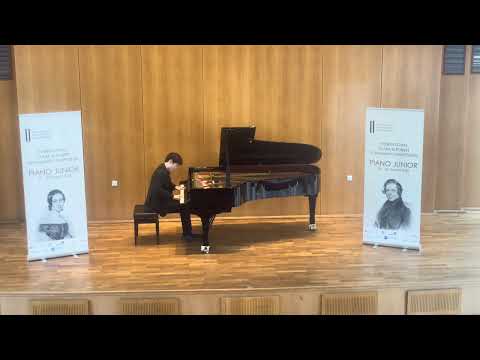
🥇 1st Prize GROUP B Ren Zhang - International Clara and Robert Schumann Competition 2025
202513m
FreeLive
 Play video
YouTube · published 2025-10-09 · 7h 10m
Robert Schumann Competition 2025 | 2nd Round, Group A and B
20257h 10m
FreeFull concertLongLive
 Play video
YouTube · published 2025-10-09 · 3h 56m
Robert Schumann Competition 2025 | 2nd Round, Group C
20253h 56m
FreeFull concertLongLive
 Play video
YouTube · published 2025-08-04 · 32m
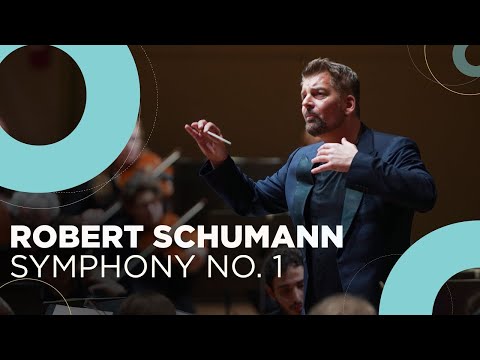
Spring Symphony - Sounds of Renewal and Joy! | Robert Schumann | Symphony No. 1
FreeLongLive
 Play video
YouTube · published 2025-08-02 · 29m
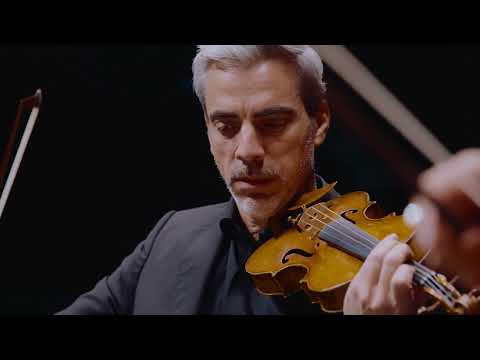
Trio Talweg: Robert Schumann - Trio N°3 Op.110 - Live in Paris - Théâtre des Bouffes du Nord
FreeLongLive
 Play video
Carnegie Hall · published 2025-06-20 · 16m
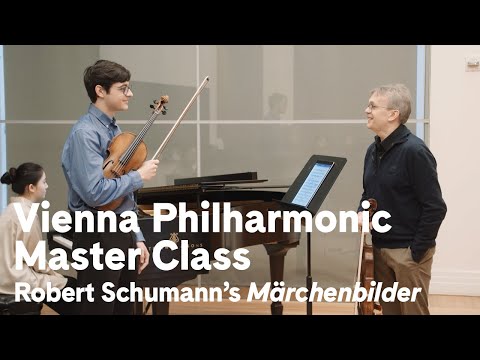
Vienna Philharmonic Viola Master Class with Tobias Lea: Robert Schumann’s “Märchenbilder,” Op. 113
2025Op.16m
Free
 Play video
YouTube · published 2025-05-01 · 28m
Ian Bostridge, Leif Ove Andsnes – Robert Schumann: Dichterliebe, Op. 48 (Live, Risør 2000)
2000Op.28m
FreeLongLive
 Play video
YouTube · published 2024-08-01 · 13m
Piano Concerto in A Minor, Op 54 - Robert Schumann - WSU Symphony Orchestra
2024ConcertoSymphony13m
FreeLive
 Play video
YouTube · published 2023-10-10 · 4h 23m
Robert Schumann Competition 2023 | Final Concert
20234h 23m
FreeFull concertLongLive
 Play video
YouTube · published 2023-07-05 · 39m
Robert Schumann (1810 - 1856) | Selected piano works | Sviatoslav Richter | Live recordings
FreeLongLive
 Play video
YouTube · published 2022-09-16 · 4h 5m
Robert Schumann Competition 2021 | Final Concert
20214h 5m
FreeFull concertLongLive
 Play video
YouTube · published 2022-09-14 · 27m
Robert Schumann "Faschingschwank aus Wien" op. 26 Olga Scheps Twitch live stream Konzert
2022Op.27m
FreeLongLive
 Play video
YouTube · published 2022-08-05 · 24m
Live: Robert Schumann Humoreske Op. 20 | Ruben Kozin, piano
2022Op.24m
FreeLongLive
 Play video
Wigmore Hall · published 2022-05-18 · 2m
Leon McCawley - Robert Schumann, Fantasiestücke Op. 12.: Warum?
2022Op.2m
FreeLive
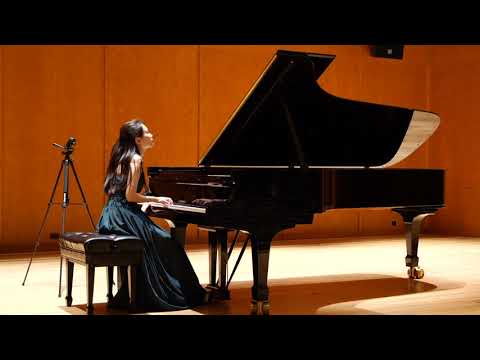 Play video
YouTube · published 2022-02-12 · 1h 3m
Hyejin Cho Piano Recital: Robert Schumann Sonata No. 1 & Humoreske
2022Sonata1h 3m
FreeFull concertLongLive
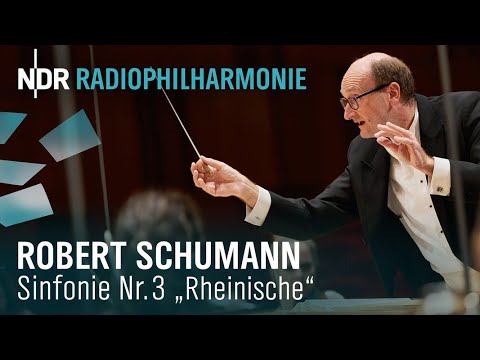 Play video
YouTube · published 2022-02-12 · 36m
Robert Schumann: Symphony No. 3 E-flat Major "Rhenish" with Andrew Manze | NDR Radiophilharmonie
FreeLongLive
 Play video
YouTube · published 2021-09-23 · 5h 0m
Robert Schumann Competition Düsseldorf 2021 - 2nd Round, Category C (online)
20215h 0m
FreeFull concertLongLive
 Play video
YouTube · published 2021-08-06 · 59m
Discover Robert Schumann - LIVE Piano Concert
202159m
FreeFull concertLongLive
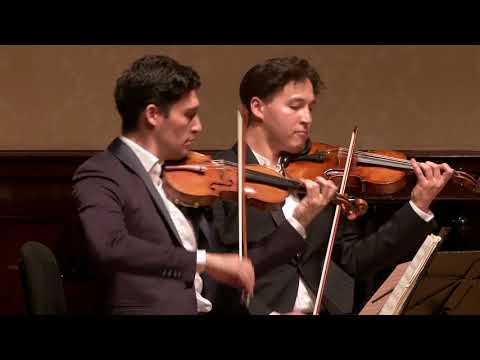 Play video
Wigmore Hall · published 2021-05-18 · 7m
Schumann Quartet - Robert Schumann, String Quartet in A Op. 41 No. 3, Finale: Allegro molto vivace
2021QuartetAllegroOp.7m
FreeLive
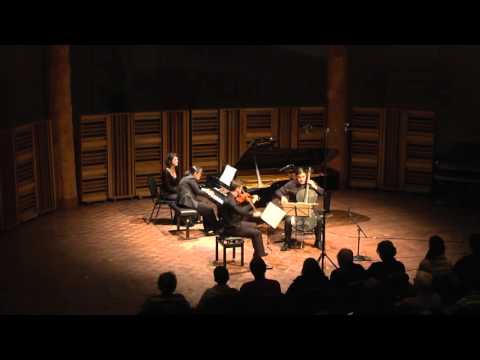 Play video
YouTube · published 2016-08-07 · 32m
Lyrebird Trio - Robert Schumann Piano Trio No.2, op.80 F major, Live Performance
2016TrioOp.32m
FreeLongLive
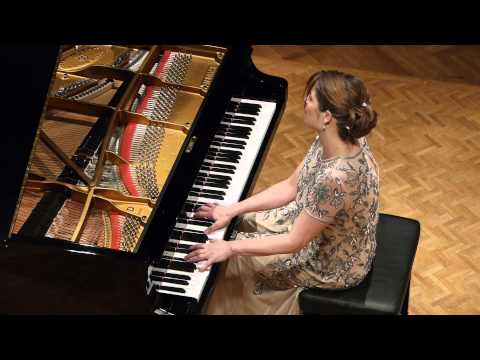 Play video
YouTube · published 2015-08-08 · 34m
Irina Georgieva plays Robert Schumann's "Kreisleriana". A live concert in the Tonhalle Zürich
201534m
FreeLongLive
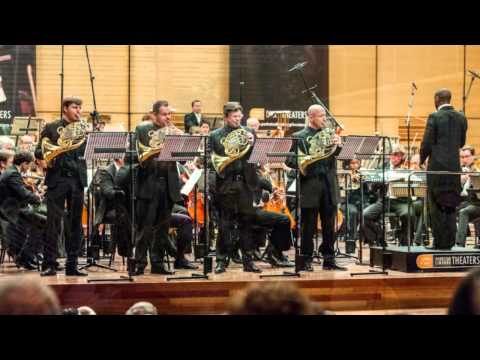 Play video
YouTube · published 2015-08-08 · 19m
Robert Schumann, Konzert for 4 Horns and Orchestra op. 86
2015Op.19m
FreeLive
 Play video
YouTube · published 2015-07-16 · 14m
Maurizio Pollini - Robert Schumann - Grand Concerto Without Orchestra, op.14 (1 of 2)
2015ConcertoOp.14m
FreeLive
 Play video
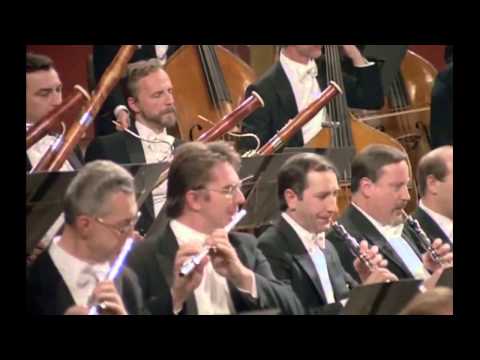
YouTube · published 2015-03-16 · 45m
Robert Schumann "Symphony No 2 in C Major "Bernstein
2015Symphony45m
FreeFull concertLongLive
 Play video
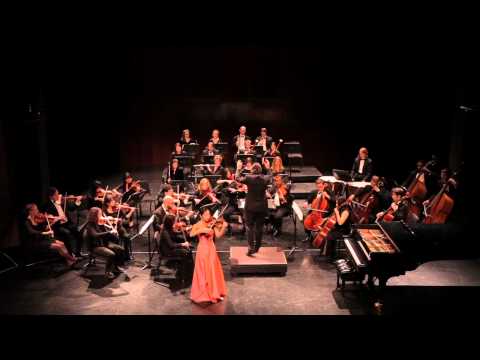
YouTube · published 2011-08-08 · 14m
Robert Schumann Fantasy for Violin and Orchestra Op. 131
2011Op.14m
FreeLive
Saved playlist songs
Tracks from your saved Spotify playlist that are attributable to Robert Schumann.
No Spotify playlist is seeded yet.
No attributable tracks for this person in your saved playlist songs yet.