Robert Massard
Your profile, built from Spotify + Wikipedia/Wikidata + your indexed library.
Born / died
1925-2025
Movement
20th-century classical
Location
Born in Pau
Friends / contemporaries
Alexandre Tharaud, Hélène Grimaud, Bertrand Chamayou +3 more
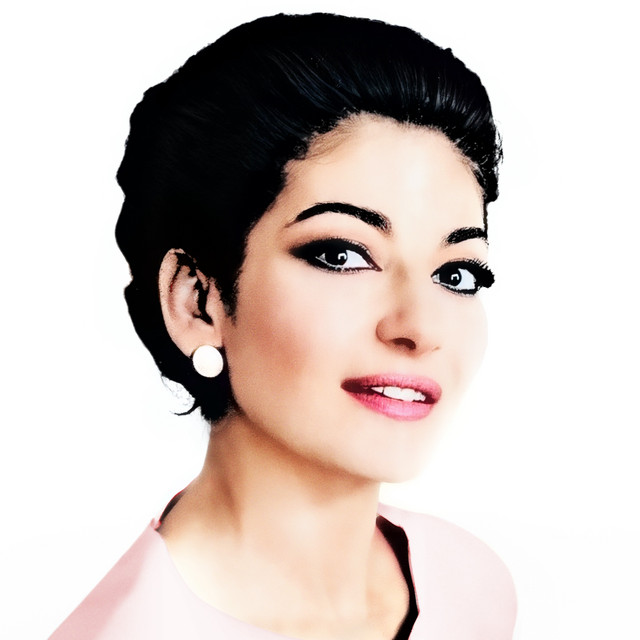
genres: opera, classical · followers: 387,571
The fame and legacy of Maria Callas are nearly unsurpassed in the modern history of opera.Spotify
Her fame has transcended the usual boundaries of classical music, and she has been the inspiration for several movies as well as the successful Broadway play "Master Class." Her extensive catalogue of recordings remains among the most coveted and controversial for both her fans and detractors. Though American by birth, Callas (born Maria Anne Sofia Cecilia Kalogeropoulos) was born of Greek parents, and at age 13 her mother took her back to Greece because of financial difficulties caused by the Great Depression.Spotify
She studied voice at the Royal Academy of Music in Athens with Spanish coloratura soprano Elvira de Hidalgo and made rapid progress; she soon sang Santuzza in a student production of Cavalleria rusticana. Her professional debut came at age 16 in a minor role in von Suppé's Boccaccio. While still in Athens during World War II, Callas sang her first Tosca in 1942.Spotify
In 1945, she returned to the United States and sang several auditions, but nothing came of her visit. Her first appearance in 1947 at Verona as La Gioconda brought her to the attention of Tullio Serafin; Serafin became her musical advisor for many years, acting as her coach and conductor of many of her performances. The entire world of opera was stunned when, in 1949 -- while singing Brünnhilde in Die Walküre at Venice -- she agreed to sing Elvira in Bellini's I Puritani, alternating performances during the same week.Spotify
That same year she traveled to Buenos Aires to sing Turandot and Norma. In 1950, she sang Aida at the Teatro alla Scala, but she did not become a regular member there until 1952. Summer of 1950 brought her to Mexico City where, in one month, she sang Norma, Aida, Tosca and Il trovatore.Spotify
During these early years, Callas would sing nearly any role offered including Isolde, Leonore in La forza del destino, Constanza in Mozart's Die Entführung aus dem Serail, and Elena in I vespri siciliani. As she matured, Callas began to concentrate on a smaller core repertory, including Cherubini's Medea, Bellini's Norma, Puccini's Tosca, Bellini's La Sonnambula, and Donizetti's Anna Bolena. Most of her other roles were heard only in one series of performances.Spotify
After 1959, she rarely appeared on the opera stage, but she did sing concerts in America and Europe. Her last opera performances were in June 1965, in Paris as Norma. She came out of retirement in 1973 to tour the world with Giuseppe di Stefano in a series of recitals.Spotify
Although financially rewarding, the tour did nothing to enhance her reputation. In 1971, she gave a series of masterclasses at the Juilliard School of Music in New York which were quite successful. In 1977, she died of a sudden heart attack in her Paris apartment.Spotify
Maria Callas was one of the most controversial singers of the twentieth century. She had a wide range from high E to the F below the staff, and an innate feel for the style of bel canto roles, but she was most notable for bringing a commitment and intensity to her dramatic portrayals that was nearly unprecedented at the time. Using photorealistic video projection, Callas was brought back to the stage for a new tour in 2018.Spotify
Callas in Concert features an interactive Callas on stage performing some of her most iconic recordings with a live orchestra.Spotify
role: unknown · 20%era: Modernmovement: 20th-century classical1925–2025
Movement
20th-century classical · Wikipedia
20th-century classical music is Western art music that was written between 1901 and 2000, inclusive. Musical style diverged during the 20th century as it never had previously, so this century was without a dominant style. Modernism, impressionism, and post-romanticism can all be traced to the decades before the turn of the 20th century, but can be included because they evolved beyond the musical boundaries of the 19th-century styles that were part of the earlier common practice period. Neoclassicism and expressionism came mostly after 1900. Minimalism started later in the century and can be seen as a change from the modern to postmodern era, although some date postmodernism from as early as about 1930. Aleatory, atonality, serialism, musique concrète, and electronic music were all developed during the century. Jazz and ethnic folk music became important influences on many composers during this century.
How this movement sounds
new harmoniesnew rhythmsneoclassicismatonalityminimalismsharp contrasts
20th-century classical listening cues: variety and experimentation. Some music keeps older forms (neoclassicism) but with sharper harmonies, leaner textures, and motoric rhythms.
Other strands move toward atonality (no clear tonal center) or explore new scales and sonorities; rhythm can become more complex, more mechanical, or more jagged.
Timbre and texture are often treated as structural elements: changes in sound color can function like 'harmonic' events.
A practical way to listen: instead of expecting a 'tune', track motives (tiny cells), rhythm, and register. Modern pieces often build form by transforming small units rather than by long melodies.
Minimalism is another common thread: repetition, gradual change, and a focus on pulse and process over long spans.
How Robert Massard sounds
new harmonyrhythmic bitecolor & textureminimal patternsextended techniques
Modern/contemporary music varies wildly, but you will often hear experimentation with harmony, rhythm, and sound color as primary material.
Some strands emphasize rhythmic bite and sharp contrasts; others explore timbre and atmosphere; minimalism builds from repeating patterns and gradual change.
If the music feels less about singable melody and more about texture, pulse, or color, you are probably hearing a modern idiom.
Wikipedia
Robert Massard (15 August 1925 – 26 December 2025) was a French baritone, primarily associated with the French repertory.Wikipedia
Study resources & scores
Curated study material and indexed score links related to Robert Massard.
No related study resources yet. As more lectures, transcripts, and scores are indexed, they will show up here.
Local matches
Matches your current indexed library (videos table). This will be sparse until connectors run.

France Musique · published 2026-04-06
Robert Massard : « Je ne me suis jamais pris pour un grand chanteur »
2026Robert Massard
Free
Saved playlist songs
Tracks from your saved Spotify playlist that are attributable to Robert Massard.
No Spotify playlist is seeded yet.
No attributable tracks for this person in your saved playlist songs yet.