Richard Wagner
Your profile, built from Spotify + Wikipedia/Wikidata + your indexed library.
Born / died
1813-1883
Movement
Romantic
Location
Born in Leipzig
Friends / contemporaries
Robert Schumann, Franz Liszt, Johannes Brahms +3 more

Richard Wagner was one of the most revolutionary figures in the history of music, a composer who made pivotal contributions to the development of harmony and musical drama that reverberate even today.Spotify
Indeed, though Wagner occasionally produced successful music written on a relatively modest scale, opera -- the bigger, the better -- was clearly his milieu, and his aesthetic is perhaps the most grandiose that Western music has ever known. Early in his career, Wagner learned both the elements and the practical, political realities of his craft by writing a handful of operas which were unenthusiastically, even angrily, received.Spotify
Beginning with Rienzi (1838-40) and The Flying Dutchman (1841), however, he enjoyed a string of successes that propelled him to immortality and changed the face of music. His monumental Ring cycle of four operas -- Das Rheingold (1853-54), Die Walküre (1854-56), Siegfried (1856-71) and Götterdämmerung (1869-74) -- remains the most ambitious and influential contribution by any composer to the opera literature. Tristan and Isolde (1857-59) is perhaps the most representative example of Wagner's musical style, which is characterized by a high degree of chromaticism, a restless, searching tonal instability, lush harmonies, and the association of specific musical elements (known as leitmotifs, the flexible manipulation of which is one of the hallmarks of Wagner's music) with certain characters and plot points.Spotify
Wagner wrote text as well as music for all his operas, which he preferred to call "music dramas." Wagner's life matched his music for sheer drama. Born in Leipzig on May 22, 1813, he began in the early 1830s to write prolifically on music and the arts in general; over his whole career, his music would to some degree serve to demonstrate his aesthetic theories. He often worked as a conductor in his early years; a conducting engagement took him to Riga, Latvia, in 1837, but he fled the country in the middle of the night two years later to elude creditors.Spotify
Wagner as a young man had some sympathy with the revolutionary movements of the middle 19th century (and even the Ring cycle contains a distinct anti-materialist and vaguely socialist drift); in the Dresden uprisings of 1849 he apparently took up arms, and he had to leave Germany when the police restored order. Settling in Zurich, Switzerland, he wrote little for some years, but evolved the intellectual framework for his towering, mature masterpieces. Wagner returned to Germany in 1864 under the protection and patronage of King Ludwig II of Bavaria; it was in Bayreuth, near Munich, that he undertook the construction of an opera house (completed in 1876) built to his personal specifications and suited to the massive fusion of music, staging, text, and scene design that his later operas entailed.Spotify
Bayreuth became something of a shrine for the fanatical Wagnerites who carried the torch after his death; it remains the goal of many a pilgrimage today. His attitude toward Jews was deeply ambivalent (he believed, mistakenly, that his stepfather was Jewish), but some of his writings contain anti-Semitic elements that have aroused considerable controversy among opera lovers, especially in view of Adolf Hitler's apparent predilection for the composer's music.Spotify
role: composer · 90%era: Romanticmovement: Romantic1813–1883
Movement
Romantic
How this movement sounds
rubatochromatic harmonybig climaxesricher timbrelong lyrical linesnarrative feel
Romantic listening cues: heightened emotion, longer lyrical melodies, and more freedom with rubato (flexible timing) in performance.
Harmony is often more chromatic, with colorful chords and side-steps that create tension and release over longer spans. You may hear more delayed resolutions and more 'yearning' harmonic motion.
Dynamics and texture often expand: thicker sonorities, bigger climaxes, and a strong sense of narrative or character (even in purely instrumental music).
In piano music, listen for the use of pedaling and resonance to create a halo around harmony; in orchestral music, listen for richer timbre and denser voicing (inner lines matter).
A useful trick: follow the bass line. In Romantic music it often shapes the drama, pulling the harmony through longer arcs rather than short phrase punctuation.
How Richard Wagner sounds
rubatorich harmonylong melodybig dynamicscoloristic pedal
Romantic music tends to foreground emotion and color: long singing melodies, flexible tempo (rubato), and harmony that stretches and sighs.
You often hear thicker textures, wider dynamic range, and a more "orchestral" use of the piano with deep bass and resonant pedaling.
Look for heightened contrast and personal voice: the same musical gesture can feel intimate one moment and heroic the next.
Wikipedia
Wilhelm Richard Wagner ( VAHG-nər; German: [ˈvɪlˌhɛlm ˈʁɪçaʁt ˈvaːɡnɐ] ; 22 May 1813 – 13 February 1883) was a German composer, theatre director, essayist, and conductor, best known for his operas, although his mature works are often referred to as music dramas.Wikipedia
Unlike most composers, Wagner wrote both the libretti and the music for all of his stage works. He first achieved recognition with works in the Romantic tradition of Carl Maria von Weber and Giacomo Meyerbeer, but revolutionised the genre through his concept of the Gesamtkunstwerk ("total work of art"), which sought to unite poetic, musical, visual, and dramatic elements.Wikipedia
In that approach, the drama unfolds as a continuously sung narrative, with the music evolving organically from the text rather than alternating between arias and recitatives. Wagner outlined those ideas in a series of essays published between 1849 and 1852, most fully realising them in the first half of his four-opera cycle Der Ring des Nibelungen (The Ring of the Nibelung). Wagner's compositions, particularly in his later period, have complex textures, rich harmonies and orchestration, and elaborate leitmotifs—musical phrases associated with individual characters, places, ideas, or plot elements.Wikipedia
His advances in musical language, such as extreme chromaticism and quickly shifting tonal centres, greatly influenced the development of classical music;…Wikipedia
Study resources & scores
Curated study material and indexed score links related to Richard Wagner.
Lecture 6. Melody: Mozart and Wagner
Yale (YouTube) · lecture · youtube, transcript
Local matches
Matches your current indexed library (videos table). This will be sparse until connectors run.

France Musique · published 2026-10-04
Le Crépuscule des dieux de Wagner dans les oreilles de la Tribune (1/2)
2026
Free

France Musique · published 2026-09-15
Waltraud Meier (2/5) : « On doit croire du fond du cœur que c’est ce qu’on pense. »
2026
Free

France Musique · published 2026-08-10
La Neuvième Symphonie de Beethoven par Christian Thielemann et l'Orchestre du Festival de Bayreuth
2026Symphony
FreeFull concert

France Musique · published 2026-06-27
Siegfried de Richard Wagner au Théâtre des Champs-Elysées
2026
FreeFull concert

France Musique · published 2026-06-11
Une nouvelle tétralogie
2026
FreeFull concert

France Musique · published 2026-06-03
Carl Maria von Weber dans la Gorge au loup
2026
FreeFull concert
 Play video
YouTube · published 2016-03-16 · 1h 24m
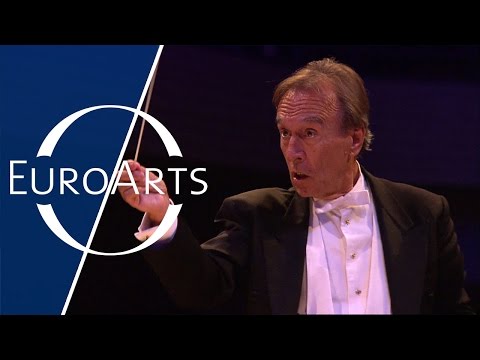
Richard Wagner - Tristan and Isolde (2nd act), concert performance (Lucerne Festival 2004)
20041h 24m
FreeFull concertLongLive
 Play video
YouTube · published 2013-03-17 · 13m
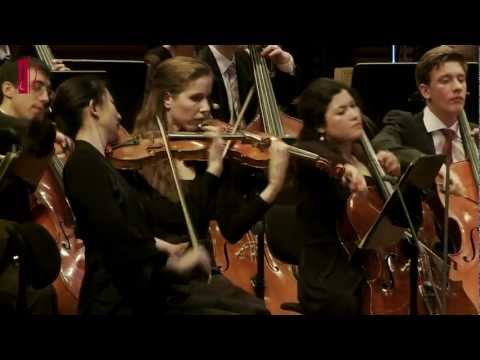
Richard Wagner: Rienzi Ouverture | University Orchestra Weimar
FreeLive
Saved playlist songs
Tracks from your saved Spotify playlist that are attributable to Richard Wagner.
No Spotify playlist is seeded yet.
No attributable tracks for this person in your saved playlist songs yet.