Richard Strauss
Your profile, built from Spotify + Wikipedia/Wikidata + your indexed library.
Born / died
1864-1949
Movement
Romantic
Location
Born in Munich
Friends / contemporaries
Anton Webern, Bedrich Smetana, Charles-Valentin Alkan +3 more

Though the long career of Richard Strauss spanned one of the most chaotic periods in political, social, and cultural history of the world, the composer retained his essentially Romantic aesthetic even into the age of television, jet engines, and atom bombs.Spotify
Born in Munich in 1864, Strauss was the son of Franz Joseph Strauss, the principal hornist in the Munich Court Orchestra. Strauss demonstrated musical aptitude at an early age, and extensive training in piano, violin, theory, harmony, and orchestration equipped him to produce music of extraordinary polish and maturity by the time he reached adulthood.Spotify
His primary teachers had been his father, who was a musical conservative, and Ludwig Thuille, a Munich School composer and family friend. Strauss' Serenade for 13 Winds, Op. 7 (1881), written when he was 17, led conductor Hans von Bülow to pronounce him "by far the most striking personality since Brahms." Bülow was able to give Strauss his first commission and an assistant conductor position.Spotify
Through new friendships, Strauss learned to admire the writings of Schopenhauer and Nietzsche and the music of Wagner and Liszt. He embarked on a long career of conducting and composing, which took him all over Europe and the U.S. From the beginning of Strauss' career as a composer, it was evident that the orchestra was his natural medium.Spotify
With the composition of the "symphonic fantasy" Aus Italien in 1886, Strauss embarked on a series of works that represents both one of the pivotal phases of his career and a body of music of central importance in the late German Romantic repertoire. Though he did not invent the tone poem per se, he brought it to its pinnacle. In such works as Don Juan (1888-1889), Ein Heldenleben (1897-1898), and Also sprach Zarathustra (1895-1896) -- of which first minute or so, thanks to its use in the film 2001: A Space Odyssey, is the composer's most readily recognizable music -- Strauss displayed his abundant gift for exploiting the coloristic possibilities of the orchestra as a dramatic device like few composers ever had (or have since).Spotify
With the arrival of the 20th century, after becoming conductor at Berlin's Hofoper, Strauss' interest turned more fully to opera, resulting in a body of unforgettable works that have long been fixtures of the repertoire: Salome (1903-1905), Elektra (1906-1908), and Der Rosenkavalier (1909-1910) are just a few of his best-known efforts for the stage. In 1919, Strauss became co-director of the Vienna Staatsoper, but was forced to resign five years later by his partner, Franz Schalk, who resented being left with many of the operational duties while Strauss was frequently away guest conducting or being feted as a great composer. When the political situation in Europe became malignant in the 1930s, profound political naïveté led to Strauss' confused involvement the Nazi propaganda machine, and the composer eventually alienated both the Nazis and their opponents.Spotify
With the end of World War II, however, he was permitted to resume his professional life, although it would be a mere echo of his previous fame. He began to have serious health problems, his financial situation had been compromised, and the monuments that embodied great German art for him -- Goethe's Weimar house; the Dresden, Munich, and Vienna opera houses -- had been destroyed. Throughout his last years, works such as the Oboe Concerto (1945) and the expressive Four Last Songs (1948) attest to Strauss' unwavering confidence in his singular musical voice.Spotify
role: unknown · 20%era: Romanticmovement: Romantic1864–1949
Movement
Romantic
How this movement sounds
rubatochromatic harmonybig climaxesricher timbrelong lyrical linesnarrative feel
Romantic listening cues: heightened emotion, longer lyrical melodies, and more freedom with rubato (flexible timing) in performance.
Harmony is often more chromatic, with colorful chords and side-steps that create tension and release over longer spans. You may hear more delayed resolutions and more 'yearning' harmonic motion.
Dynamics and texture often expand: thicker sonorities, bigger climaxes, and a strong sense of narrative or character (even in purely instrumental music).
In piano music, listen for the use of pedaling and resonance to create a halo around harmony; in orchestral music, listen for richer timbre and denser voicing (inner lines matter).
A useful trick: follow the bass line. In Romantic music it often shapes the drama, pulling the harmony through longer arcs rather than short phrase punctuation.
How Richard Strauss sounds
rubatorich harmonylong melodybig dynamicscoloristic pedal
Romantic music tends to foreground emotion and color: long singing melodies, flexible tempo (rubato), and harmony that stretches and sighs.
You often hear thicker textures, wider dynamic range, and a more "orchestral" use of the piano with deep bass and resonant pedaling.
Look for heightened contrast and personal voice: the same musical gesture can feel intimate one moment and heroic the next.
Wikipedia
Richard Georg Strauss (; German: [ˈʁɪçaʁt ˈʃtʁaʊs] ; 11 June 1864 – 8 September 1949) was a German composer and conductor known for his tone poems and operas.Wikipedia
He was a leading figure of the late Romantic and early Modern era. His first tone poem to achieve wide acclaim was Don Juan.Wikipedia
This was followed by other lauded works of this kind, including Death and Transfiguration, Till Eulenspiegel's Merry Pranks, Also sprach Zarathustra, Don Quixote, Ein Heldenleben, Symphonia Domestica, and An Alpine Symphony. His first opera to achieve international fame was Salome. This was followed by Elektra, Der Rosenkavalier, Ariadne auf Naxos, Die Frau ohne Schatten, Die ägyptische Helena, Arabella, Daphne, Friedenstag, Die Liebe der Danae and Capriccio.Wikipedia
Other well-known works by Strauss include two symphonies, lieder (especially the Four Last Songs), the Violin Concerto in D minor, the Horn Concertos Nos. 1 and 2, his Oboe Concerto, and other instrumental works such as Metamorphosen. A prominent conductor in Western Europe and the Americas, Strauss enjoyed quasi-celebrity status as his compositions became standards of orchestral and operatic repertoire.Wikipedia
He was chiefly admired for his interpretations of the works of Liszt, Mozart, and Wagner in addition to his own works. A conducting disciple of Hans von Bülow, Strauss began his conducting career as Bülow's assistant with the Meiningen Court…Wikipedia
Study resources & scores
Curated study material and indexed score links related to Richard Strauss.
No related study resources yet. As more lectures, transcripts, and scores are indexed, they will show up here.
Local matches
Matches your current indexed library (videos table). This will be sparse until connectors run.


France Musique · published 2026-09-24
Les Concertos pour cor de Richard Strauss par Dennis Brain
2026
FreeFull concert


France Musique · published 2026-07-13
"La Femme sans ombre" de Richard Strauss au Festival d'Aix-en-Provence 2026
2026
FreeFull concert

France Musique · published 2026-07-13
Festival "Nouveaux Horizons" : Fagin, Mozart, Cruz et Strauss
2026
FreeFull concert

France Musique · published 2026-07-03
Le chevalier à la rose de Strauss par Georg Solti
2026
Free

France Musique · published 2026-07-02
Wolfgang Sawallisch, la direction accomplie d’un grand maître
2026
FreeFull concert

France Musique · published 2026-06-28
La Tribune des auditeurs : Les Quatre derniers Lieder de Richard Strauss dans les oreilles de la Tribune
Free

France Musique · published 2026-06-24
Dame Felicity Lott, une cantatrice amoureuse de la France
2026
Free

France Musique · published 2026-06-22
Karl Böhm dirige Elektra de Richard Strauss
2026
Free

France Musique · published 2026-06-20
Salomé de Richard Strauss à l’Opéra national du Capitole de Toulouse
2026
FreeFull concert

France Musique · published 2026-06-17
Elisabeth Schwarzkopf chante les Quatre derniers Lieder de Richard Strauss
2026
FreeFull concert

France Musique · published 2026-06-09
Portrait de la soprano Rita Streich
2026
Free

France Musique · published 2026-06-08
Lisa della Casa chante Arabella de Richard Strauss
2026
FreeFull concert

France Musique · published 2026-06-03
Carl Maria von Weber dans la Gorge au loup
2026
FreeFull concert

France Musique · published 2026-05-29
Felicity Lott chante en allemand. « Auf Flügeln des Gesanges »... Sur les ailes du chant...
2026
Free

France Musique · published 2026-05-20
La soprano Inge Borkh chante Richard Strauss avec Fritz Reiner
2026
FreeFull concert

France Musique · published 2026-05-01
Quelle musique entendez-vous sur "La Chute d'Icare" d'Henri Matisse ?
2026
Free
France Musique · published 2026-04-12
Salomé de Strauss dans le oreilles de la Tribune
2026
Free
France Musique · published 2026-03-22
La Tribune des lycéens :Till l'Espiègle de R. Strauss, Lettre à Élise de Beethoven, Le Vol du bourdon de Rimski-Korsakov
Free
France Musique · published 2026-03-13
La soprano Sandrine Piau, entre musiques classiques et modernes
2026
FreeFull concert
 Play video
YouTube · published 2025-06-23 · 2h 2m
Richard STRAUSS Sergei PROKOFIEV I LIVE CONCERT Tchaikovsky Concert Hall CLASSIC MUSIC TV
20252h 2m
FreeFull concertLongLive
 Play video
Philharmonie de Paris · published 2025-05-17 · 8m
Ainsi parlait Zarathoustra de Richard Strauss | Les Clés du classique #36
20258m
FreeLive
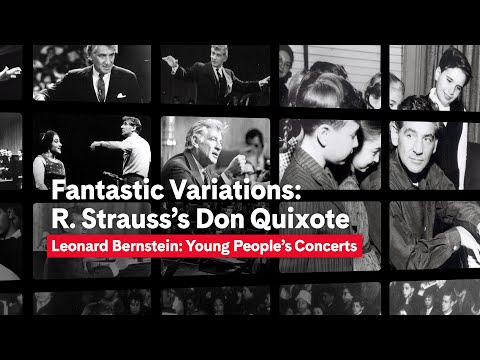 Play video
Carnegie Hall · published 2025-05-16 · 2m
Leonard Bernstein’s Young People’s Concerts: “Richard Strauss’s Don Quixote” | Carnegie Hall+
20252m
Free
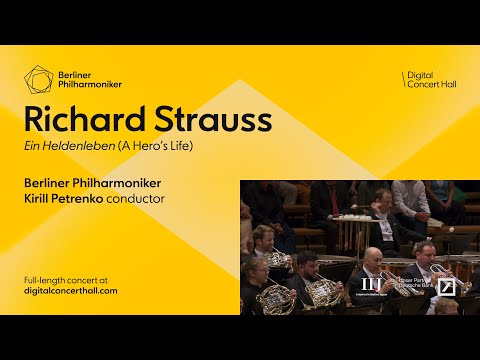 Play video
Berlin Philharmonic · published 2024-05-17 · 2m
Richard Strauss: Ein Heldenleben / Kirill Petrenko · Berliner Philharmoniker
Free
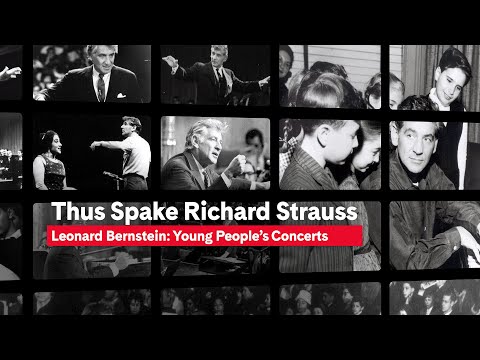 Play video
Carnegie Hall · published 2024-05-16 · 1m
Leonard Bernstein's Young People's Concerts: "Thus Spake Richard Strauss" | Carnegie Hall+
20241m
Free
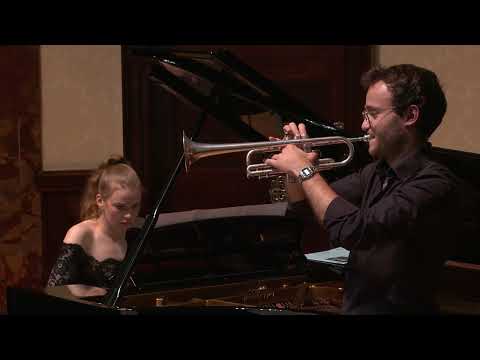 Play video
Wigmore Hall · published 2022-05-18 · 3m
Simon Höfele & Elisabeth Brauss - Richard Strauss, Das Rosenband Op. 36 No. 1
2022Op.3m
FreeLive
 Play video
YouTube · published 2022-02-12 · 54m
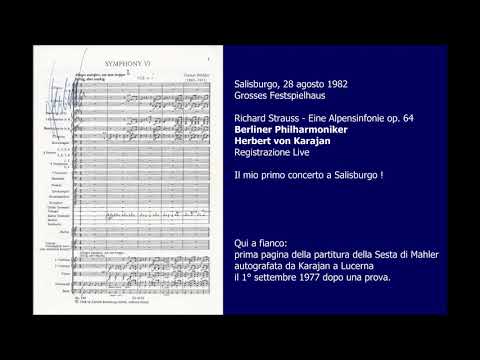
Richard Strauss - Eine Alpensinfonie / Karajan - Berliner Philharmoniker / Live Recording 1982
198254m
FreeFull concertLongLive
 Play video
YouTube · published 2021-02-12 · 54m
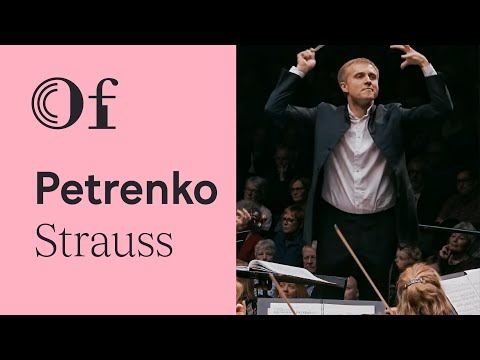
An Alpine Symphony / Richard Strauss / Vasily Petrenko / Oslo Philharmonic
2021Symphony54m
FreeFull concertLongLive
 Play video
YouTube · published 2015-02-14 · 37m
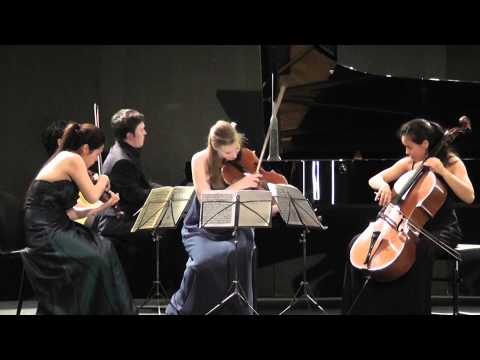
Verbier Festival: Richard Strauss - Piano Quartet in C minor Op.13
FreeLongLive
Saved playlist songs
Tracks from your saved Spotify playlist that are attributable to Richard Strauss.
No Spotify playlist is seeded yet.
No attributable tracks for this person in your saved playlist songs yet.