Maurice Ravel
Your profile, built from Spotify + Wikipedia/Wikidata + your indexed library.
Born / died
1875-1937
Movement
impressionism
Location
Born in Ciboure
Friends / contemporaries
Claude Debussy, Erik Satie, Alexander Scriabin +3 more

Maurice Ravel was among the most significant and influential composers of the early 20th century.Spotify
Although he is frequently linked with Claude Debussy as an exemplar of musical impressionism, and some of their works have a surface resemblance, Ravel possessed an independent voice that grew out of his love of a broad variety of styles, including the French Baroque, Bach, Mozart, Chopin, Spanish folk traditions, and American jazz and blues. His elegant and lyrically generous body of work was not large in comparison with that of some of his contemporaries, but his compositions are notable for being meticulously and exquisitely crafted.Spotify
He was especially gifted as an orchestrator, an area in which he remains unsurpassed. Ravel's mother was of Basque heritage, a fact that accounted for his lifelong fascination with Spanish music, and his father was a Swiss inventor and engineer, most likely the source of his commitment to precision and craftsmanship. At the age of 14, he entered the Paris Conservatory, where he was a student from 1889 to 1895 and from 1897 to 1903.Spotify
His primary composition teacher was Gabriel Fauré. A major disappointment of his life was his failure to win the Prix de Rome in spite of numerous attempts. The difficulty was transparently the conflict between the conservative administration of the Conservatory and Ravel's independent thinking, meaning his association with the French avant-garde (Debussy), and his interest in non-French traditions (Wagner, the Russian nationalists, Balinese gamelan).Spotify
He had already established himself as a composer of prominence with works such as his String Quartet, and the piano pieces Pavane pour une infante défunte, Jeux d'eau, and the Sonatine, and his loss of the Prix de Rome in 1905 was considered such a scandal that the director of the Conservatory was forced to resign. Ravel continued to express admiration for Debussy's music throughout his life, but as his own reputation grew stronger during the first decade of the century, a mutual professional jealousy cooled their personal relationship. Around the same time, he developed a friendship with Igor Stravinsky.Spotify
The two became familiar with each other's work during Stravinsky's time in Paris and worked collaboratively on arrangements for Sergey Diaghilev. Between 1909 and 1912, Ravel composed Daphnis et Chloé for Diaghilev and Les Ballets Russes. It was the composer's largest and most ambitious work and is widely considered his masterpiece.Spotify
He wrote a second ballet for Diaghilev, La Valse, which the impresario rejected, but which went on to become one of his most popular orchestral works. Following his service in the First World War as an ambulance driver and the death of his mother in 1917, his output was temporarily diminished. In 1925, the Monte Carlo Opera presented the premiere of another large work, the "lyric fantasy" L'enfant et les sortilèges, a collaboration with writer Colette.Spotify
American jazz and blues became increasingly intriguing to the composer. In 1928 he made a hugely successful tour of North America, where he met George Gershwin and had the opportunity to broaden his exposure to jazz. Several of his most important late works, such as the Sonata for Violin and Piano No.Spotify
2 and the Piano Concerto in G show the influence of that interest. Ironically, Ravel, who in his youth was rejected by some elements of the French musical establishment for being a modernist, in his later years was scorned by Satie and the members of Les Six as being old-fashioned, a symbol of the establishment. In 1932, an injury he sustained in an automobile accident started a physical decline that resulted in memory loss and an inability to communicate.Spotify
He died in 1937, following brain surgery. In spite of leaving one of the richest and most important bodies of work of any early 20th century composer, one that included virtually every genre except for symphony and liturgical music, Ravel is most often remembered for an arrangement of another composer's work, and for a piece he considered among his least significant. His orchestral arrangement of Mussorgsky's piano suite Pictures at an Exhibition has been wildly popular with concertgoers (and the royalties from it made Ravel a rich man).Spotify
Boléro, a 15-minute Spanish dance in which a single theme is repeated in a variety of instrumental guises, has been ridiculed for its insistent repetitiveness, but it is also a popular favorite and one of the most familiar and frequently performed orchestral works of the 20th century.Spotify
role: composer · 90%era: Romanticmovement: impressionism1875–1937
Movement
impressionism · Wikipedia
Impressionism in music was a movement among various composers in Western classical music whose music focuses on mood and atmosphere, "conveying the moods and emotions aroused by the subject rather than a detailed tone‐picture". "Impressionism" is a philosophical and aesthetic term borrowed from late 19th-century French painting after Monet's Impression, Sunrise. Composers were labeled Impressionists by analogy to the Impressionist painters who use starkly contrasting colors, effect of light on an object, blurry foreground and background, flattening perspective, etc. to make the observer focus their attention on the overall impression.
How this movement sounds
color over cadenceblurred harmonyfloating rhythmtimbremodes
Impressionism listening cues: atmosphere and timbre first. Harmony can feel 'blurred' or unresolved, with color-chords that don't rush to cadences.
Rhythm may feel flexible or floating; melodies can be fragmentary, like gestures rather than speeches.
Listen for orchestral color, modes, and unusual chord combinations that paint a scene more than they build a dramatic argument.
A helpful ear-training trick: notice how often the music avoids obvious dominant-to-tonic cadences. The feeling is often suspended, like light shifting rather than a story 'arriving'.
How Maurice Ravel sounds
rubatorich harmonylong melodybig dynamicscoloristic pedal
Romantic music tends to foreground emotion and color: long singing melodies, flexible tempo (rubato), and harmony that stretches and sighs.
You often hear thicker textures, wider dynamic range, and a more "orchestral" use of the piano with deep bass and resonant pedaling.
Look for heightened contrast and personal voice: the same musical gesture can feel intimate one moment and heroic the next.
Wikipedia
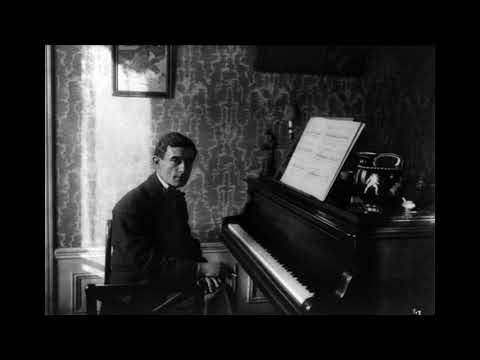
Joseph Maurice Ravel (7 March 1875 – 28 December 1937) was a French composer, pianist and conductor.Wikipedia
He is often associated with Impressionism along with his elder contemporary Claude Debussy, although both composers rejected the term. In the 1920s and 1930s Ravel was internationally regarded as France's greatest living composer.Wikipedia
Born to a music-loving family, Ravel attended France's premier music college, the Paris Conservatoire; he was not well regarded by its conservative establishment, whose biased treatment of him caused a scandal. After leaving the conservatoire, Ravel found his own way as a composer, developing a style of great clarity and incorporating elements of modernism, baroque, neoclassicism and, in his later works, jazz. He liked to experiment with musical form, as in his best-known work, Boléro (1928), in which repetition takes the place of development.Wikipedia
Renowned for his abilities in orchestration, Ravel made some orchestral arrangements of other composers' piano music, of which his 1922 version of Mussorgsky's Pictures at an Exhibition is the best known. A slow and painstaking worker, Ravel composed fewer pieces than many of his contemporaries. Among his works to enter the repertoire are pieces for piano, chamber music, two piano concertos, ballet music, two operas and eight song cycles; he wrote no symphonies or church music.Wikipedia
Many of his works exist in two…Wikipedia
Interview highlights
Built from indexed interview/masterclass transcripts (podcasts / YouTube). Quotes are direct excerpts with source links.
Interview highlights for Maurice Ravel from 2 sources. Quotes below are direct excerpts; open the source link for context.
Topics that recur (auto): Music, Know, Flute, Little, More, Then, Back, Different.
Source: youtube_captions · qfqbomqKZqY · 5:17 · published 2019-04-28 · Open source
Source: youtube_captions · _2S0rFaVSQs · 0:12 · published 2023-10-26 · Open source
Source: youtube_captions · qfqbomqKZqY · 11:13 · published 2019-04-28 · Open source
Source: youtube_captions · _2S0rFaVSQs · 11:30 · published 2023-10-26 · Open source
Source: youtube_captions · qfqbomqKZqY · 3:37 · published 2019-04-28 · Open source
Source: youtube_captions · _2S0rFaVSQs · 18:59 · published 2023-10-26 · Open source
Transcript sources (2)
Study resources & scores
Curated study material and indexed score links related to Maurice Ravel.
Lecture 21. Musical Impressionism and Exoticism: Debussy, Ravel and Monet
Yale (YouTube) · lecture · youtube, transcript
Local matches
Matches your current indexed library (videos table). This will be sparse until connectors run.

France Musique · published 2026-10-07
L'Orchestre philharmonique de New York : les années 1970 (13)
1970
FreeFull concert

France Musique · published 2026-10-07
Raphaël Personnaz incarne Maurice Ravel dans un podcast signé France Musique
2026
Free

France Musique · published 2026-09-30
Sonia Devillers : à la recherche du piano perdu
2026Sonia Devillers
Free

France Musique · published 2026-09-29
L'invité du jour : Bruno Fontaine
2026L'invité du jour
FreeFull concert

France Musique · published 2026-09-25
Quelle musique entendez-vous sur "Chats dans une commode" de Jules Le Roy ?
2026
Free

France Musique · published 2026-09-23
Giant Steps : le pas de géant de John Coltrane
2026Giant Steps
Free


France Musique · published 2026-09-08
Maurice Ravel, cinq échecs au Prix de Rome
2026
Free

France Musique · published 2026-06-17
Le Concerto en sol de Ravel par Martha Argerich
2026Concerto
FreeFull concert

France Musique · published 2026-06-08
Daphnis et Chloé : l'amour mythologique selon Ravel
2026Daphnis et Chloé
FreeFull concert

France Musique · published 2026-05-19
Gaspard Dehaene : "Souvent la musique me prend comme un océan"
2026Gaspard Dehaene
Free
France Musique · published 2026-05-19
Gaspard Dehaene : "Souvent la musique me prend comme un océan"
2026Gaspard Dehaene
Free

France Musique · published 2026-05-19
La Matinale avec Gaspard Dehaene, un air de famille
2026
Free

France Musique · published 2026-04-10
Quelle musique entendez-vous sur "Un soir de carnaval" d'Henri Rousseau ?
2026
Free
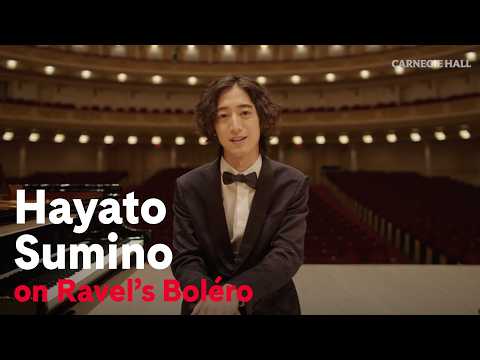 Play video
Carnegie Hall · published 2026-03-21 · 3m
Hayato Sumino on Maurice Ravel’s “Boléro” | A Story in Every Note
Free

France Musique · published 2026-03-21
Le Jardin féérique de Maurice Ravel : l’apothéose du printemps
2026
Free

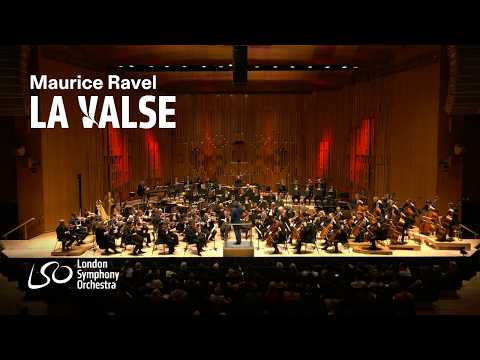 Play video
YouTube · published 2026-01-23 · 13m
Maurice Ravel: La valse // Alexandre Bloch & London Symphony Orchestra
FreeLive
 Play video
YouTube · published 2025-11-03 · 1h 21m
Concert d'ouverture de la Philharmonie de Paris Maurice Ravel, Gabriel Faure, Borodine, Tschaïkovsky
20251h 21m
FreeFull concertLongLive
 Play video
YouTube · published 2025-08-05 · 12m
Sonatine Maurice Ravel SUU Thorley Recital Hall Christopher Hansen November 8 2024
202412m
FreeLive
 Play video
YouTube · published 2025-07-17 · 28m
French National Orchestra – Maurice Ravel - Piano Concerto in G major
2025Concerto28m
FreeLongLive
 Play video
YouTube · published 2025-06-30 · 1h 10m
Sophomore Recital: Celebrating 150th Anniversary of Maurice Ravel
20251h 10m
FreeFull concertLongLive
 Play video
YouTube · published 2025-06-16 · 14m
Vienna Philharmonic Orchestra - Maurice Ravel - Bolero
202514m
FreeLive
 Play video
YouTube · published 2025-06-02 · 12m
MAURICE RAVEL | La Valse | Jader Bignamini, Conductor | Detroit Symphony Orchestra
FreeLive
 Play video
Philharmonie de Paris · published 2025-05-17 · 6m
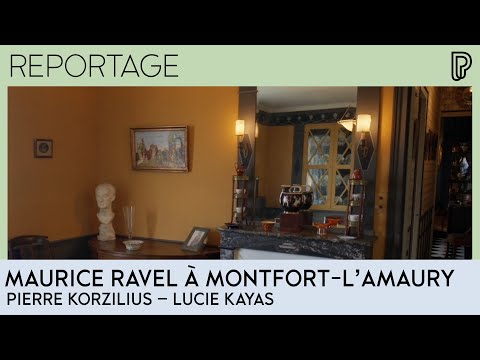
Maurice Ravel à Montfort-l'Amaury | Exposition Ravel Boléro
FreeLive
 Play video
YouTube · published 2025-03-18 · 14m
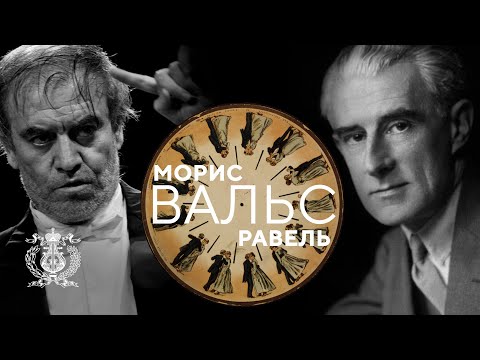
La valse - Maurice Ravel's choreographic poem performed by the Mariinsky Orchestra
Performed by the Mariinsky Orchestra
202514m
FreeLive
 Play video
YouTube · published 2025-03-13 · 19m
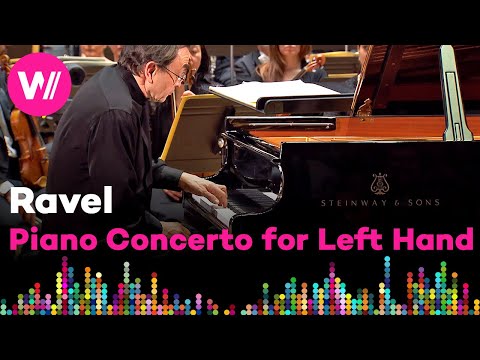
Maurice Ravel - Piano Concerto for the Left Hand | performance by Pierre-Laurent Aimard
FreeLive
 Play video
YouTube · published 2024-08-05 · 1h 3m
Live from Montreal - Ylan Chu (Maurice Ravel, Arnold Schoenberg, Franz Schubert)
20241h 3m
FreeFull concertLongLive
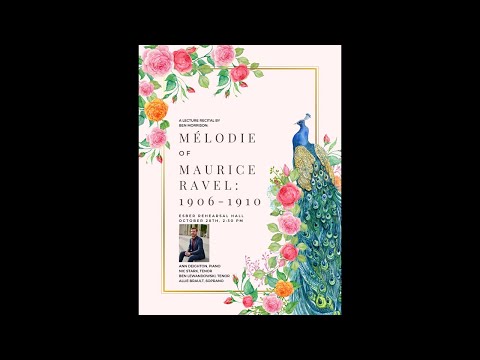 Play video
YouTube · published 2024-08-05 · 1h 19m
Ben Morrison’s Lecture Recital: The Mélodie of Maurice Ravel 1906-1910
20241h 19m
FreeFull concertLongLive
 Play video
YouTube · published 2023-08-06 · 51m
Yuda Zheng: Piano Recital - Maurice Ravel's Works
FreeFull concertLongLive
 Play video
YouTube · published 2023-06-19 · 15m
Maurice Ravel: Bolero · Neue Philharmonie München · Johannes Zahn
FreeLive
 Play video
YouTube · published 2022-02-12 · 1h 19m
1 Hours Maurice Ravel | Studying and Healing | Excellent Musical Performance
FreeFull concertLongLive
 Play video
YouTube · published 2021-08-06 · 10m
Introduction and Allegro / Maurice Ravel / Birgitte Volan Håvik / Oslo Philharmonic
2021Allegro10m
FreeLive
 Play video
YouTube · published 2021-08-06 · 26m
Ma mère l'Oye (Mother Goose) / Maurice Ravel / James Gaffigan / Oslo Philharmonic
202126m
FreeLongLive
 Play video
YouTube · published 2021-08-06 · 16m
Bolero / Maurice Ravel / Vasily Petrenko / Oslo Philharmonic
202116m
FreeLive
 Play video
YouTube · published 2020-08-06 · 17m
Maurice Ravel "Shéhérazade"/Detroit Symphony Orchestra/Isabel Leonard/James Gaffigan
2020Symphony17m
FreeLive
 Play video
YouTube · published 2020-08-05 · 15m
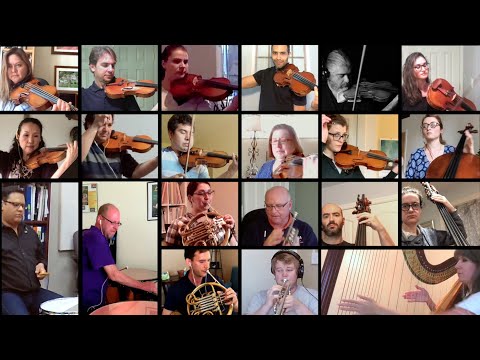
SoNA presents virtual performance of Boléro by Maurice Ravel
202015m
FreeLive
 Play video
YouTube · published 2020-07-23 · 13m
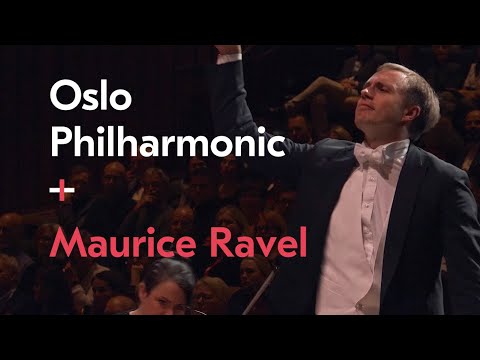
La Valse / Maurice Ravel / Vasily Petrenko / Oslo Philharmonic
202013m
FreeLive
 Play video
YouTube · published 2020-02-13 · 25m
"Gaspard de la nuit" Maurice Ravel, Alice-Sara Ott piano recital part3
202025m
FreeLongLive
 Play video
YouTube · published 2018-07-19 · 25m
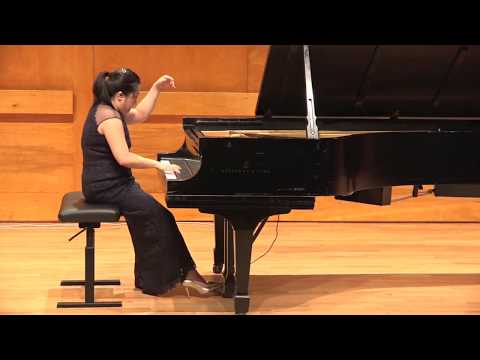
Maurice Ravel: Gaspard de la nuit (complete)(Jackie Leung- LIVE)
FreeLongLive
 Play video
YouTube · published 2017-02-13 · 55m
Maurice Ravel - Daphnis et Chloé | Jukka-Pekka Saraste | WDR Symphony Orchestra | WDR Radio Choir
FreeFull concertLongLive
 Play video
YouTube · published 2016-02-14 · 27m
Maurice Ravel – Le Tombeau de Couperin (Complete) | Doctoral Recital, SWBTS 2009
200927m
FreeLongLive
 Play video
YouTube · published 2015-08-08 · 31m
Maurice Ravel: String Quartet in F major LIVE at Wigmore Hall
FreeLongLive
 Play video
YouTube · published 2014-02-14 · 19m
ARCHIVIO IEM: Maurice Ravel, Bolero ( London Symphony Orchestra / Valery Gergiev)
FreeLive
Saved playlist songs
Tracks from your saved Spotify playlist that are attributable to Maurice Ravel.
No Spotify playlist is seeded yet.
No attributable tracks for this person in your saved playlist songs yet.