Maurice André
Your profile, built from Spotify + Wikipedia/Wikidata + your indexed library.
Born / died
1921-2016
Movement
20th-century classical
Location
Born in Narbonne
Friends / contemporaries
Alain Lefèvre, Alexander Melnikov, Alexander Vedernikov +3 more
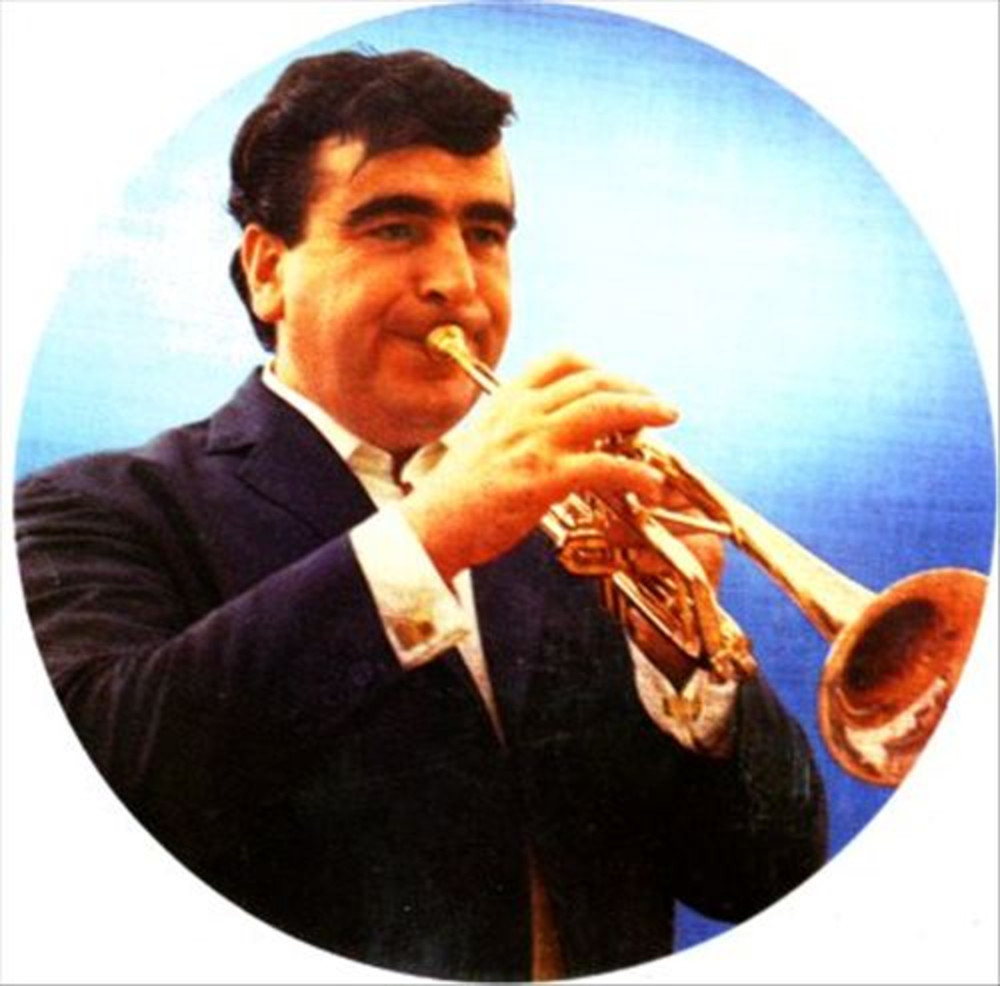
genres: baroque, concerto, classical · followers: 17,537
Maurice André rightly earned the reputation of being one of the finest trumpet virtuosos from the 20th and 21st centuries.Spotify
He made numerous concert appearances and recordings and inspired composers like Blacher, Jolivet, and Tomasi to write major works for his instrument. André was born in the Cévennes district of southern France.Spotify
Young Maurice began taking vocal instruction (solfeggio) at age ten, but two years later, influenced by his father -- a miner, but also an excellent amateur trumpeter -- began playing the cornet and eventually the trumpet. But he also followed his father's occupation, becoming a miner at age 14. It was not long until his father realized the depth of his son's talent and arranged lessons for him with local teacher Leon Barthélémy.Spotify
Because his father's wages were meager, André could not consider study at the Paris Conservatory, but through Barthélémy's clever plan, he gained admittance, tuition-free, by first joining a military band. At the age of 18, André began studies at the conservatory under Raymond Sabarich. He quickly demonstrated his immense talents, winning first prizes there for both cornet and trumpet playing in his first two years.Spotify
In 1953, he began playing professionally in two ensembles, the Lamoureux Concert Association Orchestra and the Radio France Philharmonic Orchestra. André captured first prize in trumpet at the 1955 Geneva International Competition. He left the two orchestral posts in 1960 and 1962, respectively, joining the orchestra of the Opéra Comique in the latter year.Spotify
In 1963, André was asked to sit on the jury of the Munich International Competition, but entered as a candidate instead and captured first prize, thus establishing himself at the age of 30 as one of the leading young trumpeters in the world. He immediately launched a solo career, which was eventually managed by his wife Liliane. He began making his first recordings around this time, most with the French label Erato.Spotify
Many of his most important and popular later ones, however, were done for EMI. He also recorded for Deutsche Grammophon, Philips, and smaller labels. Because the repertory for the trumpet was relatively small, he began transcribing -- or engaged others to transcribe -- works for oboe, violin, and other instruments.Spotify
The Tartini Violin Concerto in D major was one such example, the transcription being done by Jean Thilde. André also began commissioning works from some of the leading composers of the day. Throughout the 1960s and 1970s, André maintained a heavy concert schedule, playing with many of the leading orchestras and conductors in Europe and the United States and making numerous recordings.Spotify
In a 1978 interview, André estimated that he typically played a 180-concert schedule and had made over 220 recordings up to that time. By 2003, André had appeared on over 300 recordings, though he had significantly reduced his concert schedule. While he had recorded music from most periods, he tended to focus on Baroque repertory, such as works by Bach, Telemann, Handel, Torelli, and Albinoni.Spotify
On many of his concert tours, André's younger brother Raymond, also a trumpeter of some renown, accompanied him. In 1979, the first Maurice André Trumpet Competition was held. Subsequent events in the series took place in 1988, 1997, and 2000.Spotify
André usually served as chairman of the jury.Spotify
role: unknown · 20%era: Modernmovement: 20th-century classical1921–2016
Movement
20th-century classical · Wikipedia
20th-century classical music is Western art music that was written between 1901 and 2000, inclusive. Musical style diverged during the 20th century as it never had previously, so this century was without a dominant style. Modernism, impressionism, and post-romanticism can all be traced to the decades before the turn of the 20th century, but can be included because they evolved beyond the musical boundaries of the 19th-century styles that were part of the earlier common practice period. Neoclassicism and expressionism came mostly after 1900. Minimalism started later in the century and can be seen as a change from the modern to postmodern era, although some date postmodernism from as early as about 1930. Aleatory, atonality, serialism, musique concrète, and electronic music were all developed during the century. Jazz and ethnic folk music became important influences on many composers during this century.
How this movement sounds
new harmoniesnew rhythmsneoclassicismatonalityminimalismsharp contrasts
20th-century classical listening cues: variety and experimentation. Some music keeps older forms (neoclassicism) but with sharper harmonies, leaner textures, and motoric rhythms.
Other strands move toward atonality (no clear tonal center) or explore new scales and sonorities; rhythm can become more complex, more mechanical, or more jagged.
Timbre and texture are often treated as structural elements: changes in sound color can function like 'harmonic' events.
A practical way to listen: instead of expecting a 'tune', track motives (tiny cells), rhythm, and register. Modern pieces often build form by transforming small units rather than by long melodies.
Minimalism is another common thread: repetition, gradual change, and a focus on pulse and process over long spans.
How Maurice André sounds
new harmonyrhythmic bitecolor & textureminimal patternsextended techniques
Modern/contemporary music varies wildly, but you will often hear experimentation with harmony, rhythm, and sound color as primary material.
Some strands emphasize rhythmic bite and sharp contrasts; others explore timbre and atmosphere; minimalism builds from repeating patterns and gradual change.
If the music feels less about singable melody and more about texture, pulse, or color, you are probably hearing a modern idiom.
Study resources & scores
Curated study material and indexed score links related to Maurice André.
No related study resources yet. As more lectures, transcripts, and scores are indexed, they will show up here.
Local matches
Matches your current indexed library (videos table). This will be sparse until connectors run.

France Musique · published 2026-05-05
Maurice André : « J'ai mis la trompette sur son piédestal parce que c'est un instrument noble. »
2026Maurice André
Free

France Musique · published 2026-05-04
Maurice André : « J'ai mordu à la musique sans m'en rendre compte. »
2026Maurice André
Free
Saved playlist songs
Tracks from your saved Spotify playlist that are attributable to Maurice André.
No Spotify playlist is seeded yet.
No attributable tracks for this person in your saved playlist songs yet.