Matthias Goerne
Your profile, built from Spotify + Wikipedia/Wikidata + your indexed library.
Born / died
1967
Movement
20th-century classical
Location
Born in Weimar
Friends / contemporaries
Kurt Masur, Vladimir Ashkenazy, Alain Lefèvre +3 more

role: unknown · 20%era: Modernmovement: 20th-century classical1967
Movement
20th-century classical
How this movement sounds
new harmoniesnew rhythmsneoclassicismatonalityminimalismsharp contrasts
20th-century classical listening cues: variety and experimentation. Some music keeps older forms (neoclassicism) but with sharper harmonies, leaner textures, and motoric rhythms.
Other strands move toward atonality (no clear tonal center) or explore new scales and sonorities; rhythm can become more complex, more mechanical, or more jagged.
Timbre and texture are often treated as structural elements: changes in sound color can function like 'harmonic' events.
A practical way to listen: instead of expecting a 'tune', track motives (tiny cells), rhythm, and register. Modern pieces often build form by transforming small units rather than by long melodies.
Minimalism is another common thread: repetition, gradual change, and a focus on pulse and process over long spans.
How Matthias Goerne sounds
new harmonyrhythmic bitecolor & textureminimal patternsextended techniques
Modern/contemporary music varies wildly, but you will often hear experimentation with harmony, rhythm, and sound color as primary material.
Some strands emphasize rhythmic bite and sharp contrasts; others explore timbre and atmosphere; minimalism builds from repeating patterns and gradual change.
If the music feels less about singable melody and more about texture, pulse, or color, you are probably hearing a modern idiom.
Wikipedia
Matthias Goerne (born 31 March 1967) is a German baritone.Wikipedia
He has performed and recorded extensively, both on the opera stage and in Lieder settings. Goerne has been referred to as "today's leading interpreter of German art songs" by the Chicago Tribune, while the Boston Globe describes him as "one of the greatest singers performing today".Wikipedia
Prominent opera stages on which Goerne has appeared include the Royal Opera House in London, Teatro Real in Madrid, Paris National Opera, Vienna State Opera, and the Metropolitan Opera in New York City. His roles include Wagner's Wolfram in Tannhäuser, Amfortas in Parsifal, and Kurwenal in Tristan und Isolde, Orest in Elektra by Richard Strauss and the title roles in Alban Berg's Wozzeck, Bartók's Bluebeard's Castle, Hindemith's Mathis der Maler and Reimann's Lear. In lieder recitals, he has worked with pianists including Alfred Brendel, Vladimir Ashkenazy, Daniil Trifonov and Seong-Jin Cho.Wikipedia
Study resources & scores
Curated study material and indexed score links related to Matthias Goerne.
No related study resources yet. As more lectures, transcripts, and scores are indexed, they will show up here.
Local matches
Matches your current indexed library (videos table). This will be sparse until connectors run.

France Musique · published 2026-09-30
Robert Schumann : Zwielicht - Matthias Goerne, Markus Hinterhäuser
2026Robert Schumann
Free

France Musique · published 2026-09-30
Matthias Goerne n'en a pas fini avec le lied !
2026
Free

France Musique · published 2026-07-15
Raphaël Pichon et l’ensemble Pygmalion vous invitent à une traversée du romantisme allemand
2026
FreeFull concert

France Musique · published 2026-06-20
Salomé de Richard Strauss à l’Opéra national du Capitole de Toulouse
2026
FreeFull concert

France Musique · published 2026-03-20
Matthias Goerne & Daniil Trifonov : portrait croisé
2026
FreeFull concert
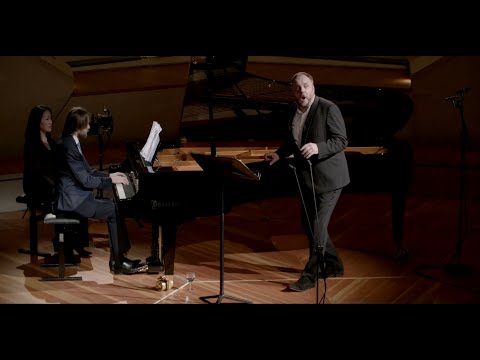 Play video
YouTube · published 2025-10-05 · 32m
Daniil Trifonov and Matthias Goerne - Schumann - Dichterliebe Op. 48 (Live 2022)
2022Op.32m
FreeLongLive
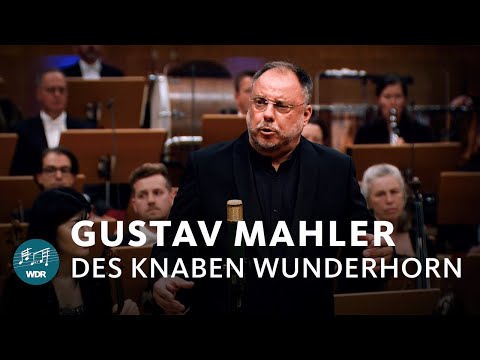 Play video
YouTube · published 2024-02-12 · 43m
Mahler - Des Knaben Wunderhorn | Matthias Goerne | WDR Symphony Orchestra
FreeLongLive
Saved playlist songs
Tracks from your saved Spotify playlist that are attributable to Matthias Goerne.
No Spotify playlist is seeded yet.
No attributable tracks for this person in your saved playlist songs yet.