Mariss Jansons
Your profile, built from Spotify + Wikipedia/Wikidata + your indexed library.
Born / died
1943-2019
Movement
20th-century classical
Location
Born in Riga
Friends / contemporaries
Daniela Ruso, Valery Gergiev, Sergei Prokofiev +3 more

Latvia's Mariss Jansons was one of the most important conductors to have emerged from the Soviet Union in the last years of its existence.Spotify
He led major orchestras in Europe and the U.S. and amassed a large catalog of recordings. Jansons was born January 14, 1943, in German-occupied Latvia; his mother, who was Jewish, had fled the capital to give birth.Spotify
Both her father and her uncle were killed. After the war, Jansons studied violin with his father and then enrolled at the Leningrad Conservatory (now the St. Petersburg Conservatory), studying conducting and piano.Spotify
He was able to travel to the West for further study in Austria with Hans Swarowsky and Herbert von Karajan. He won the International Herbert von Karajan Foundation Competition in Berlin. The impressed Karajan wanted to offer Jansons a position as his assistant at the Berlin Philharmonic, but the Soviet government did not transmit the offer to Jansons.Spotify
He landed, however, with another influential conductor, Yevgeny Mravinsky, who appointed Jansons associate conductor of the Leningrad Philharmonic Orchestra in 1973. Jansons moved on to his first major Western position as music director of the Oslo Philharmonic in 1979, remaining in that post until 2000; he resigned after clashing with the city of Oslo over the acoustics of the Oslo Concert Hall. He added the post of principal conductor of the Leningrad Philharmonic to his portfolio in 1985, leading that group on tours of Europe and the U.S. after it changed its name to the St.Spotify
Petersburg Philharmonic following the fall of the Soviet Union. Those tours exposed Jansons to new audiences, leading to his appointment as principal guest conductor of the London Philharmonic in 1992 and as music director of the Pittsburgh Symphony in 1997; he remained there until 2004, taking advantage of the city's skilled medical care infrastructure to have a defibrillator implanted after suffering a heart attack while conducting a performance of Puccini's La bohème. From 2002 to 2014, he was the chief conductor of the Concertgebouw Orchestra in Amsterdam, and in the 2003-2004 season, he began a long tenure as chief conductor of the Sinfonieorchester des Bayerischen Rundfunks (Bavarian Radio Symphony Orchestra).Spotify
He gained broad public visibility from conducting the Vienna Philharmonic Orchestra's annual New Year's concert several times. Jansons' discography is vast, including many albums on the EMI Classics label and on the Bavarian Radio Symphony Orchestra's in-house BR Klassik label. Within the first two months of the year 2019, he had already been heard on four albums: recordings of Beethoven, Schumann, and Bruckner on BR Klassik and the collection Blue Hour with the Berlin Philharmonic on Deutsche Grammophon.Spotify
Late in that same year, still having a heart condition, Jansons passed away at his home in St. Petersburg. Among his long list of honors was the Grand Merit Cross with Star of the Federal Republic of Germany.Spotify
role: unknown · 20%era: Modernmovement: 20th-century classical1943–2019
Movement
20th-century classical
How this movement sounds
new harmoniesnew rhythmsneoclassicismatonalityminimalismsharp contrasts
20th-century classical listening cues: variety and experimentation. Some music keeps older forms (neoclassicism) but with sharper harmonies, leaner textures, and motoric rhythms.
Other strands move toward atonality (no clear tonal center) or explore new scales and sonorities; rhythm can become more complex, more mechanical, or more jagged.
Timbre and texture are often treated as structural elements: changes in sound color can function like 'harmonic' events.
A practical way to listen: instead of expecting a 'tune', track motives (tiny cells), rhythm, and register. Modern pieces often build form by transforming small units rather than by long melodies.
Minimalism is another common thread: repetition, gradual change, and a focus on pulse and process over long spans.
How Mariss Jansons sounds
new harmonyrhythmic bitecolor & textureminimal patternsextended techniques
Modern/contemporary music varies wildly, but you will often hear experimentation with harmony, rhythm, and sound color as primary material.
Some strands emphasize rhythmic bite and sharp contrasts; others explore timbre and atmosphere; minimalism builds from repeating patterns and gradual change.
If the music feels less about singable melody and more about texture, pulse, or color, you are probably hearing a modern idiom.
Wikipedia
Mariss Ivars Georgs Jansons (14 January 1943 – 1 December 2019) was a Latvian conductor, best known for his interpretations of Mahler, Strauss, and Russian composers such as Tchaikovsky, Rachmaninoff, and Shostakovich.Wikipedia
During his lifetime he was often cited as among the world's leading conductors; in a 2015 Bachtrack poll, he was ranked by music critics as the world's third best living conductor. Jansons was long associated with the Bavarian Radio Symphony Orchestra (BRSO; 2003–2019) and Royal Concertgebouw Orchestra (RCO; 2004–2015) as music director.Wikipedia
Born in Riga, Latvia, Jansons moved to Leningrad (now Saint Petersburg) in 1956, where he studied conducting, and he received further training in Austria. He first achieved prominence with the Oslo Philharmonic, where he served as music director from 1979 to 2000. Besides the BRSO and RCO, he also directed the Pittsburgh Symphony Orchestra from 1997 to 2004; he was a frequent guest conductor with the London Philharmonic Orchestra and London Symphony Orchestra.Wikipedia
Jansons recorded prolifically, and was the recipient of numerous awards.Wikipedia
Study resources & scores
Curated study material and indexed score links related to Mariss Jansons.
No related study resources yet. As more lectures, transcripts, and scores are indexed, they will show up here.
Local matches
Matches your current indexed library (videos table). This will be sparse until connectors run.

France Musique · published 2026-05-12
Daniel Barenboim nous accompagne cette semaine
2026
FreeFull concert
 Play video
YouTube · published 2026-02-06 · 27m
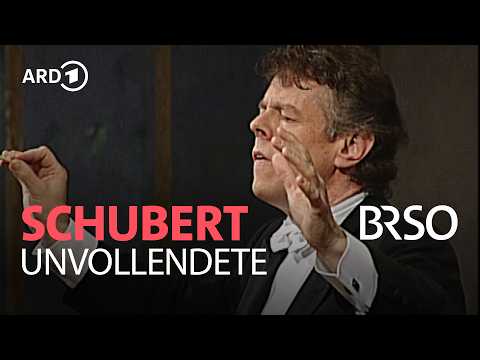
Schubert – The Unfinished | Mariss Jansons | Bavarian Radio Symphony Orchestra
FreeLongLive
 Play video
YouTube · published 2021-02-12 · 47m
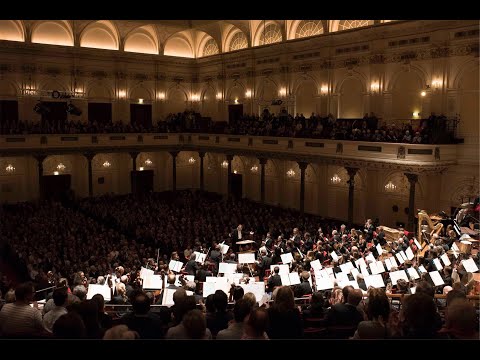
Dvořák's 9th Symphony: Mariss Jansons and Symphonieorkchester des Bayerischen Rundfunks
2021Symphony47m
FreeFull concertLongLive
 Play video
YouTube · published 2016-10-10 · 41m
LANG LANG ~ Beethoven Piano Concerto #1 Mariss Jansons/ Bavarian Symphony
2016ConcertoSymphony41m
FreeLongLive
Saved playlist songs
Tracks from your saved Spotify playlist that are attributable to Mariss Jansons.
No Spotify playlist is seeded yet.
No attributable tracks for this person in your saved playlist songs yet.