Ligeti
Your profile, built from Spotify + Wikipedia/Wikidata + your indexed library.
Born / died
1923-2006
Movement
20th-century classical
Location
Born in Târnăveni
Friends / contemporaries
Alain Lefèvre, Alexander Melnikov, Alexander Vedernikov +3 more

role: unknown · 20%era: Modernmovement: 20th-century classical1923–2006
Movement
20th-century classical
How this movement sounds
new harmoniesnew rhythmsneoclassicismatonalityminimalismsharp contrasts
20th-century classical listening cues: variety and experimentation. Some music keeps older forms (neoclassicism) but with sharper harmonies, leaner textures, and motoric rhythms.
Other strands move toward atonality (no clear tonal center) or explore new scales and sonorities; rhythm can become more complex, more mechanical, or more jagged.
Timbre and texture are often treated as structural elements: changes in sound color can function like 'harmonic' events.
A practical way to listen: instead of expecting a 'tune', track motives (tiny cells), rhythm, and register. Modern pieces often build form by transforming small units rather than by long melodies.
Minimalism is another common thread: repetition, gradual change, and a focus on pulse and process over long spans.
How Ligeti sounds
new harmonyrhythmic bitecolor & textureminimal patternsextended techniques
Modern/contemporary music varies wildly, but you will often hear experimentation with harmony, rhythm, and sound color as primary material.
Some strands emphasize rhythmic bite and sharp contrasts; others explore timbre and atmosphere; minimalism builds from repeating patterns and gradual change.
If the music feels less about singable melody and more about texture, pulse, or color, you are probably hearing a modern idiom.
Wikipedia
György Sándor Ligeti ( ; Hungarian: [ˈliɡɛti ˈɟørɟ ˈʃaːndor]; 28 May 1923 – 12 June 2006) was a Hungarian composer of contemporary classical music.Wikipedia
He has been described as "one of the most important avant-garde composers in the latter half of the twentieth century" and "one of the most innovative and influential among progressive figures of his time". Born in Romania, he lived in the Hungarian People's Republic before emigrating to Austria in 1956.Wikipedia
He became an Austrian citizen in 1968. In 1973 he became professor of composition at the Hochschule für Musik und Theater Hamburg, where he worked until retiring in 1989. His students included Hans Abrahamsen, Unsuk Chin and Michael Daugherty.Wikipedia
He died in Vienna in 2006. Restricted in his musical style by the authorities of Communist Hungary, only when he reached the West in 1956 could Ligeti fully realise his passion for avant-garde music and develop new compositional techniques. After experimenting with electronic music in Cologne, Germany, his breakthrough came with orchestral works such as Atmosphères, for which he used a technique he later dubbed micropolyphony.Wikipedia
After writing his "anti-anti-opera" Le Grand Macabre, Ligeti shifted away from chromaticism and towards polyrhythm for his later works. He is best known by the public through the use of his music in film soundtracks. Although he did not directly compose any film scores,…Wikipedia
Study resources & scores
Curated study material and indexed score links related to Ligeti.
No related study resources yet. As more lectures, transcripts, and scores are indexed, they will show up here.
Local matches
Matches your current indexed library (videos table). This will be sparse until connectors run.

France Musique · published 2026-09-30
Juke box contemporain : 50 ans de l'Ensemble intercontemporain avec Pierre Bleuse et Mariam Rezaei
FreeFull concert

France Musique · published 2026-09-16
L'Orchestre philharmonique de New York (8) Les "sixties" avec Leonard Bernstein : 1964-1965
1964
FreeFull concert

France Musique · published 2026-06-12
Concert d'archive de Katia et Marielle Labèque en 1977
1977
FreeFull concert


France Musique · published 2026-06-03
Roberto Negro, hors des sentiers battus 3 : « Dans le Tricot, chacun a sa couleur, et cela en créé une nouvelle »
2026
FreeFull concert
 Play video
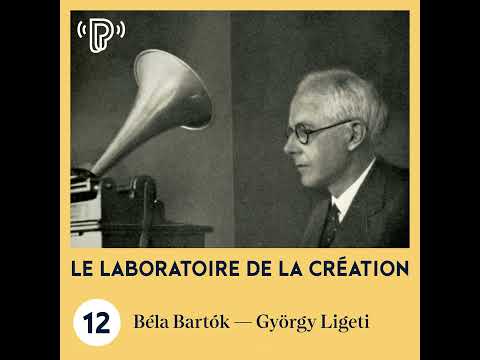
Philharmonie de Paris · published 2025-05-17 · 12m
Bartók – Ligeti : le parfum de la terre | Le Laboratoire de la création #12
202512m
FreeLive
 Play video
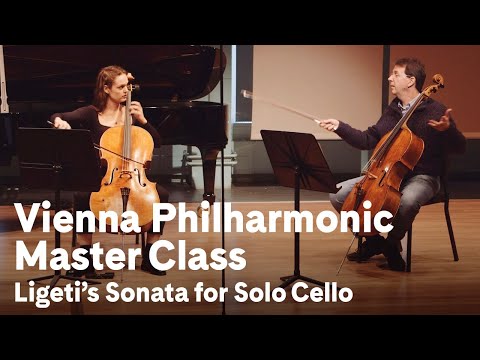
Carnegie Hall · published 2025-05-16 · 13m
Vienna Philharmonic Cello Master Class with Tamás Varga: Ligeti’s Sonata for Solo Cello
2025Sonata13m
Free
 Play video
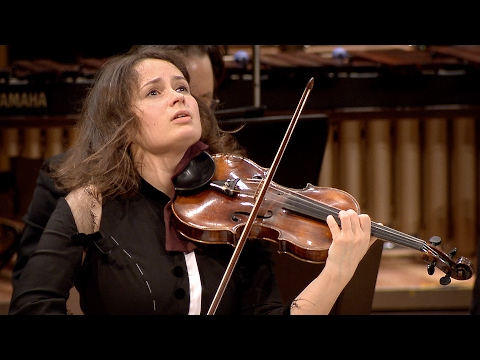
Berlin Philharmonic · published 2017-05-19 · 3m
Ligeti: Violin Concerto / Kopatchinskaja - Rattle - Berliner Philharmoniker
Free
 Play video
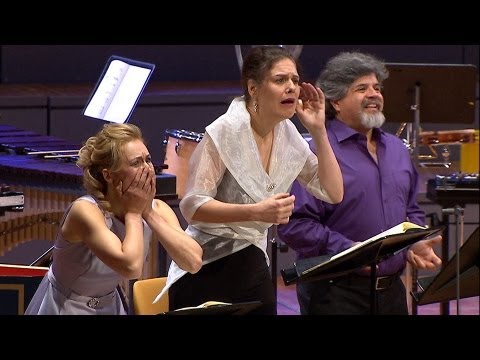
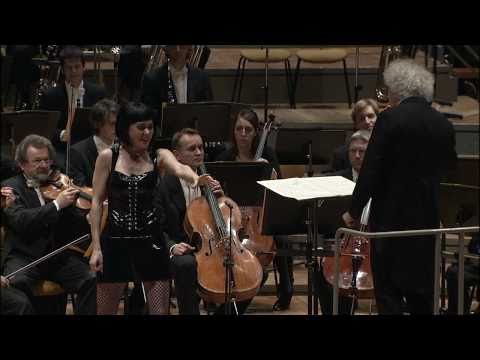
Berlin Philharmonic · published 2013-05-20 · 2m
Ligeti: Nouvelles Aventures / Rattle · Berliner Philharmoniker
Free
 Play video
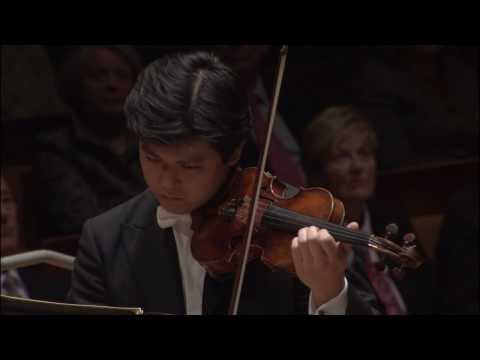
Berlin Philharmonic · published 2011-05-21 · 2m
Ligeti: Mysteries of the Macabre / Hannigan - Rattle - Berliner Philharmoniker
Free
 Play video
Berlin Philharmonic · published 2010-05-21 · 2m
Ligeti: atmosphères / Rattle - Berliner Philharmoniker
Free
Saved playlist songs
Tracks from your saved Spotify playlist that are attributable to Ligeti.
No Spotify playlist is seeded yet.
No attributable tracks for this person in your saved playlist songs yet.