Lang Lang and Christoph Eschenbach
Your profile, built from Spotify + Wikipedia/Wikidata + your indexed library.
Back
genres: classical piano, classical, chamber music · followers: 13,397
Christoph Eschenbach overcame the most difficult of circumstances to become one of the finest pianists and conductors of the 20th and early 21st centuries.Spotify
He has performed throughout the world, recorded dozens of albums, and has won several awards and prizes. Since 2017, Eschenbach has served as the chief conductor of the Konzerthausorchester Berlin.Spotify
In 2022, he led the WDR Symphony Orchestra in backing soprano Hanna-Elisabeth Müller on the album Sinnbild: Strauss Songs. Eschenbach was born Christoph Ringmann on February 20, 1940, in Breslau, Germany. He was orphaned at a young age: his mother died in childbirth, and his father, musicologist Heribert Ringmann, was killed in battle during World War II.Spotify
His adoptive grandmother was then killed while trying to extract him and herself from the path of the Allied armies. Fortunately, his mother's cousin, Wallydore Eschenbach, tracked him down after the war and adopted him from the refugee camp that would likely have claimed his life. It is from her side of the family that he eventually took his better-known surname.Spotify
Eschenbach began studying piano at the age of eight, taught by his adoptive mother. She quickly realized his talents and enrolled him in the Hamburg Hochschule für Musik, where he studied both piano and conducting. He won first prize in the 1952 Steinway Piano Competition, and in 1962 he took second prize in the Munich International Competition.Spotify
However, it was with his first prize at the Clara Haskil Competition in Vevey, Switzerland, in 1965 that he finally made his mark. This new acknowledgment led to a London concert debut in 1966 and a prestigious debut with the Cleveland Orchestra and George Szell in 1969. Szell was impressed with his musicianship and gave him lessons in conducting, starting a close relationship that lasted until Szell's death in 1970.Spotify
Eschenbach was soon essaying a wide repertory in concert tours throughout Europe and America. Notable in his programs were a large number of works from 20th century composers such as Bartók, Henze, Rihm, and Ruzicka. However, his performances of Mozart, Beethoven, and Schubert were considered revelatory.Spotify
Eschenbach made his conducting debut in 1972 with a performance of Bruckner's Symphony No. 3, soon followed by Verdi's La Traviata at Darmstadt in 1978. In 1979, he was named general music director of the Rheinland-Pfalz State Philharmonic (through 1981).Spotify
He was the permanent guest conductor, then chief conductor, of the Zürich Tonhalle Orchestra (1971-1985). In 1988, he began a significant and productive association as music director of the Houston Symphony Orchestra, where he remained until 1999. Although the orchestra was already established as one of America's finer major symphonies, Eschenbach improved its standards, heightened its international reputation, and broadened its repertory.Spotify
He also formed the Houston Symphony Chamber Players from its ranks. Eschenbach conducted the Houston Symphony in recordings on the Koch International, Virgin, and RCA Red Seal labels, among others. These included standard fare such as some highly regarded Brahms and Tchaikovsky recordings and all of the major Mozart wind concertos.Spotify
He and the Houston Symphony also recorded Kurt Weill's The Rise and Fall of the City Mahagonny Suite, Tobias Picker's The Encantadas, and the violin concertos of John Adams and Philip Glass. Eschenbach was the co-artistic director of the Pacific Music Festival, along with Michael Tilson Thomas (1991-1998), and the artistic director of the Schleswig-Holstein Festival (1999-2003). He has served as the music director for the Ravinia Festival, the summer outdoor season of the Chicago Symphony Orchestra (1994-2005), Orchestre de Paris (2000-2010), the Philadelphia Orchestra (2003-2008), and the National Symphony Orchestra (2010-2017).Spotify
He was also the principal conductor of the North German Radio Symphony Orchestra of Hamburg (1998-2004). In 2017, Eschenbach was named the chief conductor of the Konzerthausorchester Berlin; after a contract extension, he was expected to conclude his tenure there following the 2022-2023 season. Eschenbach has recorded for many major labels, including Deutsche Grammophon, EMI, and Ondine.Spotify
Highlights of his recording output include Elgar & Schnittke: Viola Concertos (2009), The Best of Lang Lang (2010), and Remembering JFK - 50th Anniversary Concert (2011). In 2019, he conducted the Konzerthausorchester Berlin with Cameron Carpenter on a Sony Classical album of music by Rachmaninoff and Poulenc. Leading the WDR Symphony Orchestra, Eschenbach backed soprano Hanna-Elisabeth Müller on the album Sinnbild: Strauss Songs.Spotify
~ TiVo Staff, Rovi
role: unknown · 20%
Your top pieces
Based on tracks in your saved Spotify playlist (not Spotify play history).
No Spotify playlist is seeded yet.
No attributable tracks for this person in your playlist yet.
Study resources & scores
Curated study material and indexed score links related to Lang Lang and Christoph Eschenbach.
No related study resources yet. As more lectures, transcripts, and scores are indexed, they will show up here.
Local matches
Matches your current indexed library (videos table). This will be sparse until connectors run.
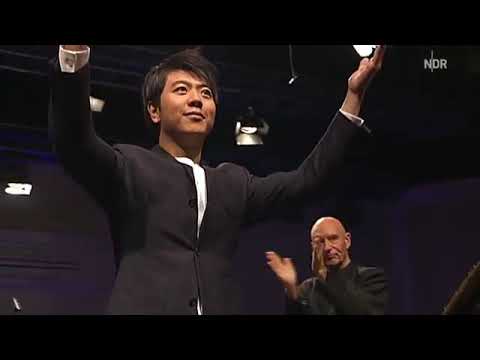
Beethoven Piano Concerto n.º 5 Emperor | Lang Lang and Christoph Eschenbach
YouTube · 43m
FreeLong