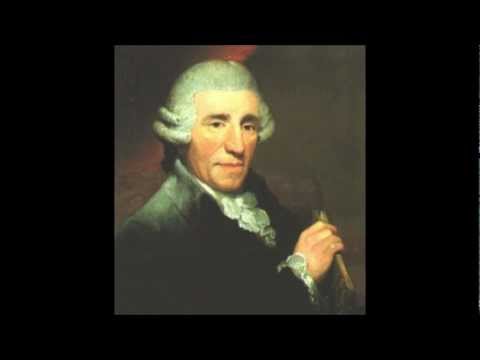
Joseph Haydn
Your profile, built from Spotify + Wikipedia/Wikidata + your indexed library.
Born / died
1732-1809
Movement
Classicism
Location
Worked in Vienna
Friends / contemporaries
Ludwig van Beethoven, Domenico Scarlatti, François Couperin +3 more

Franz Joseph Haydn is the composer who, more than any other, epitomizes the aims and achievements of the Classical era.Spotify
Perhaps his most important achievement was that he developed and evolved the most influential structural principle in the history of music: his perfection of the set of expectations known as sonata form made an epochal impact. In hundreds of instrumental sonatas, string quartets, and symphonies, Haydn both broke new ground and provided durable models; indeed, he was among the creators of these fundamental genres of classical music.Spotify
He also wrote several masterful oratorios and masses, especially in his later years. His operas, too, have finally come to be regarded as well-crafted and deserving of far greater attention than they had historically received in the 20th century. His influence upon later composers is immeasurable; Haydn's most illustrious pupil, Beethoven, was the direct beneficiary of the elder master's musical imagination, and Haydn's shadow lurks within (and sometimes looms over) the music of composers like Schubert, Mendelssohn, and Brahms.Spotify
Part and parcel of Haydn's formal mastery was his famous sense of humor, his feeling for the unpredictable, elegant twist. By one estimate, Haydn produced some 340 hours of music, more than Bach or Handel, Mozart or Beethoven. Few of them lack some unexpected detail or clever solution to a formal problem.Spotify
Haydn was prolific not just because he was a tireless worker with an inexhaustible musical imagination, but also because of the circumstances of his musical career: he was the last prominent beneficiary of the system of noble patronage that had nourished European musical composition since the Renaissance. Born in the small Austrian village of Rohrau, he became a choirboy at St. Stephen's cathedral in Vienna when he was eight, later joined by his younger brother, Michael Haydn, also destined to be a composer.Spotify
After Haydn's voice broke and he was turned out of the choir, he eked out a precarious living as a teenage freelance musician in Vienna. His fortunes began to turn in the late 1750s as members of Vienna's noble families became aware of his music, and on May 1, 1761, he went to work for the Esterházy family. He remained in their employ for the next 30 years, writing many of his instrumental compositions, which included dozens of keyboard sonatas and trios for the now forgotten instrument, the baryton, and operas for performance at their vast summer palace, Esterháza.Spotify
Musical creativity may often, it is true, meet a tragic end, but Haydn lived long enough to reap the rewards of his own imagination and toil. The Esterházys curtailed their musical activities in 1790, but by that time Haydn was known all over Europe and widely considered the greatest living composer. (He himself deferred to Mozart in that regard, and the friendly competition between the two composers deepened the music of both.) Two trips to London during the 1790s resulted in two sets of six symphonies each (among them the "Surprise" symphony) that remain centerpieces of the orchestral repertoire. Five sets of string quartets were also published between 1790 and 1799.Spotify
Haydn's final masterpieces included powerful and pictorial choral works: The Creation and The Seasons oratorios and a group of six masses. He stopped composing in 1803, after which he prefaced his correspondence with a little musical quotation (from one of his part-songs) bearing the text "Gone is all my strength; I am old and weak." He died in Vienna on May 31, 1809.Spotify
~ TiVo Staff, Rovi
role: composer · 90%era: Baroquemovement: Classicism1732–1809
Movement
Classicism · Wikipedia
Classicism, in the arts, refers generally to a high regard for a classical period, classical antiquity in the Western tradition, as setting standards for taste which the classicists seek to emulate. In its purest form, classicism is an aesthetic attitude dependent on principles based in the culture, art and literature of ancient Greece and Rome, with the emphasis on form, simplicity, proportion, clarity of structure, perfection and restrained emotion, as well as explicit appeal to the intellect. The art of classicism typically seeks to be formal and restrained: of the Discobolus Sir Kenneth Clark observed, "if we object to his restraint and compression we are simply objecting to the classicism of classic art. A violent emphasis or a sudden acceleration of rhythmic movement would have destroyed those qualities of balance and completeness through which it retained until the present century its position of authority in the restricted repertoire of visual images." Classicism, as Clark noted, implies a canon of widely accepted ideal forms, in the Western canon that he was examining in The Nude (1956).
How this movement sounds
steady pulsebasso continuocounterpointornamentationdance rhythmsterraced dynamics
Baroque listening cues: a steady pulse, energetic rhythmic drive, and lots of repeating patterns and sequences that feel like the music is constantly in motion.
Texture is often built from basso continuo (a bass line plus chords, frequently harpsichord or organ) and counterpoint: several independent lines weaving together (fugue-like thinking even when it's not a fugue).
Baroque expression is often about articulation and rhythm more than massive crescendos. Dynamics can be terraced (step-like) and the emotional character is often sustained rather than dramatically 'swung' every few bars.
Listen for dance rhythms in suites (courante, sarabande, gigue) and for how harmony supports long, flowing lines: tension is created by rhythmic drive and line-shape, not by sudden harmonic shocks.
If you're new to the sound: try following just the bass line (continuo). When you can hear that steady foundation, the rest of the counterpoint becomes much easier to 'read' by ear.
How Joseph Haydn sounds
counterpointdance rhythmssteady pulseornamentssequences
Baroque music often sounds rhythmically steady and patterned, with repeating figures and clear harmonic direction.
You will frequently hear counterpoint (multiple independent lines) and dance-derived pulses underneath the surface.
Ornamentation (trills, turns) tends to decorate the melody, and intensity builds by layering lines rather than by sudden harmonic shocks.
Wikipedia
Franz Joseph Haydn ( HY-dən; German: [ˈfʁants ˈjoːzɛf ˈhaɪdn̩] ; 31 March 1732 – 31 May 1809) was an Austrian composer of the Classical period.Wikipedia
He was pivotal in the evolution of chamber music forms such as the string quartet and piano trio. His contributions to musical form have led him to be called "Father of the Symphony", "Father of the String quartet" and "Father of Sonata Form".Wikipedia
Haydn rose from humble origins as the child of working people in a rural village. He established his career firstly by serving as a chorister at St. Stephen's Cathedral, Vienna, then through an arduous period as a freelance musician.Wikipedia
Eventually he found career success, spending much of his working life as music director for the wealthy Esterházy family at their palace of Eszterháza in rural Hungary. Though he had his own orchestra there, it isolated him from other composers and trends in music so that he was, as he put it, "forced to become original". During this period his music circulated widely in publication, eventually making him the most celebrated composer in Europe.Wikipedia
Notable works include the Paris and London symphonies. With the death of his patron Nikolaus Esterházy in 1790, Haydn became free to travel, and augmented his fame as a performer before the public in both London and Vienna. Late in life, he composed the oratorios The Creation (1798) and The Seasons (1801).Wikipedia
The last years of…Wikipedia
Interview highlights
Built from indexed interview/masterclass transcripts (podcasts / YouTube). Quotes are direct excerpts with source links.
Interview highlights for Joseph Haydn from 2 sources. Quotes below are direct excerpts; open the source link for context.
Topics that recur (auto): Music, Hyden, Think, London, Time, Well, Britain, Know.
Source: youtube_captions · 4wObzOOBwZA · 7:40 · published 2024-04-03 · Open source
Source: youtube_captions · EDc2APzwT2w · 3:48 · published 2015-11-21 · Open source
Source: youtube_captions · 4wObzOOBwZA · 15:18 · published 2024-04-03 · Open source
Source: youtube_captions · EDc2APzwT2w · 3:59 · published 2015-11-21 · Open source
Source: youtube_captions · 4wObzOOBwZA · 15:23 · published 2024-04-03 · Open source
Source: youtube_captions · EDc2APzwT2w · 3:43 · published 2015-11-21 · Open source
Transcript sources (2)
Study resources & scores
Curated study material and indexed score links related to Joseph Haydn.
No related study resources yet. As more lectures, transcripts, and scores are indexed, they will show up here.
Local matches
Matches your current indexed library (videos table). This will be sparse until connectors run.
 Play video
YouTube · published 2026-06-06 · 22m
Franz Joseph Haydn – Symphony No. 96, "Miracle" | Lakes Area Music Festival 2025
2025Symphony22m
FreeLongLive

France Musique · published 2026-05-29
Quelle musique entendez-vous sur "Les Proverbes flamands" de Pieter Bruegel le Jeune ?
2026
Free
 Play video
YouTube · published 2026-05-11 · 45m
Choir of the Earth presents: Joseph Haydn's Harmoniemesse ("Harmony Mass") | A Concert Premiere
202645mHarmony
FreeFull concertLongLive
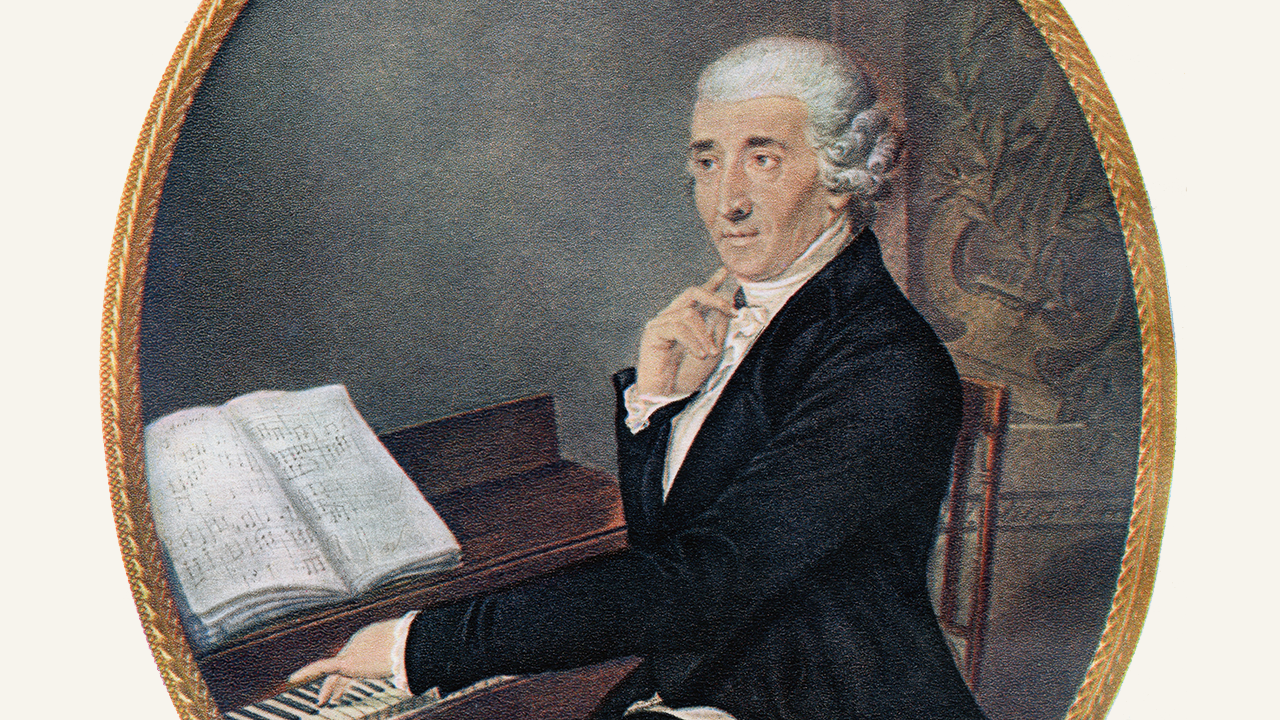
France Musique · published 2026-03-13
Une heure et plus, un compositeur : Joseph Haydn
2026
Free
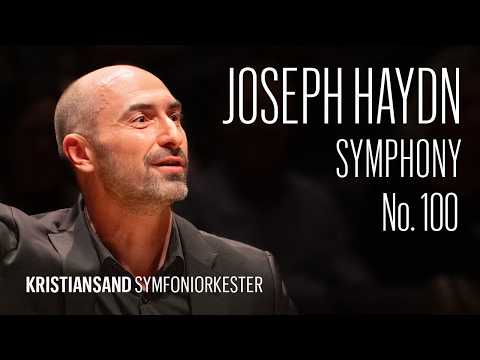 Play video
YouTube · published 2026-03-05 · 24m
Joseph Haydn: Symphony No. 100 in G major, "Military" - Peter Whelan
FreeLongLive
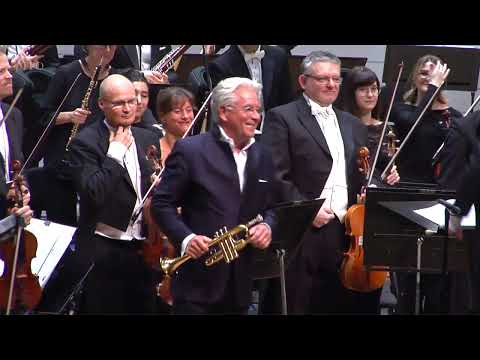 Play video
YouTube · published 2025-07-31 · 15m
Joseph Haydn: Trumpet Concerto in E-flat major, Hob.VIIe:1 | Turku Philharmonic Orchestra
FreeLive
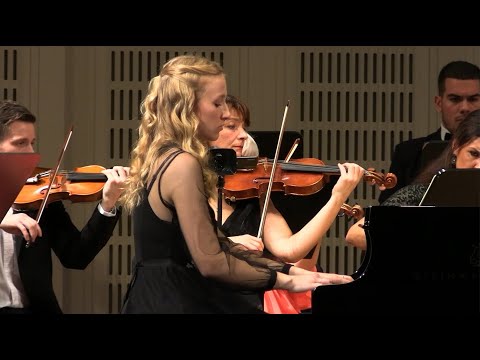 Play video
YouTube · published 2024-07-31 · 22m
Veronika Huber: Joseph Haydn - Piano Concerto No. 11 in D Major - Hámori/Danubia Symphony Orchestra
FreeLongLive
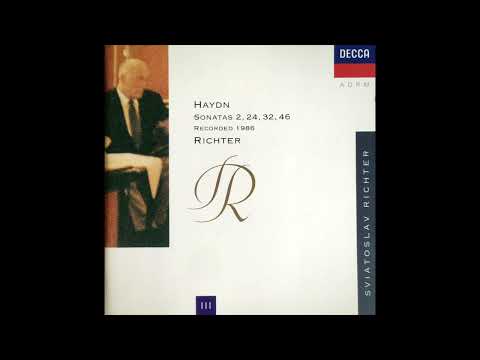 Play video
YouTube · published 2023-07-05 · 2h 51m
Joseph Haydn (1732 - 1809) | 10 piano sonatas | Sviatoslav Richter | Live recordings
20232h 51m
FreeFull concertLongLive
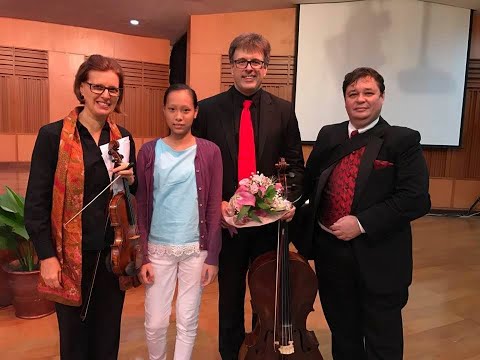 Play video
YouTube · published 2021-07-15 · 26m
Joseph Haydn - Cello Concerto in C Major @ Concert Hall of UPH Conservatory of Music on 11.02.2017
2017Concerto26m
FreeLongLive
 Play video
YouTube · published 2021-05-08 · 2h 47m
Festival Kvarner - Joseph Haydn - Opera Orlando paladino [Virtual Concert Hall - 3. concert]
20212h 47m
FreeFull concertLongLive
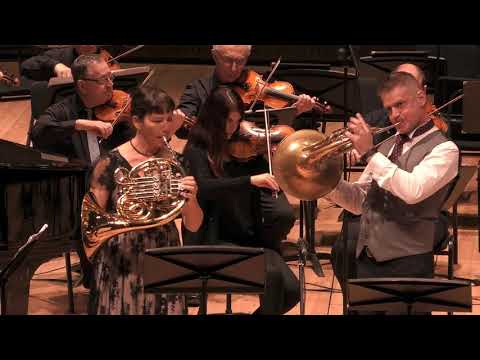 Play video
YouTube · published 2020-08-06 · 18m
Joseph Haydn / Concerto for two horns and orchestra / Israel Camerata Jerusalem
2020Concerto18m
FreeLive
 Play video
YouTube · published 2018-07-18 · 24m
Joseph Haydn: Symphony No. 82 in C major
FreeLongLive
 Play video
YouTube · published 2017-02-13 · 20m
Recital Round: Ulysses Quartet - Franz Joseph Haydn, String Quartet, Op. 76, No. 5
2017QuartetOp.20m
FreeLongLive
 Play video
YouTube · published 2017-02-13 · 26m
Recital Round: Rolston String Quartet - Franz Joseph Haydn, String Quartet, Op. 77, No. 1
2017QuartetOp.26m
FreeLongLive
 Play video
YouTube · published 2017-02-13 · 22m
Recital Round: Castalian String Quartet - Franz Joseph Haydn, String Quartet, Op. 76, No. 1
2017QuartetOp.22m
FreeLongLive
 Play video
YouTube · published 2017-02-13 · 1h 9m
Joseph Haydn, Stabat Mater, English Concert & Choir, Pinnock
20171h 9m
FreeFull concertLongLive
 Play video
YouTube · published 2016-08-07 · 18m
JOSEPH HAYDN - Concerto for organ and orchestra C - Dur (REMASTERED)
2016Concerto18m
FreeLive
 Play video
YouTube · published 2016-08-01 · 19m
Joseph Haydn concerto for violin, piano and orchestra in F major
2016Concerto19m
FreeLive
 Play video
YouTube · published 2015-02-14 · 35m
Joseph Haydn Symphony No 71 in B flat major Hob I 71
2015Symphony35m
FreeLongLive
 Play video
YouTube · published 2013-08-08 · 22m
Joseph Haydn: Symphony in D major, no. 6 'Le Matin'
FreeLongLive
 Play video
YouTube · published 2013-08-02 · 28m
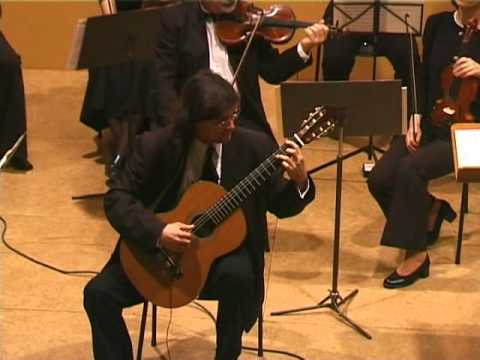
Joseph Haydn Concerto for Guitar and Orchestra in C Major HobVIIb/1
2013Concerto28m
FreeLongLive
 Play video
YouTube · published 2013-02-14 · 28m
Joseph Haydn Symphony nº 66 Hob. I:67 in F major
2013Symphony28m
FreeLongLive
 Play video
YouTube · published 2012-07-14 · 1h 2m
Joseph Haydn - The Seven Last Words of Christ (Full Concert) (Full HD)
20121h 2m
FreeFull concertLongLive
Saved playlist songs
Tracks from your saved Spotify playlist that are attributable to Joseph Haydn.
No Spotify playlist is seeded yet.
No attributable tracks for this person in your saved playlist songs yet.