John Eliot Gardiner
Your profile, built from Spotify + Wikipedia/Wikidata + your indexed library.
Born / died
1943
Movement
20th-century classical
Location
Worked in England
Friends / contemporaries
Michael Nyman, Yiruma, Alain Lefèvre +3 more

Conductor John Eliot Gardiner is a leading figure in the historical performance movement, having founded the Monteverdi Choir for performances of Baroque music and the Orchestre Révolutionnaire et Romantique, devoted to music of the 19th century.Spotify
He is especially noted for performances and recordings of Bach's choral music, and his label, Soli Deo Gloria ("To the Glory of God Only"), takes its name from the small S.D.G. signature Bach affixed to many of his works. Gardiner was born on April 20, 1943, in the village of Fontmell Magna in England's Dorset County.Spotify
It is worth notice that for the first part of his musical education, he was largely self-taught: he sang in a village church choir and played the violin. At 15, he took up conducting, and while he was studying history, Arabic, and medieval Spanish at Cambridge, he also began conducting choirs there. He led choirs from Oxford and Cambridge on a Middle Eastern tour while still an undergraduate, and in 1964, he conducted a performance of Monteverdi's Vespers of 1610, a work little known at the time.Spotify
Out of this performance grew the Monteverdi Choir, his primary performing ensemble. Gardiner studied musicology and conducting with Thurston Dart and Nadia Boulanger in the mid-'60s, which was his only period of formal musical study. In 1968, he founded a Monteverdi Orchestra to go with the choir; in the '70s, the group began to use Baroque instruments and was renamed the English Baroque Soloists.Spotify
With this group and the Monteverdi Choir, Gardiner has made recordings numbering in the hundreds. Mostly during the first part of his career, he also worked with conventional symphony orchestras. His U.S. debut came in 1979 with the Dallas Symphony Orchestra, and in the '80s and early '90s, he was music director of the CBC Vancouver Symphony Orchestra, the Opera de Lyon Orchestra, and the North German Radio Orchestra (now the NDR Elbphilharmonie).Spotify
In 1990, as understanding of the historical instruments used in the music of Beethoven and subsequent composers was just developing, he founded the Orchestre Révolutionnaire et Romantique, leading it on tour in 1993 with a then recently rediscovered Messe solennelle of Berlioz. One of Gardiner's most celebrated accomplishments was his Bach Cantata Pilgrimage of 2000, with the Monteverdi Choir and English Baroque Soloists. The group toured for 52 weeks, performing all of Bach's cantatas at their appropriate times in the liturgical year, often in churches with relevance in Bach's own career.Spotify
The performances were recorded and issued in lavish packaging on Soli Deo Gloria, with essays by Gardiner delving into the meaning of each work. These essays led Gardiner to publish a book, Bach: Music in the Castle of Heaven (2013). Gardiner has also recorded for Deutsche Grammophon, Philips, and other labels.Spotify
His Schumann symphony recordings with the Orchestre Révolutionnaire et Romantique are credited with introducing a trend toward smaller forces in those works. Another major tour came in Spain in 2004, as Gardiner and the Monteverdi Choir retraced the medieval Camino de Santiago pilgrimage route and sang medieval Spanish repertory. Gardiner has also appeared as a guest conductor with major symphony orchestras, including the Berlin Philharmonic, the Chicago Symphony, and the Cleveland Orchestra.Spotify
His recording career has not slackened in the least in his senior citizen years, as he has often released a half-dozen recordings per year or more. In 2019, he and the Monteverdi Choir released Love is come again, featuring music from the Springhead Easter Play, a mime event staged annually at Gardiner's family home and originally directed by his mother. He was not slowed much in 2020 by the coronavirus pandemic, for he already had material in the hopper, including a modern-instrument recording of a pair of Schumann symphonies with the London Symphony Orchestra.Spotify
He returned in 2022 with the Monteverdi Choir and English Baroque Soloists in a new recording for the Deutsche Grammophon label of Bach's St. John Passion, BWV 245. Gardiner's many awards include designation as Commander of the British Empire in 1990 and as Chevalier of the Legion of Honor in France in 2011.Spotify
~ James Manheim, Rovi
role: interpreter · 65%instrument: conductorera: Modernmovement: 20th-century classical1943
Movement
20th-century classical
How this movement sounds
new harmoniesnew rhythmsneoclassicismatonalityminimalismsharp contrasts
20th-century classical listening cues: variety and experimentation. Some music keeps older forms (neoclassicism) but with sharper harmonies, leaner textures, and motoric rhythms.
Other strands move toward atonality (no clear tonal center) or explore new scales and sonorities; rhythm can become more complex, more mechanical, or more jagged.
Timbre and texture are often treated as structural elements: changes in sound color can function like 'harmonic' events.
A practical way to listen: instead of expecting a 'tune', track motives (tiny cells), rhythm, and register. Modern pieces often build form by transforming small units rather than by long melodies.
Minimalism is another common thread: repetition, gradual change, and a focus on pulse and process over long spans.
How John Eliot Gardiner sounds
new harmonyrhythmic bitecolor & textureminimal patternsextended techniques
Modern/contemporary music varies wildly, but you will often hear experimentation with harmony, rhythm, and sound color as primary material.
Some strands emphasize rhythmic bite and sharp contrasts; others explore timbre and atmosphere; minimalism builds from repeating patterns and gradual change.
If the music feels less about singable melody and more about texture, pulse, or color, you are probably hearing a modern idiom.
Wikipedia
Sir John Eliot Gardiner (born 20 April 1943) is an English conductor, particularly known for his performances of the works of Johann Sebastian Bach, especially the Bach Cantata Pilgrimage of 2000, performing Bach's church cantatas in liturgical order in churches all over Europe, and New York City with the Monteverdi Choir, and recording them at the locations.Wikipedia
He is the author of Music in the Castle of Heaven: A Portrait of Johann Sebastian Bach and presenter of the documentary Bach: A Passionate Life.Wikipedia
Study resources & scores
Curated study material and indexed score links related to John Eliot Gardiner.
No related study resources yet. As more lectures, transcripts, and scores are indexed, they will show up here.
Local matches
Matches your current indexed library (videos table). This will be sparse until connectors run.

France Musique · published 2026-06-05
John Eliot Gardiner dirige la Passion selon saint Jean de Bach
2026
Free

France Musique · published 2026-05-14
Le Bach du matin avec le choeur Monteverdi
2026
FreeFull concert

France Musique · published 2026-05-07
John Eliot Gardiner dirige Orphée et Euridice de Gluck
2026
FreeFull concert

France Musique · published 2026-04-14
Le Bach du matin avec John Eliot Gardiner
2026
FreeFull concert

France Musique · published 2026-04-05
Le Bach du dimanche 05 avril 2026
2026
Free

France Musique · published 2026-03-31
Le printemps selon Schumann, Debussy, Chopin, Mahler, Chausson…
2026
FreeFull concert
 Play video
YouTube · published 2025-12-13 · 30m
Mozart: Piano Concerto No. 27 | Maria João Pires, Sir John Eliot Gardiner, London Symphony Orchestra
FreeLongLive
 Play video
YouTube · published 2025-11-13 · 34m
Tchaikovsky: Symphony No. 2 | London Symphony Orchestra & Sir John Eliot Gardiner
FreeLongLive
 Play video
YouTube · published 2023-03-14 · 40m
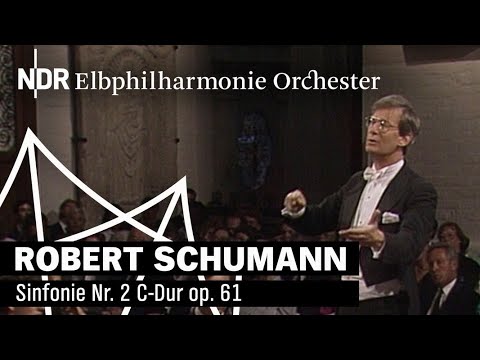
Schumann: Symphony No. 2 C Major | John Eliot Gardiner | SHMF 1989 | NDR Elbphilharmonie Orchestra
FreeLongLive
 Play video
YouTube · published 2020-02-13 · 28m
Haydn Symphony 44 E minor Trauersinphonie John Eliot Gardiner BRSO
2020Symphony28m
FreeLongLive
Saved playlist songs
Tracks from your saved Spotify playlist that are attributable to John Eliot Gardiner.
No Spotify playlist is seeded yet.
No attributable tracks for this person in your saved playlist songs yet.