John Cage
Your profile, built from Spotify + Wikipedia/Wikidata + your indexed library.
Born / died
1912-1992
Movement
Fluxus
Location
Worked in Europe, New York City
Friends / contemporaries
Alain Lefèvre, Alexander Melnikov, Alexander Vedernikov +3 more

role: unknown · 20%era: Modernmovement: Fluxus1912–1992
Movement
Fluxus
How this movement sounds
new harmoniesnew rhythmsneoclassicismatonalityminimalismsharp contrasts
20th-century classical listening cues: variety and experimentation. Some music keeps older forms (neoclassicism) but with sharper harmonies, leaner textures, and motoric rhythms.
Other strands move toward atonality (no clear tonal center) or explore new scales and sonorities; rhythm can become more complex, more mechanical, or more jagged.
Timbre and texture are often treated as structural elements: changes in sound color can function like 'harmonic' events.
A practical way to listen: instead of expecting a 'tune', track motives (tiny cells), rhythm, and register. Modern pieces often build form by transforming small units rather than by long melodies.
Minimalism is another common thread: repetition, gradual change, and a focus on pulse and process over long spans.
How John Cage sounds
new harmonyrhythmic bitecolor & textureminimal patternsextended techniques
Modern/contemporary music varies wildly, but you will often hear experimentation with harmony, rhythm, and sound color as primary material.
Some strands emphasize rhythmic bite and sharp contrasts; others explore timbre and atmosphere; minimalism builds from repeating patterns and gradual change.
If the music feels less about singable melody and more about texture, pulse, or color, you are probably hearing a modern idiom.
Wikipedia
John Milton Cage Jr. (September 5, 1912 – August 12, 1992) was an American composer, visual artist and music theorist.Wikipedia
A pioneer of indeterminacy in music, electroacoustic music, and non-standard use of musical instruments, Cage was one of the leading figures of the post-war avant-garde. Critics have lauded him as one of the most influential composers of the 20th century.Wikipedia
He was also instrumental in the development of modern dance, mostly through his association with choreographer Merce Cunningham, who was also Cage's romantic partner for most of their lives. Cage's teachers included Henry Cowell (1933) and Arnold Schoenberg (1933–35), both known for their radical innovations in music, but Cage's major influences lay in various East and South Asian cultures. Through his studies of Indian philosophy and Zen Buddhism in the late 1940s, Cage came to the idea of aleatoric or chance-controlled music, which he started composing in 1951.Wikipedia
The I Ching, an ancient Chinese classic text and decision-making tool, became Cage's standard composition tool for the rest of his life. In a 1957 lecture, "Experimental Music", he described music as "a purposeless play" which is "an affirmation of life – not an attempt to bring order out of chaos nor to suggest improvements in creation, but simply a way of waking up to the very life we're living". Cage's best known work is the 1952 composition…Wikipedia
Study resources & scores
Curated study material and indexed score links related to John Cage.
No related study resources yet. As more lectures, transcripts, and scores are indexed, they will show up here.
Local matches
Matches your current indexed library (videos table). This will be sparse until connectors run.

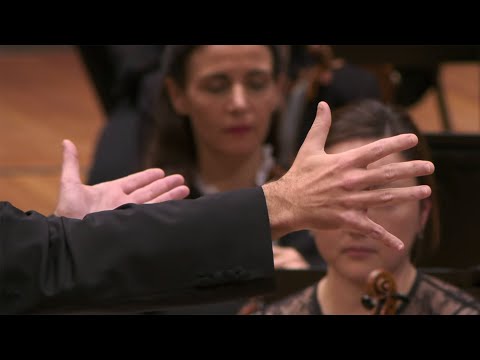 Play video
Berlin Philharmonic · published 2021-05-18 · 3m
John Cage: 4'33'' / Petrenko · Berliner Philharmoniker
Free
Saved playlist songs
Tracks from your saved Spotify playlist that are attributable to John Cage.
No Spotify playlist is seeded yet.
No attributable tracks for this person in your saved playlist songs yet.