Johann Sebastian Bach
Your profile, built from Spotify + Wikipedia/Wikidata + your indexed library.
Born / died
1685-1750
Movement
Baroque
Location
Worked in MüHlhausen/Thuringia, Weimar +3 more
Friends / contemporaries
Arcangelo Corelli, Domenico Scarlatti, François Couperin +1 more

Johann Sebastian Bach was better known as a virtuoso organist than as a composer in his day.Spotify
His sacred music, organ and choral works, and other instrumental music had an enthusiasm and seeming freedom that concealed immense rigor. Bach's use of counterpoint was brilliant and innovative, and the immense complexities of his compositional style -- which often included religious and numerological symbols that seem to fit perfectly together in a profound puzzle of special codes -- still amaze musicians today.Spotify
Many consider him the greatest composer of all time. Bach was born in Eisenach in 1685. He was taught to play the violin and harpsichord by his father, Johann Ambrosius, a court trumpeter in the service of the Duke of Eisenach.Spotify
Young Johann was not yet ten when his father died, leaving him orphaned. He was taken in by his recently married oldest brother, Johann Christoph, who lived in Ohrdruf. Because of his excellent singing voice, Bach attained a position at the Michaelis monastery at Lüneberg in 1700.Spotify
His voice changed a short while later, but he stayed on as an instrumentalist. After taking a short-lived post in Weimar in 1703 as a violinist, Bach became organist at the Neue Kirche in Arnstadt (1703-1707). His relationship with the church council was tenuous as the young musician often shirked his responsibilities, preferring to practice the organ.Spotify
One account describes a four-month leave granted Bach, to travel to Lubeck where he would familiarize himself with the music of Dietrich Buxtehude. He returned to Arnstadt long after he was expected and much to the dismay of the council. He then briefly served at St.Spotify
Blasius in Mühlhausen as organist, beginning in June 1707, and married his cousin, Maria Barbara Bach, that fall. Bach composed his famous Toccata and Fugue in D minor (BWV 565) and his first cantatas while in Mühlhausen, but quickly outgrew the musical resources of the town. He next took a post for the Duke of Sachsen-Weimar in 1708, serving as court organist and playing in the orchestra, eventually becoming its leader in 1714.Spotify
He wrote many organ compositions during this period, including his Orgel-Büchlein. Owing to politics between the Duke and his officials, Bach left Weimar and secured a post in December 1717 as Kapellmeister at Cöthen. In 1720, Bach's wife suddenly died, leaving him with four children (three others had died in infancy).Spotify
A short while later, he met his second wife, soprano Anna Magdalena Wilcke, whom he married in December 1721. She would bear 13 children, though only five would survive childhood. The six Brandenburg Concertos (BWV 1046-51), among many other secular works, date from his Cöthen years.Spotify
Bach became Kantor of the Thomas School in Leipzig in May 1723 and held the post until his death. It was in Leipzig that he composed the bulk of his religious and secular cantatas. Bach eventually became dissatisfied with this post, not only because of its meager financial rewards, but also because of onerous duties and inadequate facilities.Spotify
Thus, he took on other projects, chief among which was the directorship of the city's Collegium Musicum, an ensemble of professional and amateur musicians who gave weekly concerts, in 1729. He also became music director at the Dresden Court in 1736, in the service of Frederick Augustus II; though his duties were vague and apparently few, they allowed him freedom to compose what he wanted. Bach began making trips to Berlin in the 1740s, not least because his son Carl Philipp Emanuel served as a court musician there.Spotify
In May 1747, the composer was warmly received by King Frederick II of Prussia, for whom he wrote the gloriously abstruse Musical Offering (BWV 1079). Among Bach's last works was his 1749 Mass in B minor. Besieged by diabetes, he died on July 28, 1750.Spotify
role: composer · 90%era: Baroquemovement: Baroque1685–1750
Movement
Baroque · Wikipedia
Baroque music refers to the period or dominant style of Western classical music composed from about 1600 to 1750. The Baroque style followed the Renaissance period, and was followed in turn by the Classical period after a short transition. Baroque music forms a major portion of the "classical music" canon, and continues to be widely studied, performed, and listened to. Key composers of the Baroque era include Jacopo Peri, who wrote the first operas; Alessandro Stradella, who originated the concerto grosso style; and Arcangelo Corelli, who was one of the first composers to publish widely and have his music performed across Europe.
How this movement sounds
steady pulsebasso continuocounterpointornamentationdance rhythmsterraced dynamics
Baroque listening cues: a steady pulse, energetic rhythmic drive, and lots of repeating patterns and sequences that feel like the music is constantly in motion.
Texture is often built from basso continuo (a bass line plus chords, frequently harpsichord or organ) and counterpoint: several independent lines weaving together (fugue-like thinking even when it's not a fugue).
Baroque expression is often about articulation and rhythm more than massive crescendos. Dynamics can be terraced (step-like) and the emotional character is often sustained rather than dramatically 'swung' every few bars.
Listen for dance rhythms in suites (courante, sarabande, gigue) and for how harmony supports long, flowing lines: tension is created by rhythmic drive and line-shape, not by sudden harmonic shocks.
If you're new to the sound: try following just the bass line (continuo). When you can hear that steady foundation, the rest of the counterpoint becomes much easier to 'read' by ear.
How Johann Sebastian Bach sounds
counterpointsteady pulsedance rhythmssequencingclear voicescadences
Bach is about interlocking lines: instead of one melody with backing, you often hear several voices that each feel purposeful.
You can recognize Bach by the clarity of the harmonic motion, the steady underlying pulse, and the way patterns repeat and climb (sequence) to build intensity.
Even when the texture is dense, try to follow one line at a time; the piece often reveals itself as a conversation between voices.
Wikipedia
Johann Sebastian Bach (31 March [O.S.Wikipedia
21 March] 1685 – 28 July 1750) was a German composer and musician of the late Baroque period. He is known for his prolific output across a variety of instruments and forms, including the orchestral Brandenburg Concertos; solo instrumental works such as the Cello Suites and Sonatas and Partitas for Solo Violin; keyboard works such as the Goldberg Variations and The Well-Tempered Clavier; organ works such as the Schübler Chorales and the Toccata and Fugue in D minor; and choral works such as the St.Wikipedia
Matthew Passion and the Mass in B minor. He is known for his mastery of counterpoint, as heard in The Musical Offering and The Art of Fugue. Felix Mendelssohn precipitated the Bach Revival with a performance of the St.Wikipedia
Matthew Passion in 1829. Ever since, Bach has been acclaimed as one of the greatest composers in the history of Western music. The Bach family had already produced several composers when Johann Sebastian was born in Eisenach, the youngest child of the city musician Johann Ambrosius Bach.Wikipedia
After being orphaned at age 10, he lived for five years with his eldest brother, Johann Christoph, then continued his musical education in Lüneburg. In 1703 he returned to Thuringia, working as a musician for Protestant churches in Arnstadt and Mühlhausen. Around that time he also paid extended visits to the courts in Weimar, where he expanded his…Wikipedia
YouTube (channel bio)
Johann Sebastian Bach was a German composer and musician of the late Baroque period.YouTube
He is known for his prolific output across a variety of instruments and forms, including the orchestral Brandenburg Concertos; solo instrumental works such as the Cello Suites and Sonatas and Partitas for Solo Violin; keyboard works such as the Goldberg Variations and The Well-Tempered Clavier; organ works such as the Schübler Chorales and the Toccata and Fugue in D minor; and choral works such as the St. Matthew Passion and the Mass in B minor.YouTube
He is known for his mastery of counterpoint, as heard in The Musical Offering and The Art of Fugue. Felix Mendelssohn precipitated the Bach Revival with a performance of the St. Matthew Passion in 1829.YouTube
Ever since, Bach has been acclaimed as one of the greatest composers in the history of Western music. The Bach family had already produced several composers when Johann Sebastian was born in Eisenach, the youngest child of the city musician Johann Ambrosius Bach. After being orphaned at age 10, he lived for five years with his eldest brother, Johann Christoph, then continued his musical education in Lüneburg.YouTube
Interview highlights
Built from indexed interview/masterclass transcripts (podcasts / YouTube). Quotes are direct excerpts with source links.
Interview highlights for Johann Sebastian Bach from 6 sources. Quotes below are direct excerpts; open the source link for context.
Topics that recur (auto): Music, Musical, Church, Then, Works, Yeah, Well, Years.
Source: youtube_captions · 7fSpKQyTGV0 · 5:55 · published 2017-10-26 · Open source
Source: youtube_captions · OeXKaS__6FM · 4:33 · published 2022-10-17 · Open source
Source: youtube_captions · tkWuuj8R_Vs · 4:28 · published 2023-03-28 · Open source
Source: youtube_captions · wrgJKCgXGEA · 8:48 · published 2022-09-23 · Open source
Source: youtube_captions · 6ovPUOLUeyQ · 8:41 · published 2026-06-11 · Open source
Source: youtube_captions · S7JBOw_Ghek · 8:43 · published 2026-05-25 · Open source
Transcript sources (18)
Study resources & scores
Curated study material and indexed score links related to Johann Sebastian Bach.
Lecture 16. Baroque Music: The Vocal Music of Johann Sebastian Bach
Yale (YouTube) · lecture · youtube, transcript
Local matches
Matches your current indexed library (videos table). This will be sparse until connectors run.
 Play video
YouTube · published 2026-07-23 · 22m
Johann Sebastian Bach – Concerto in D Major | Live
2026Concerto22m
FreeLongLive
 Play video
YouTube · published 2026-07-23 · 26m
LIVE! Johann Sebastian Bach. Maksym Shadko (piano)
202626m
FreeLongLive

France Musique · published 2026-06-19
Jean-Sébastien Bach : Passion selon Saint Jean - Jordi Savall, La Capella Reial de Catalunya, Le Concert des Nations
FreeFull concert

France Musique · published 2026-05-29
Bach on the Edge. A Selection of Harpsichord Works - Cristiano Gaudio
2026Harpsichord
Free
 Play video
YouTube · published 2026-05-26 · 53m
César Franck, Johann Sebastian Bach | Practice Goes Live – May 19
202653m
FreeFull concertLongLive


France Musique · published 2026-04-16
Víkingur Ólafsson : le son comme reflet 4/5 : "Le son, c'est le reflet qui vous êtes et c’est différent d’un jour à l’autre"
Free
 Play video
YouTube · published 2026-04-08 · 3h 2m
LIVE: Иоганн Себастьян Бах — «Страсти по Иоанну» || Johann Sebastian Bach — The John Passion
20263h 2m
FreeFull concertLongLive
 Play video
Philharmonie de Paris · published 2025-09-22 · 5m
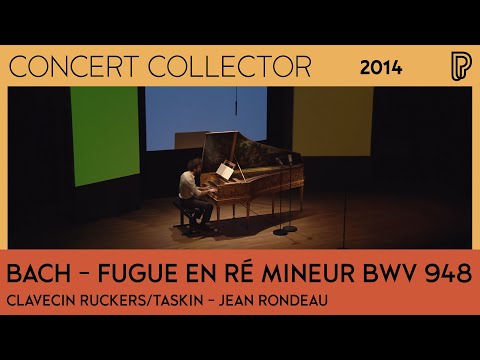
Johann Sebastian Bach – Fugue en ré mineur BWV 948 | Jean Rondeau, clavecin Ruckers/Taskin (2014)
2014BWV5mFugueHarpsichord
FreeLive
 Play video
YouTube · published 2024-02-12 · 26m
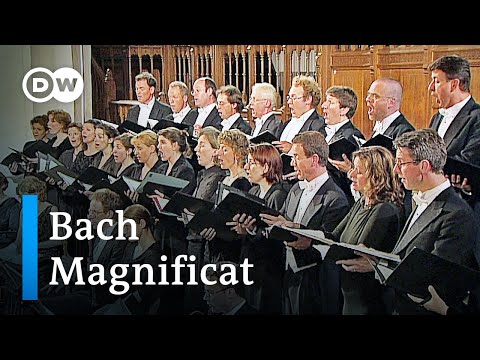
Johann Sebastian Bach: Magnificat in E-flat major | Ton Koopman, Amsterdam Baroque Orchestra & Choir
FreeLongLive
 Play video
YouTube · published 2020-08-06 · 12m
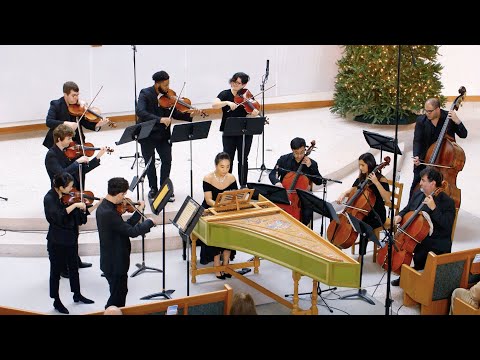
Johann Sebastian Bach: Brandenburg Concerto No. 3 in G Major • Kaleidoscope Chamber Orchestra
FreeLive
 Play video
Zurich Chamber Orchestra (Zuercher Kammerorchester) · published 2020-05-21 · 1m
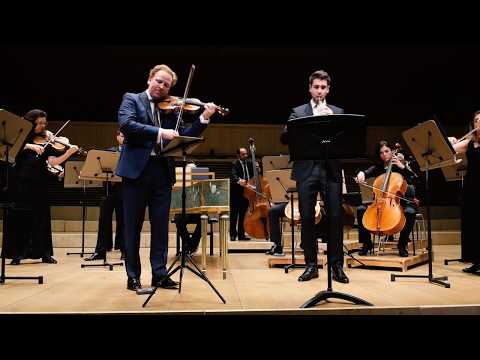
Konzert d-Moll für Oboe, Violine, Streicher und b.c. nach BWV 1060 von Johann Sebastian Bach
2020BWV1m
FreeLive
Play videoYouTube · published 2020-02-28
Konzert d-Moll für Oboe, Violine, Streicher und b.c. nach BWV 1060 von Johann Sebastian Bach
2020BWV
FreeFull concert
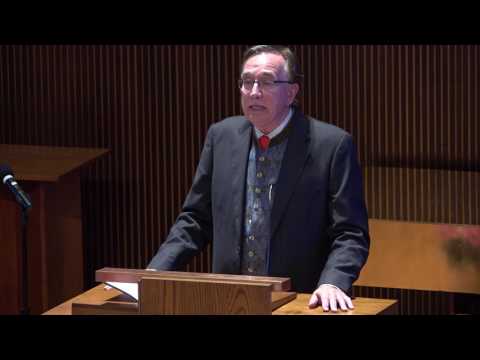 Play video
YouTube · published 2018-02-13 · 51m
Organ Recital on Johann Sebastian Bach
201851m
FreeFull concertLongLive
 Play video
YouTube · published 2017-06-01 · 2h 50m
Johann Sebastian Bach, Matthaus Passion, Live 1989
19892h 50m
FreeFull concertLongLive
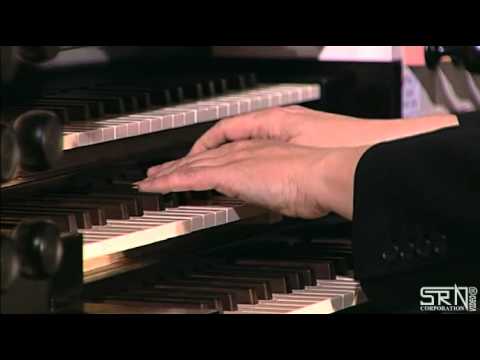 Play video
YouTube · published 2014-08-08 · 56m
Johann Sebastian Bach. Organ Concert in St. Thomas Church. Ullrich Bohme (organ)
201456m
FreeFull concertLongLive
 Play video
YouTube · 57m
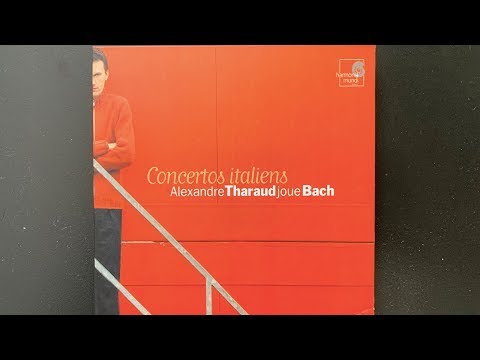
Johann Sebastian Bach "Concertos Italiens", Alexandre Tharaud
57m
FreeFull concertLong
Saved playlist songs
Tracks from your saved Spotify playlist that are attributable to Johann Sebastian Bach.
No Spotify playlist is seeded yet.
No attributable tracks for this person in your saved playlist songs yet.