Jean-Efflam Bavouzet
Your profile, built from Spotify + Wikipedia/Wikidata + your indexed library.
Born / died
1962
Movement
20th-century classical
Location
Born in Lannion
Friends / contemporaries
Alexandre Tharaud, Hélène Grimaud, Bertrand Chamayou +3 more
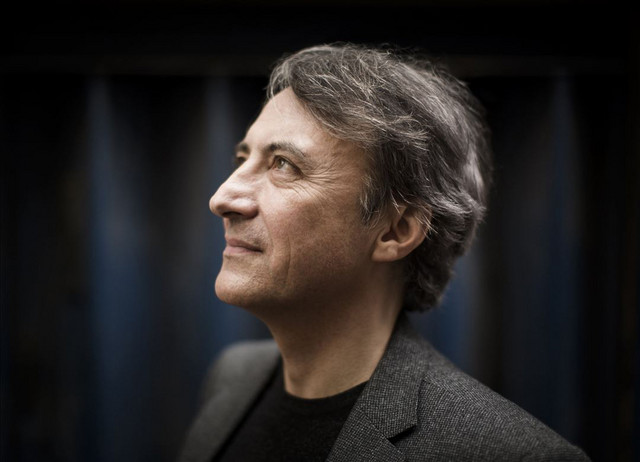
Jean-Efflam Bavouzet has achieved acclaim for a variety of disparate repertories, but particularly for his complete cycles of music by Haydn, Debussy, Ravel, Bartók, and Prokofiev.Spotify
He has performed and recorded with a wide array of ensembles and conductors throughout the world and has achieved success critically. Bavouzet was born in Lannion, France, on October 17, 1962.Spotify
He studied music at the Paris Conservatory with Pierre Sancan. In 1986, Bavouzet won the Beethoven International Competition in Cologne. Three years later, he was given the Steven de Groote Memorial Award for best chamber music performance at the Van Cliburn Competition.Spotify
While Bavouzet enjoyed reasonable success in the wake of these triumphs, including his appearance on a 1993 Accord release of works by Stockhausen, his breakthrough came in 1995 when he debuted with the Orchestre de Paris at the invitation of Georg Solti. In a 1998 concert with the Orchestre de Paris, Bavouzet collaborated with Pierre Boulez, a conductor with whom he would make many subsequent appearances, both in France and abroad. Bavouzet has concertized throughout Europe, the U.K., the U.S., and Asia and has appeared with many leading conductors, including Gergiev, Ashkenazy, Boulez, and Gianandrea Noseda.Spotify
Bavouzet has found continued success as his career has progressed, not least because of his considerable activity in the recording studio. He recorded the complete piano works of Ravel to acclaim for MDG in 2003. For his initial project with Chandos, he issued the complete piano works of Debussy in 2006, with critics broadly approving of each release.Spotify
In 2008, he began recording the complete piano sonatas by Beethoven, the first of which was released in 2012. Bavouzet distinguished himself further when in 2009, he played the challenging five Prokofiev concertos over two concerts with the Warsaw Philharmonic Orchestra and conductor Antoni Wit. That year, Bavouzet premiered a work dedicated to him, the Bruno Mantovani piano concerto The Book of Jeb, at the Piano aux Jacobins International Festival in Toulouse.Spotify
Bavouzet's repertory extends to individual works by Liszt, Tchaikovsky, and Pierné. The following year, he issued the first volume in a complete cycle of Haydn's sonatas. Alongside the Haydn cycle, Bavouzet began a survey of Mozart concertos in 2016, issuing the fifth volume in 2020.Spotify
In 2022, he released the tenth volume of his Haydn cycle. Bavouzet's recordings have won awards from the Grammophon and BBC Music magazines, as well as the Diapason d'Or and the Choc de l’année.Spotify
~ Robert Cummings & Keith Finke, Rovi
role: unknown · 20%era: Modernmovement: 20th-century classical1962
Movement
20th-century classical
How this movement sounds
new harmoniesnew rhythmsneoclassicismatonalityminimalismsharp contrasts
20th-century classical listening cues: variety and experimentation. Some music keeps older forms (neoclassicism) but with sharper harmonies, leaner textures, and motoric rhythms.
Other strands move toward atonality (no clear tonal center) or explore new scales and sonorities; rhythm can become more complex, more mechanical, or more jagged.
Timbre and texture are often treated as structural elements: changes in sound color can function like 'harmonic' events.
A practical way to listen: instead of expecting a 'tune', track motives (tiny cells), rhythm, and register. Modern pieces often build form by transforming small units rather than by long melodies.
Minimalism is another common thread: repetition, gradual change, and a focus on pulse and process over long spans.
How Jean-Efflam Bavouzet sounds
new harmonyrhythmic bitecolor & textureminimal patternsextended techniques
Modern/contemporary music varies wildly, but you will often hear experimentation with harmony, rhythm, and sound color as primary material.
Some strands emphasize rhythmic bite and sharp contrasts; others explore timbre and atmosphere; minimalism builds from repeating patterns and gradual change.
If the music feels less about singable melody and more about texture, pulse, or color, you are probably hearing a modern idiom.
Wikipedia
Jean-Efflam Bavouzet (born 17 October 1962) is a French classical pianist.Wikipedia
Study resources & scores
Curated study material and indexed score links related to Jean-Efflam Bavouzet.
No related study resources yet. As more lectures, transcripts, and scores are indexed, they will show up here.
Local matches
Matches your current indexed library (videos table). This will be sparse until connectors run.

France Musique · published 2026-08-04
Jean-Efflam Bavouzet : "Couvrir une intégrale, c'est comme être en haut d'une montagne"
Free

France Musique · published 2026-08-04
La Matinale avec Jean-Efflam Bavouzet
2026
Free
 Play video
Wigmore Hall · published 2023-05-18 · 2m
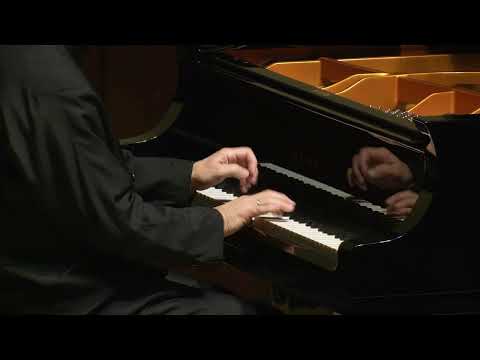
Jean-Efflam Bavouzet - Massenet, Toccata
20232m
FreeLive
Saved playlist songs
Tracks from your saved Spotify playlist that are attributable to Jean-Efflam Bavouzet.
No Spotify playlist is seeded yet.
No attributable tracks for this person in your saved playlist songs yet.