J. S. Bach
Your profile, built from Spotify + Wikipedia/Wikidata + your indexed library.
role: unknown · 20%era: Baroquemovement: Baroque1685–1750
Movement
Baroque · Wikipedia
Baroque music refers to the period or dominant style of Western classical music composed from about 1600 to 1750. The Baroque style followed the Renaissance period, and was followed in turn by the Classical period after a short transition. Baroque music forms a major portion of the "classical music" canon, and continues to be widely studied, performed, and listened to. Key composers of the Baroque era include Jacopo Peri, who wrote the first operas; Alessandro Stradella, who originated the concerto grosso style; and Arcangelo Corelli, who was one of the first composers to publish widely and have his music performed across Europe.
How this movement sounds
steady pulsebasso continuocounterpointornamentationdance rhythmsterraced dynamics
Baroque listening cues: a steady pulse, energetic rhythmic drive, and lots of repeating patterns and sequences that feel like the music is constantly in motion.
Texture is often built from basso continuo (a bass line plus chords, frequently harpsichord or organ) and counterpoint: several independent lines weaving together (fugue-like thinking even when it's not a fugue).
Baroque expression is often about articulation and rhythm more than massive crescendos. Dynamics can be terraced (step-like) and the emotional character is often sustained rather than dramatically 'swung' every few bars.
Listen for dance rhythms in suites (courante, sarabande, gigue) and for how harmony supports long, flowing lines: tension is created by rhythmic drive and line-shape, not by sudden harmonic shocks.
If you're new to the sound: try following just the bass line (continuo). When you can hear that steady foundation, the rest of the counterpoint becomes much easier to 'read' by ear.
How J. S. Bach sounds
counterpointdance rhythmssteady pulseornamentssequences
Baroque music often sounds rhythmically steady and patterned, with repeating figures and clear harmonic direction.
You will frequently hear counterpoint (multiple independent lines) and dance-derived pulses underneath the surface.
Ornamentation (trills, turns) tends to decorate the melody, and intensity builds by layering lines rather than by sudden harmonic shocks.
Wikipedia
Johann Sebastian Bach (31 March [O.S.Wikipedia
21 March] 1685 – 28 July 1750) was a German composer and musician of the late Baroque period. He is known for his prolific output across a variety of instruments and forms, including the orchestral Brandenburg Concertos; solo instrumental works such as the Cello Suites and Sonatas and Partitas for Solo Violin; keyboard works such as the Goldberg Variations and The Well-Tempered Clavier; organ works such as the Schübler Chorales and the Toccata and Fugue in D minor; and choral works such as the St.Wikipedia
Matthew Passion and the Mass in B minor. He is known for his mastery of counterpoint, as heard in The Musical Offering and The Art of Fugue. Felix Mendelssohn precipitated the Bach Revival with a performance of the St.Wikipedia
Matthew Passion in 1829. Ever since, Bach has been acclaimed as one of the greatest composers of classical music. The Bach family had already produced several composers when Johann Sebastian was born in Eisenach, the youngest child of the city musician Johann Ambrosius Bach.Wikipedia
After being orphaned at age 10, he lived for five years with his eldest brother, Johann Christoph, then continued his musical education in Lüneburg. In 1703 he returned to Thuringia, working as a musician for Protestant churches in Arnstadt and Mühlhausen. Around that time he also paid extended visits to the courts in Weimar, where he expanded his organ…Wikipedia
Your top pieces
Based on tracks in your saved Spotify playlist (not Spotify play history).
No Spotify playlist is seeded yet.
No attributable tracks for this person in your playlist yet.
Study resources & scores
Curated study material and indexed score links related to J. S. Bach.
No related study resources yet. As more lectures, transcripts, and scores are indexed, they will show up here.
Local matches
Matches your current indexed library (videos table). This will be sparse until connectors run.
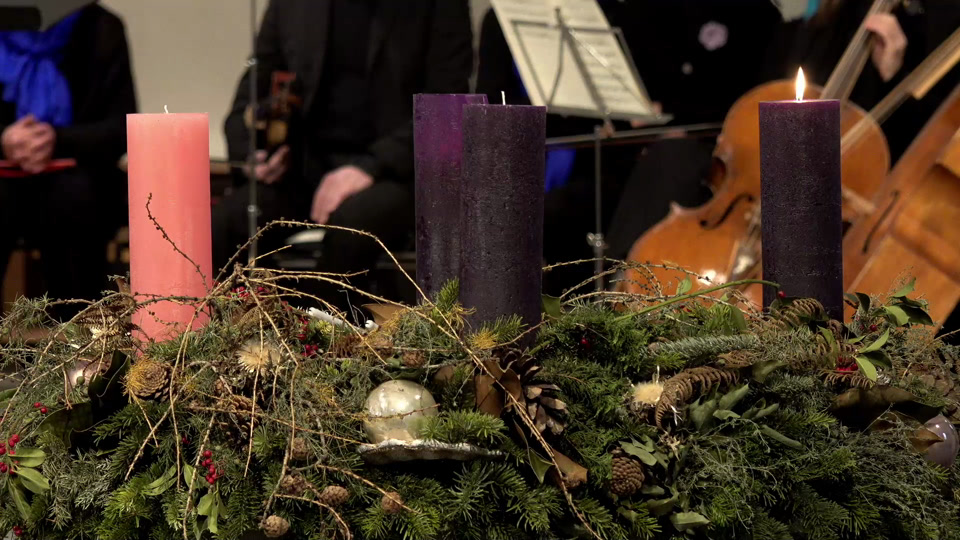
Ökumenischer Kantaten-Gottesdienst zum 2. Advent | «Nun kommt der Heiden Heiland», Kantate von J. S. Bach | mit Pfrn. Kathrin Rehmat; Thomas Münch, kath. Theologe; Zürcher Kantorei zu Predigern; Johannes Günther, Kantor - Predigerkirche
2023St. Peter Live ZurichFull concertLivepub 2023-12-10
St. Peter Live Zurich · FREE · published 2023-12-10
FreeFull concertLive

J. S. Bach: Recital of Organ Works
YouTube · FREE · 27m · published 2019-02-13
FreeLongLive

J. S. Bach – Suite française n°5 en sol majeur | Blandine Rannou, clavecin Ruckers/Taskin (2014)
2014SuitePhilharmonie de Paris16mHarpsichordLive
Philharmonie de Paris · FREE · 16m
FreeLive

J. S. Bach: Violin Concertos (Bohdan Warchal, Slovak Chamber Orchestra 1977-1980)
YouTube · FREE · 44m · published 2023-02-12
FreeLongLive

J. S. Bach: Konzert für zwei Klaviere c-Moll ∙ hr-Sinfonieorchester ∙ Fazıl Say ∙ Alain Altinoglu
YouTube · FREE · 15m
Free