Herbert Blomstedt
Your profile, built from Spotify + Wikipedia/Wikidata + your indexed library.
Born / died
1927
Movement
20th-century classical
Location
Born in Springfield
Friends / contemporaries
Philip Glass, Yo-Yo Ma, Víkingur Ólafsson +3 more
role: unknown · 20%era: Modernmovement: 20th-century classical1927
Movement
20th-century classical · Wikipedia
20th-century classical music is Western art music that was written between 1901 and 2000, inclusive. Musical style diverged during the 20th century as it never had previously, so this century was without a dominant style. Modernism, impressionism, and post-romanticism can all be traced to the decades before the turn of the 20th century, but can be included because they evolved beyond the musical boundaries of the 19th-century styles that were part of the earlier common practice period. Neoclassicism and expressionism came mostly after 1900. Minimalism started later in the century and can be seen as a change from the modern to postmodern era, although some date postmodernism from as early as about 1930. Aleatory, atonality, serialism, musique concrète, and electronic music were all developed during the century. Jazz and ethnic folk music became important influences on many composers during this century.
How this movement sounds
new harmoniesnew rhythmsneoclassicismatonalityminimalismsharp contrasts
20th-century classical listening cues: variety and experimentation. Some music keeps older forms (neoclassicism) but with sharper harmonies, leaner textures, and motoric rhythms.
Other strands move toward atonality (no clear tonal center) or explore new scales and sonorities; rhythm can become more complex, more mechanical, or more jagged.
Timbre and texture are often treated as structural elements: changes in sound color can function like 'harmonic' events.
A practical way to listen: instead of expecting a 'tune', track motives (tiny cells), rhythm, and register. Modern pieces often build form by transforming small units rather than by long melodies.
Minimalism is another common thread: repetition, gradual change, and a focus on pulse and process over long spans.
How Herbert Blomstedt sounds
new harmonyrhythmic bitecolor & textureminimal patternsextended techniques
Modern/contemporary music varies wildly, but you will often hear experimentation with harmony, rhythm, and sound color as primary material.
Some strands emphasize rhythmic bite and sharp contrasts; others explore timbre and atmosphere; minimalism builds from repeating patterns and gradual change.
If the music feels less about singable melody and more about texture, pulse, or color, you are probably hearing a modern idiom.
Wikipedia
Herbert Thorson Blomstedt (Swedish: [ˈhæ̌rːbɛʈ ˈblʊ̌mːstɛt]; born 11 July 1927) is an American-born Swedish conductor of classical music.Wikipedia
He was conductor of the Staatskapelle Dresden, the San Francisco Symphony and the Leipzig Gewandhaus Orchestra. At the age of 98, he continues to conduct concerts in Europe, the United States and Japan.Wikipedia
Study resources & scores
Curated study material and indexed score links related to Herbert Blomstedt.
No related study resources yet. As more lectures, transcripts, and scores are indexed, they will show up here.
Local matches
Matches your current indexed library (videos table). This will be sparse until connectors run.

France Musique · published 2026-05-20
Hommage à Michael Tilson Thomas (1944-2026). MTT et les années 90
1944
FreeFull concert
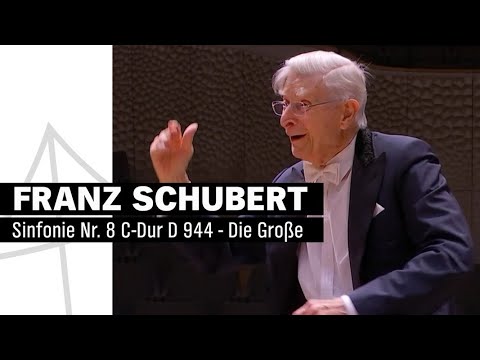 Play video
YouTube · published 2022-02-12 · 1h 0m
Schubert: Symphony No. 8 in C major (The Great) | Herbert Blomstedt | NDR Elbphilharmonie Orchester
FreeFull concertLongLive
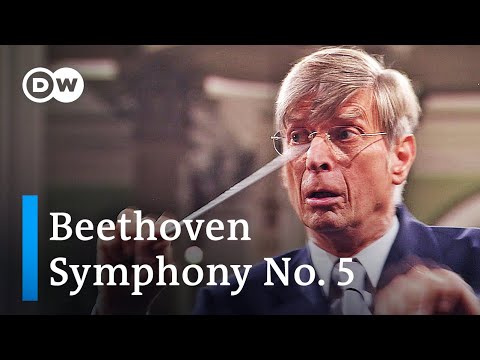 Play video
YouTube · published 2022-02-12 · 36m
Beethoven: Symphony No. 5 Fate Symphony | Herbert Blomstedt and the Gewandhausorchester Leipzig
FreeLongLive
Saved playlist songs
Tracks from your saved Spotify playlist that are attributable to Herbert Blomstedt.
No Spotify playlist is seeded yet.
No attributable tracks for this person in your saved playlist songs yet.