Giuseppe Verdi
Your profile, built from Spotify + Wikipedia/Wikidata + your indexed library.
Born / died
1813-1901
Movement
Romantic
Location
Worked in Milan, Rome +1 more
Friends / contemporaries
Anton Webern, Bedrich Smetana, Charles-Valentin Alkan +3 more

When he arrived on the scene some had suggested that effective opera after Rossini was not possible. Verdi, however, took the form to new heights of drama and musical expression.Spotify
Partisans see him as at least the equal of Wagner, even though his style and musical persona were of an entirely different cast. In the end, both Verdi's popular vein -- as heard in the operas Rigoletto, Il trovatore, and La traviata -- and his deeper side -- found in Aida, Otello, and Falstaff -- demonstrate his mastery and far-reaching development of Italian opera. Verdi showed talent by the age of seven and even played organ at a local church.Spotify
Around this time he was given an old piano, which he quickly learned to play with proficiency. He moved to Busseto in 1823 and began study the following year with Ferdinando Provesi. By age 15 he had become an assistant church organist and had already started composing.Spotify
Beginning in 1832, he studied privately with Vincenzo Lavigna in Milan, after the Conservatory there turned him away. He returned to Busseto and married Margherita Barezzi in 1836. Having achieved publication of some songs, he moved to Milan in 1839 and composed his first opera, Oberto.Spotify
It was a success, though his next effort, Un giorno di regno, was an abject failure. Worse, Verdi's wife died during its composition. (Their two children had died in the previous two years.) Stunned and depressed, the composer struggled on to rebound with Nabucco (1842) and I lombardi (1843). Macbeth, Luisa Miller, and other operas came in the 1840s, most with great success.Spotify
Around 1847, Verdi developed a relationship with soprano Giuseppina Strepponi and the two lived together for many years on Verdi's farm, Sant'Agata, before finally marrying in 1859. In the period 1851-1853, the composer wrote three of his most popular operas. Rigoletto (1851) and Il trovatore (1853) were instant successes, but La traviata (1853) was a disappointment at its premiere, though a year later, with minor revisions, it was warmly received.Spotify
After an extended excursion to Paris in 1853, Verdi returned to Busseto and turned out Simon Boccanegra (1857) and Un ballo in maschera (1859), both embroiling him in politics, an activity in which he was already immersed, since he served in the local parliament and later in national parliament as senator. In St. Petersburg, Verdi's La forza del destino premiered in 1862 and Don Carlos in Paris in 1867.Spotify
Having relocated to Genoa, Verdi composed Aida in the years 1870-1871. Its Cairo premiere in 1871 was a success, but the composer then gave up opera, at least for a time. His String Quartet (1873) and Requiem (1874) showed his creative juices were still very much alive.Spotify
His next opera, Otello, came finally in 1886, Verdi working slowly and getting sidetracked revising earlier operas. One more opera came from his pen, Falstaff, in 1893, which scored a stunning success. Critical opinion has it that his last three operas are his finest, that the elderly composer became bolder and more imaginative in his later years.Spotify
In these later years, Verdi also worked to found a hospital and, in Milan, a home for retired musicians. In 1897, Giuseppina Verdi died and the composer thereafter lived at the Grand Hotel in Milan, finding companionship with retired soprano Teresa Stolz. A year later, his Quatro pezzi sacri premiered in Paris.Spotify
This would be the composer's last work. On January 21, 1901, Verdi suffered a stroke and died six days later.Spotify
~ Robert Cummings, Rovi
role: composer · 90%era: Romanticmovement: Romantic1813–1901
Movement
Romantic · Wikipedia
Romantic music is a stylistic movement in Western Classical music associated with the period of the 19th century commonly referred to as the Romantic era. It is closely related to the broader concept of Romanticism—the intellectual, artistic, and literary movement that became prominent in Western culture from about 1798 until 1837.
How this movement sounds
rubatochromatic harmonybig climaxesricher timbrelong lyrical linesnarrative feel
Romantic listening cues: heightened emotion, longer lyrical melodies, and more freedom with rubato (flexible timing) in performance.
Harmony is often more chromatic, with colorful chords and side-steps that create tension and release over longer spans. You may hear more delayed resolutions and more 'yearning' harmonic motion.
Dynamics and texture often expand: thicker sonorities, bigger climaxes, and a strong sense of narrative or character (even in purely instrumental music).
In piano music, listen for the use of pedaling and resonance to create a halo around harmony; in orchestral music, listen for richer timbre and denser voicing (inner lines matter).
A useful trick: follow the bass line. In Romantic music it often shapes the drama, pulling the harmony through longer arcs rather than short phrase punctuation.
How Giuseppe Verdi sounds
rubatorich harmonylong melodybig dynamicscoloristic pedal
Romantic music tends to foreground emotion and color: long singing melodies, flexible tempo (rubato), and harmony that stretches and sighs.
You often hear thicker textures, wider dynamic range, and a more "orchestral" use of the piano with deep bass and resonant pedaling.
Look for heightened contrast and personal voice: the same musical gesture can feel intimate one moment and heroic the next.
Wikipedia
Giuseppe Fortunino Francesco Verdi ( VAIR-dee; Italian: [dʒuˈzɛppe ˈverdi]; 9 or 10 October 1813 – 27 January 1901) was an Italian composer best known for his operas.Wikipedia
He was born near Busseto, a small town in the modern province of Parma, to a family of moderate means, receiving a musical education with the help of a local patron named Antonio Barezzi. Verdi came to dominate the Italian opera scene after the era of Gioachino Rossini, Vincenzo Bellini, and Gaetano Donizetti, whose works significantly influenced him.Wikipedia
He was also strongly influenced by the French Grand opera style, particularly Giacomo Meyerbeer and Gaspare Spontini. In his early operas, Verdi demonstrated sympathy with the Risorgimento movement which sought the unification of Italy. He also served briefly as an elected politician.Wikipedia
The chorus "Va, pensiero" from his early opera Nabucco (1842), and similar choruses in later operas, were much in the spirit of the unification movement, and the composer himself became esteemed as a representative of these ideals. Macbeth (1847) has been called his first masterpiece. An intensely private person, Verdi did not seek to ingratiate himself with popular movements.Wikipedia
As he became professionally successful, he was able to reduce his operatic workload and sought to establish himself as a landowner in his native region. He found further fame with the three peaks of his "middle…Wikipedia
Study resources & scores
Curated study material and indexed score links related to Giuseppe Verdi.
Lecture 19. Romantic Opera: Verdi's La Traviata, Bocelli, Pavarotti and Domingo
Yale (YouTube) · lecture · youtube, transcript
Local matches
Matches your current indexed library (videos table). This will be sparse until connectors run.

France Musique · published 2026-11-03
Giuseppe Verdi : maître de l'opéra et agriculteur
2026Giuseppe Verdi
FreeFull concert

France Musique · published 2026-09-07
Teresa Stolz et Giuseppe Verdi : amour ou amitié ?
2026
FreeFull concert


France Musique · published 2026-07-01
Comment Giuseppe Verdi est-il devenu l'âme musicale de l'Italie ?
2026
FreeFull concert

France Musique · published 2026-06-30
Verdi, le chant de l'Italie 1/5 : Le Paysan de Roncole
2026
Free

France Musique · published 2026-06-30
Verdi, le chant de l'Italie 5/5 : Les derniers miracles
2026
Free

France Musique · published 2026-03-30
La gamme énigmatique de Giuseppe Verdi
2026
Free

France Musique · published 2026-03-27
Une heure et plus, un compositeur : Giuseppe Verdi
2026
Free
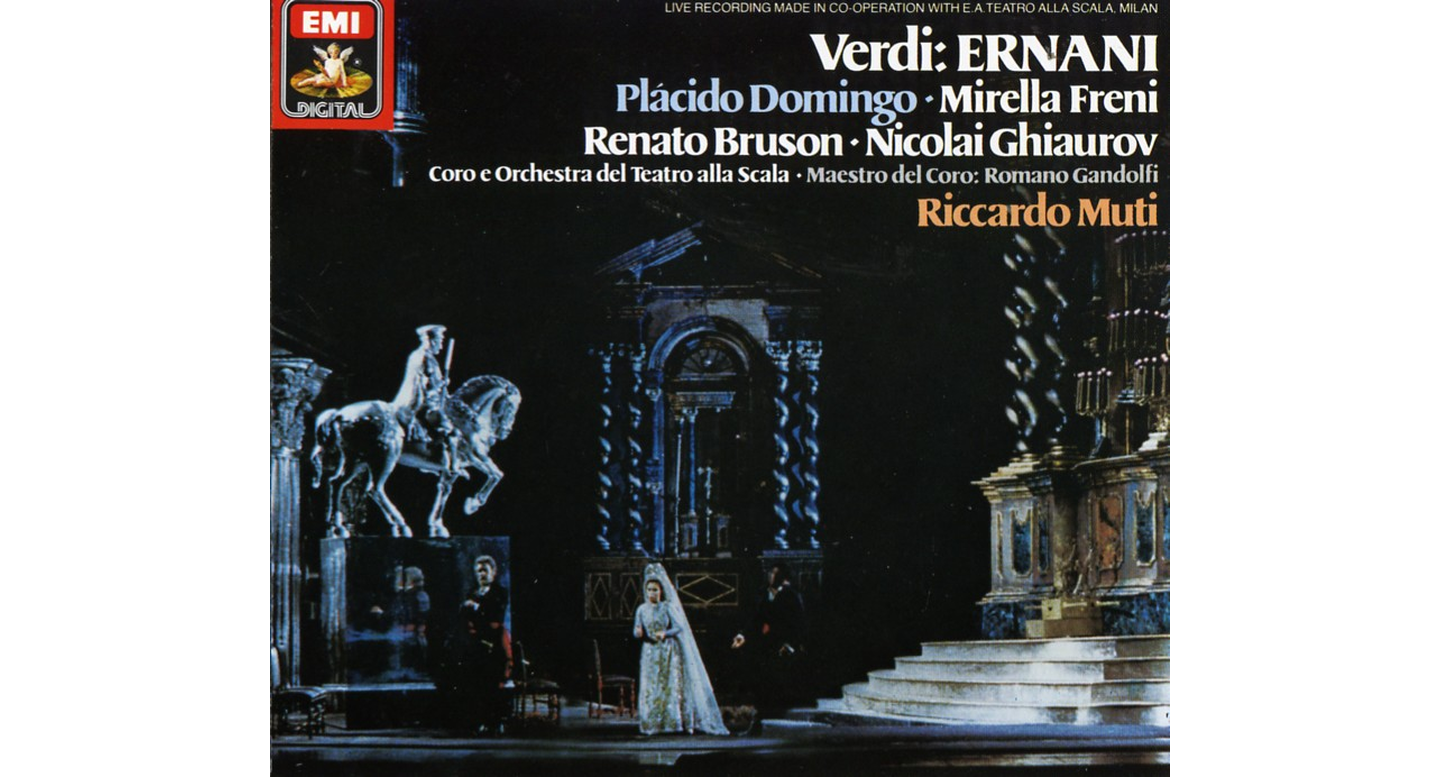
France Musique · published 2026-03-17
Riccardo Muti dirige Ernani de Verdi
2026
FreeFull concert
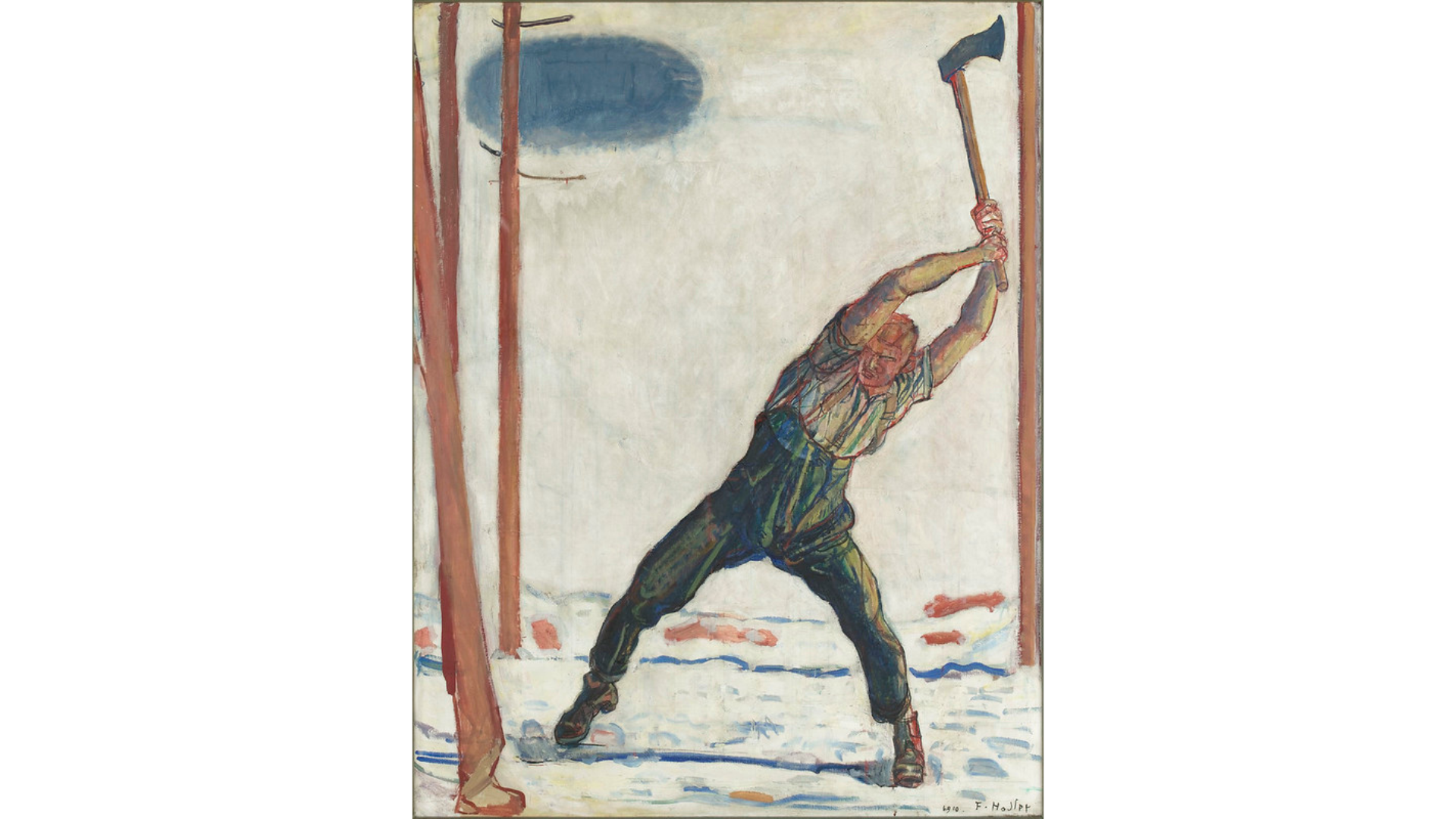
France Musique · published 2026-03-13
Quelle musique entendez-vous sur "Le bûcheron" de Ferdinand Hodler ?
2026
Free
 Play video
YouTube · published 2026-01-13 · 1h 44m
Giuseppe Verdi – RIGOLETTO (Full Opera) | Imperial Classical Opera | Complete Performance in HD
FreeFull concertLongLive
 Play video
YouTube · published 2025-11-14 · 3h 20m
Wexford Festival Opera Live | Le Trouvère by Giuseppe Verdi | RTÉ
FreeFull concertLongLive
 Play video
YouTube · published 2023-03-15 · 2h 13m
Giuseppe Verdi - La Traviata | Full Opera with Subtitles (St. Margarethen Opera Festival 2008)
20082h 13m
FreeFull concertLongLive
 Play video
YouTube · published 2022-03-15 · 1h 29m
REQUIEM (full) - Giuseppe VERDI // Danish National Symphony Orchestra (LIVE)
2022Symphony1h 29mRequiem
FreeFull concertLongLive
 Play video
YouTube · published 2017-03-16 · 1h 46m
Concert. Requiem di Giuseppe Verdi. Enoch zu Guttenberg
20171h 46mRequiem
FreeFull concertLongLive
Saved playlist songs
Tracks from your saved Spotify playlist that are attributable to Giuseppe Verdi.
No Spotify playlist is seeded yet.
No attributable tracks for this person in your saved playlist songs yet.