Edward Elgar
Your profile, built from Spotify + Wikipedia/Wikidata + your indexed library.
Born / died
1857-1934
Movement
Romantic
Location
Born in Lower Broadheath
Friends / contemporaries
Anton Webern, Bedrich Smetana, Charles-Valentin Alkan +3 more

Edward Elgar, one of the pre-eminent musical figures of his time, bridged the 19th and 20th centuries as the finest English composer since the days of Handel and Purcell.Spotify
His compositions have been recorded countless times, and many have become mainstays in the classical repertoire throughout the world. Elgar was born in Broadheath, England, on June 2, 1857.Spotify
His father owned a music shop and was a church organist who taught his son piano, organ, and violin; apart from this instruction, Elgar was practically self-taught as a musician. At the age of 16, the composer became a freelance musician, and for the remainder of his life, he never took a permanent job. He conducted locally, performed, taught, and composed, scraping by until his marriage to Caroline Alice Roberts, a published novelist of some wealth, in 1889.Spotify
Elgar had by this time achieved only limited recognition. He and his wife moved to London, where he scarcely fared better in advancing his career. The couple eventually retreated to Worcester, Elgar suffering from bitter self-doubt and depression.Spotify
Alice stood by him the entire time, her unfailing confidence restoring his spirits. He was further buoyed by the success of his Imperial March, Op. 32, which earned him a publisher and a vital friendship with August Jaeger, his editor and confidant.Spotify
In 1899, Elgar composed one of his best-known works, the "Enigma" Variations, Op. 36, which catapulted him to fame. The work is a cryptic tribute to Alice and to the many friends who stood behind the composer in the shaky early days of his career.Spotify
Conductor Hans Richter proclaimed it a masterpiece, and his performances of the work in Britain and Germany established the composer's lasting success. Elgar's most fruitful period was the first decade of the 20th century, during which he wrote some of his noblest, most expressive music, including the Symphony No. 1 in A flat major, Op.Spotify
55 (1907-1908), and the Violin Concerto in B minor, Op. 61 (1909-1910). His best-known works from this period, however, are the first four of his Pomp and Circumstance Marches (1901-1907); the first of these, subtitled "Land of Hope and Glory," became an unofficial second national anthem for the British Empire.Spotify
Elgar suffered a blow when Jaeger (the "Nimrod" of the "Enigma" Variations) died in 1909. The composer's productivity dropped, and the horrors of World War I deepened his melancholy outlook. His music became more intimate, even anguished.Spotify
Still, he wrote some of his best chamber music during this period, as well as the masterly Cello Concerto in E minor, Op. 85 (1919), whose deep feeling of sadness and impending loss surely relates to the final illness of his faithful Alice, who died in 1920. For some time after her death, Elgar wrote little of significance, but he made a historical foray into the recording studios when new electrical recording processes were developed.Spotify
The fortunate result was a number of masterly interpretations of his orchestral music that have survived for posterity. In the early 1930s, Elgar set to work on a third symphony, left unfinished at his death in Worcester on February 23, 1934. The work was brought to a generally well-received realization by Anthony Payne in the late 1990s and was subsequently recorded.Spotify
~ Rovi Staff, Rovi
role: unknown · 20%era: Romanticmovement: Romantic1857–1934
Movement
Romantic
How this movement sounds
rubatochromatic harmonybig climaxesricher timbrelong lyrical linesnarrative feel
Romantic listening cues: heightened emotion, longer lyrical melodies, and more freedom with rubato (flexible timing) in performance.
Harmony is often more chromatic, with colorful chords and side-steps that create tension and release over longer spans. You may hear more delayed resolutions and more 'yearning' harmonic motion.
Dynamics and texture often expand: thicker sonorities, bigger climaxes, and a strong sense of narrative or character (even in purely instrumental music).
In piano music, listen for the use of pedaling and resonance to create a halo around harmony; in orchestral music, listen for richer timbre and denser voicing (inner lines matter).
A useful trick: follow the bass line. In Romantic music it often shapes the drama, pulling the harmony through longer arcs rather than short phrase punctuation.
How Edward Elgar sounds
rubatorich harmonylong melodybig dynamicscoloristic pedal
Romantic music tends to foreground emotion and color: long singing melodies, flexible tempo (rubato), and harmony that stretches and sighs.
You often hear thicker textures, wider dynamic range, and a more "orchestral" use of the piano with deep bass and resonant pedaling.
Look for heightened contrast and personal voice: the same musical gesture can feel intimate one moment and heroic the next.
Wikipedia
Sir Edward William Elgar, 1st Baronet ( ; 2 June 1857 – 23 February 1934) was an English composer, many of whose works have entered the British and international classical concert repertoire.Wikipedia
Among his best-known compositions are orchestral works including the Enigma Variations, the Pomp and Circumstance Marches, concertos for violin and cello, and two symphonies. He also composed choral works, including The Dream of Gerontius, chamber music and songs.Wikipedia
He was appointed Master of the King's Musick in 1924. Although Elgar is often regarded as a typically English composer, most of his musical influences were not from England but from continental Europe. He felt himself to be an outsider, not only musically, but socially.Wikipedia
In musical circles dominated by academics, he was a self-taught composer; in Protestant Britain, his Roman Catholicism was regarded with suspicion in some quarters; and in the class-conscious society of Victorian and Edwardian Britain, he was acutely sensitive about his humble origins even after he achieved recognition. He nevertheless married the daughter of a senior British Army officer. She inspired him both musically and socially, but he struggled to achieve success until his forties when, after a series of moderately successful works, his Enigma Variations (1899) became immediately popular in Britain and overseas.Wikipedia
He followed the Variations with a choral…Wikipedia
Study resources & scores
Curated study material and indexed score links related to Edward Elgar.
No related study resources yet. As more lectures, transcripts, and scores are indexed, they will show up here.
Local matches
Matches your current indexed library (videos table). This will be sparse until connectors run.

France Musique · published 2026-09-15
Sir ! Elgar, Bruch, Britten - Astrig Siranossian, Nathanaël Gouin, London Symphony Orchestra
2026Symphony
FreeFull concert

France Musique · published 2026-09-01
Elgar, Concerto pour violon par Ning Feng
2026Concerto
FreeFull concert

France Musique · published 2026-06-11
Création mondiale des "Études, concerto pour orchestre" de Thierry Escaich par l'ONF et Cristian Măcelaru
2026Concerto
FreeFull concert

France Musique · published 2026-05-13
Elgar, Bridge, Ireland : English Cello Works – Andreas Brantelid
2026
Free
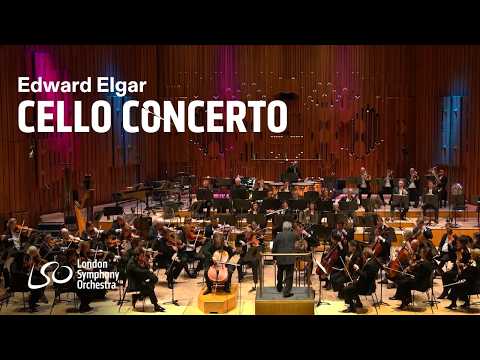 Play video
YouTube · published 2025-08-05 · 33m
Edward Elgar: Cello Concerto // David Cohen, Sir Antonio Pappano & London Symphony Orchestra
FreeLongLive
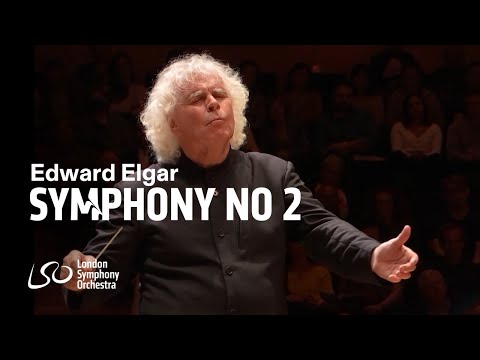 Play video
YouTube · published 2023-05-29 · 15m
Edward Elgar: Symphony No 2, Movement 4 // London Symphony Orchestra & Sir Simon Rattle
FreeLive
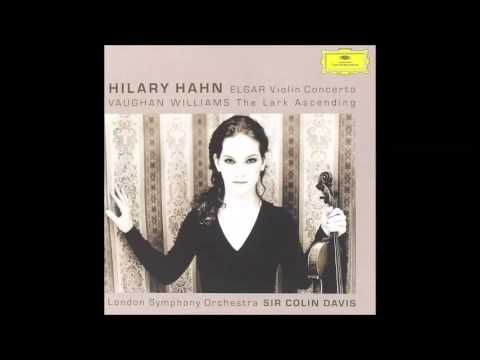 Play video
YouTube · published 2015-10-11 · 49m
Edward Elgar: Concerto for violin and orchestra, Hilary Hahn
FreeFull concertLongLive
Saved playlist songs
Tracks from your saved Spotify playlist that are attributable to Edward Elgar.
No Spotify playlist is seeded yet.
No attributable tracks for this person in your saved playlist songs yet.