Dmitri Shostakovich
Your profile, built from Spotify + Wikipedia/Wikidata + your indexed library.
Born / died
1906-1975
Movement
Romantic
Location
Born in Saint Petersburg
Friends / contemporaries
Pyotr Ilyich Tchaikovsky, Sergei Prokofiev, Sergei Rachmaninoff +3 more

Dmitry Shostakovich was a Russian composer whose symphonies and quartets, numbering 15 each, are among the greatest examples from the 20th century of these classic forms.Spotify
His style evolved from the brash humor and experimental character of his first period, exemplified by the operas The Nose and Lady Macbeth of Mtsensk, into both the more introverted melancholy and nationalistic fervor of his second phase (the Symphonies No. 5 and No.Spotify
7, "Leningrad"), and finally into the defiant and bleak mood of his last period (exemplified by the Symphony No. 14 and Quartet No. 15).Spotify
Early in his career his music showed the influence of Prokofiev and Stravinsky, especially in his prodigious and highly successful First Symphony. He could effectively communicate a melancholic depth and profound sense of anguish, as one hears in many of his symphonies, concertos, and quartets. Solomon Volkov, in his controversial Testimony: The Memoirs of Dmitri Shostakovich explains the composer's seeming bombast as deft satire of the pomposity of the Soviet state, pointing to the "forced rejoicing" of Fifth Symphony's ending.Spotify
Typical traits of Shostakovich's style include short, reiterated melodic or rhythmic figures, motifs of one or two pitches or intervals, and lugubrious and manic string writing. Shostakovich was born in St. Petersburg in 1906 and educated at the Petrograd Conservatory.Spotify
The acid style of his early Lady Macbeth of Mtsensk irritated Stalin, and Shostakovich was attacked in the Soviet press. Fearing imprisonment, he withdrew his already rehearsed Fourth Symphony; his Fifth Symphony (1937) carried the subtitle "A Soviet Artist's Reply to Just Criticism." It is more ingenious than most critics have fathomed, for it managed to satisfy both the backward tastes of the party censors and those of more demanding aesthetes in the West. The 1941 German invasion of Russia inspired the composer's Seventh Symphony, subtitled "Leningrad." Impressed by the symphony's epic-heroic character, Toscanini, Koussevitzky, and Stokowski vied for the Western Hemisphere premiere; the score had to be microfilmed, flown to Teheran, driven to Cairo, and flown out.Spotify
The work became an enormous success the world over, but eventually fell into obscurity. Still, the composer had for a time become a worldwide celebrity, his picture even appearing on the cover of Time. Shostakovich ran afoul of the government again in 1948, when an infamous decree was issued by the Central Committee of the Communist Party accusing Shostakovich, Prokofiev, and other prominent composers of "formalist perversions." For some time he wrote mostly works glorifying Soviet life or history.Spotify
Artistic repression diminished in post-Stalinist Russia, but curiously Shostakovich still drew in his modernist horns until the Thirteenth Symphony, "Babi Yar," a 1962 work based on poems by Yevgeny Yevtushenko. The work provoked major controversy because of its first movement's subject: Russian oppression of the Jews. In 1966 Shostakovich wrote his Second Cello Concerto, a work on an even higher level than his solid First, but one that did not capture as much attention from either artists or the public.Spotify
That year, Shostakovich was diagnosed with a serious heart condition. He continued to compose, his works growing more sparsely scored and darker, the subject of death becoming prominent. His Fourteenth Symphony (1969), really a collection of songs on texts by Lorca, Apollinaire, Küchelbecker, and Rilke, is a death-obsessed work of considerable dissonance and showing little regard for the Socialist Realism still demanded by the state.Spotify
Shostakovich died on August 9, 1975.Spotify
~ Rovi Staff, Rovi
role: composer · 90%era: Romanticmovement: Romantic1906–1975
Movement
Romantic
How this movement sounds
rubatochromatic harmonybig climaxesricher timbrelong lyrical linesnarrative feel
Romantic listening cues: heightened emotion, longer lyrical melodies, and more freedom with rubato (flexible timing) in performance.
Harmony is often more chromatic, with colorful chords and side-steps that create tension and release over longer spans. You may hear more delayed resolutions and more 'yearning' harmonic motion.
Dynamics and texture often expand: thicker sonorities, bigger climaxes, and a strong sense of narrative or character (even in purely instrumental music).
In piano music, listen for the use of pedaling and resonance to create a halo around harmony; in orchestral music, listen for richer timbre and denser voicing (inner lines matter).
A useful trick: follow the bass line. In Romantic music it often shapes the drama, pulling the harmony through longer arcs rather than short phrase punctuation.
How Dmitri Shostakovich sounds
rubatorich harmonylong melodybig dynamicscoloristic pedal
Romantic music tends to foreground emotion and color: long singing melodies, flexible tempo (rubato), and harmony that stretches and sighs.
You often hear thicker textures, wider dynamic range, and a more "orchestral" use of the piano with deep bass and resonant pedaling.
Look for heightened contrast and personal voice: the same musical gesture can feel intimate one moment and heroic the next.
Wikipedia
Dmitri Dmitriyevich Shostakovich (25 September [O.S.Wikipedia
12 September] 1906 – 9 August 1975) was a Soviet-era Russian composer and pianist who became internationally known after the premiere of his First Symphony in 1926 and thereafter was regarded as a major composer. Shostakovich achieved early fame in the Soviet Union, but had a complex relationship with its government.Wikipedia
His 1934 opera Lady Macbeth of Mtsensk was initially a success but later condemned by the Soviet government, putting his career at risk. In 1948, his work was denounced under the Zhdanov Doctrine, with professional consequences lasting several years. Even after his censure was rescinded in 1956, performances of his music were occasionally subject to state interventions, as with his Thirteenth Symphony (1962).Wikipedia
Nevertheless, Shostakovich was a member of the Supreme Soviet of the RSFSR (1947) and the Supreme Soviet of the Soviet Union (from 1962 until his death), as well as chairman of the RSFSR Union of Composers (1960–1968). Over the course of his career, he earned several important awards, including the Order of Lenin, from the Soviet government. Shostakovich combined various musical techniques in his works.Wikipedia
His music is characterized by sharp contrasts, elements of the grotesque, and ambivalent tonality; he was also heavily influenced by neoclassicism and by the music of Gustav Mahler. His orchestral works…Wikipedia
Study resources & scores
Curated study material and indexed score links related to Dmitri Shostakovich.
Lecture 20. The Colossal Symphony: Beethoven, Berlioz, Mahler and Shostakovich
Yale (YouTube) · lecture · youtube, transcript
Local matches
Matches your current indexed library (videos table). This will be sparse until connectors run.
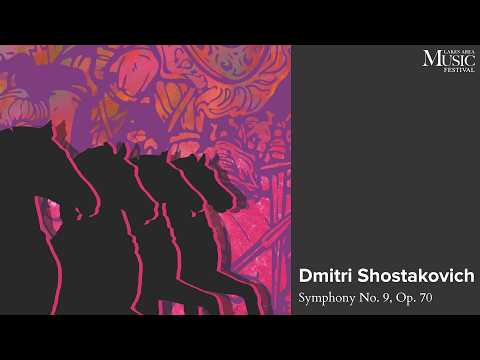 Play video
YouTube · published 2026-06-02 · 26m
Dmitri Shostakovich – Symphony No. 9, Op. 70 | Lakes Area Music Festival 2025
2025SymphonyOp.26m
FreeLongLive
 Play video
YouTube · published 2026-04-11 · 27m
UNT Concert Orchestra: Symphony No. 9 in E-flat Major, Op 70 by Dmitri Shostakovich
2026Symphony27m
FreeLongLive
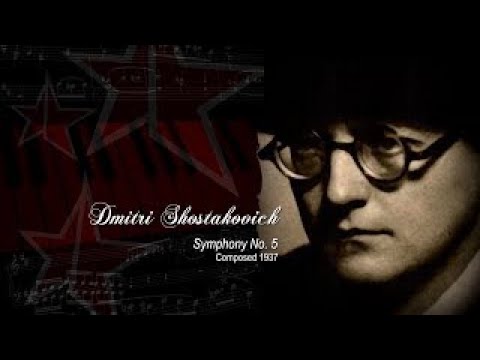 Play video
YouTube · published 2026-02-06 · 47m
Dmitri Shostakovich. Symphony No. 5
2026Symphony47m
FreeFull concertLongLive
 Play video
YouTube · published 2025-10-14 · 28m
Dmitri Shostakovich: Concerto for Cello and Orchestra No. 1 E flat major, Op. 107
FreeLongLive
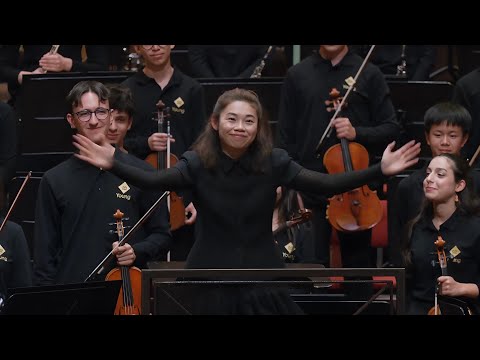 Play video
YouTube · published 2025-10-07 · 50m
Dmitri Shostakovich Symphony No. 5 - RCO - Concertgebouw Orchestra Young 2025
2025Symphony50m
FreeFull concertLongLive
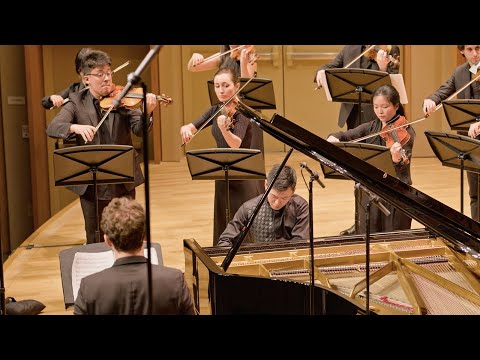 Play video
YouTube · published 2025-06-08 · 23m
Dmitri Shostakovich: Piano Concerto No. 1 in C minor, Op. 35 • Kaleidoscope Chamber Orchestra
FreeLongLive
 Play video
YouTube · published 2024-07-31 · 22m
Senior recital 2024. String Quartet #8. Dmitri Shostakovich.
2024Quartet22m
FreeLongLive
 Play video
YouTube · published 2023-08-23 · 14m
Piano Concerto No. 1in c minor, op. 26 -- Dmitri Shostakovich (Competition Cuts)
2023ConcertoOp.14m
FreeLive
 Play video
YouTube · published 2023-07-23 · 1h 4m
Dmitri Shostakovich Symphony No 5 Live Rostropovich 1985 National Symphony Orchestra
1985Symphony1h 4m
FreeFull concertLongLive
 Play video
YouTube · published 2020-08-06 · 1h 48m
Keeping Score | Dmitri Shostakovich: Symphony No. 5 (FULL DOCUMENTARY AND CONCERT)
2020Symphony1h 48m
FreeFull concertLongLive
 Play video
YouTube · published 2019-08-07 · 24m
Dmitri Shostakovich: Chamber Symphony in C minor, Op. 110a
FreeLongLive
 Play video
YouTube · published 2019-05-06 · 16m
Dmitri Shostakovich: Symphony No. 5. Analysis by Gerard Schwarz (part 1) | Music | Khan Academy
FreeLive
 Play video
YouTube · published 2018-10-11 · 11m
Dmitri Shostakovich - Symphony No. 5: Finale
2018Symphony11m
FreeLive
 Play video
YouTube · published 2017-08-07 · 35m
Dmitri Shostakovich - Symphony No. 6 / Paavo Järvi / Estonian Festival Orchestra
2017Symphony35m
FreeLongLive
 Play video
YouTube · published 2016-10-11 · 10m
Finale from the 5th Symphony ( Dmitri Shostakovich, arr.C.B.Righter )
2016Symphony10m
FreeLive
 Play video
YouTube · published 2015-08-03 · 24m
Dmitri Shostakovich : Suite for Variety Orchestra No. 1
FreeLongLive
 Play video
YouTube · published 2012-10-12 · 11m
Dmitri Shostakovich - Symphony No. 5 - Finale
2012Symphony11m
FreeLive
 Play video
YouTube · published 2011-09-27 · 12m
Finale from the 5th Symphony ( Dmitri Shostakovich,arr.Righter )
2011Symphony12m
FreeLive
 Play video
YouTube · published 2011-07-21 · 10m
Dmitri Shostakovich - Symphony No. 5 - Allegro non troppo (LIVE)
2011SymphonyAllegro10m
FreeLive
Saved playlist songs
Tracks from your saved Spotify playlist that are attributable to Dmitri Shostakovich.
No Spotify playlist is seeded yet.
No attributable tracks for this person in your saved playlist songs yet.