Claude Debussy
Your profile, built from Spotify + Wikipedia/Wikidata + your indexed library.
Born / died
1862-1918
Movement
impressionism
Location
Born in Saint-Germain-en-Laye
Friends / contemporaries
Erik Satie, Maurice Ravel, Charles-Valentin Alkan +3 more

Claude Debussy (born Achille-Claude Debussy) was among the most influential composers of the late 19th and early 20th centuries.Spotify
His mature compositions, distinctive and appealing, combined modernism and sensuality so successfully that their sheer beauty often obscures their technical innovation. Debussy is considered the founder and leading exponent of musical Impressionism (although he resisted the label), and his adoption of non-traditional scales and tonal structures was paradigmatic for many composers who followed.Spotify
The son of a shopkeeper and a seamstress, Debussy began piano studies at the Paris Conservatory at the age of 11. While a student there, he encountered the wealthy Nadezhda von Meck (most famous as Tchaikovsky's patroness), who employed him as a music teacher to her children; through travel, concerts and acquaintances, she provided him with a wealth of musical experience. Most importantly, she exposed the young Debussy to the works of Russian composers, such as Borodin and Mussorgsky, who would remain important influences on his music.Spotify
Debussy began composition studies in 1880, and in 1884 he won the prestigious Prix de Rome with his cantata L'enfant prodigue. This prize financed two years of further study in Rome -- years that proved to be creatively frustrating. However, the period immediately following was fertile for the young composer; trips to Bayreuth and the Paris World Exhibition (1889) established, respectively, his determination to move away from the influence of Richard Wagner, and his interest in the music of Eastern cultures.Spotify
After a relatively bohemian period, during which Debussy formed friendships with many leading Parisian writers and musicians (not least of which were Mallarmé, Satie, and Chausson), the year 1894 saw the enormously successful premiere of his Prélude à l'après-midi d'un faune (Prelude to the Afternoon of a Faun) -- a truly revolutionary work that brought his mature compositional voice into focus. His seminal opera Pelléas et Mélisande, completed the next year, would become a sensation at its first performance in 1902. The impact of those two works earned Debussy widespread recognition (as well as frequent attacks from critics, who failed to appreciate his forward-looking style), and over the first decade of the 20th century he established himself as the leading figure in French music -- so much so that the term "Debussysme" ("Debussyism"), used both positively and pejoratively, became fashionable in Paris.Spotify
Debussy spent his remaining healthy years immersed in French musical society, writing as a critic, composing, and performing his own works internationally. He succumbed to colon cancer in 1918, having also suffered a deep depression brought on by the onset of World War I. Debussy's personal life was punctuated by unfortunate incidents, most famously the attempted suicide of his first wife, Lilly Texier, whom he abandoned for the singer Emma Bardac.Spotify
However, his subsequent marriage to Bardac, and their daughter Claude-Emma, whom they called "Chouchou" and who became the dedicatee of the composer's Children's Corner piano suite, provided the middle-aged Debussy with great personal joys. Debussy wrote successfully in most every genre, adapting his distinctive compositional language to the demands of each. His orchestral works, of which Prélude à l'après-midi d'un faune and La mer (The Sea, 1905) are most familiar, established him as a master of instrumental color and texture.Spotify
It is this attention to tone color -- his layering of sound upon sound so that they blend to form a greater, evocative whole -- that linked Debussy in the public mind to the Impressionist painters. His works for solo piano, particularly his collections of Préludes and Etudes, which have remained staples of the repertoire since their composition, bring into relief his assimilation of elements from both Eastern cultures and antiquity -- especially pentatonicism (the use of five-note scales), modality (the use of scales from ancient Greece and the medieval church), parallelism (the parallel movement of chords and lines), and the whole-tone scale (formed by dividing the octave into six equal intervals). Pelléas et Mélisande and his collections of songs for solo voice establish the strength of his connection to French literature and poetry, especially the symbolist writers, and stand as some of the most understatedly expressive works in the repertory.Spotify
The writings of Mallarmé, Maeterlinck, Baudelaire, and his childhood friend Paul Verlaine appear prominently among his chosen texts and joined symbiotically with the composer's own unique moods and forms of expression.Spotify
~ Allen Schrott, Rovi
role: composer · 90%era: Romanticmovement: impressionism1862–1918
Movement
impressionism · Wikipedia
Impressionism in music was a movement among various composers in Western classical music whose music focuses on mood and atmosphere, "conveying the moods and emotions aroused by the subject rather than a detailed tone‐picture". "Impressionism" is a philosophical and aesthetic term borrowed from late 19th-century French painting after Monet's Impression, Sunrise. Composers were labeled Impressionists by analogy to the Impressionist painters who use starkly contrasting colors, effect of light on an object, blurry foreground and background, flattening perspective, etc. to make the observer focus their attention on the overall impression.
How this movement sounds
color over cadenceblurred harmonyfloating rhythmtimbremodes
Impressionism listening cues: atmosphere and timbre first. Harmony can feel 'blurred' or unresolved, with color-chords that don't rush to cadences.
Rhythm may feel flexible or floating; melodies can be fragmentary, like gestures rather than speeches.
Listen for orchestral color, modes, and unusual chord combinations that paint a scene more than they build a dramatic argument.
A helpful ear-training trick: notice how often the music avoids obvious dominant-to-tonic cadences. The feeling is often suspended, like light shifting rather than a story 'arriving'.
How Claude Debussy sounds
rubatorich harmonylong melodybig dynamicscoloristic pedal
Romantic music tends to foreground emotion and color: long singing melodies, flexible tempo (rubato), and harmony that stretches and sighs.
You often hear thicker textures, wider dynamic range, and a more "orchestral" use of the piano with deep bass and resonant pedaling.
Look for heightened contrast and personal voice: the same musical gesture can feel intimate one moment and heroic the next.
Wikipedia
Achille Claude Debussy (French: [aʃil klod dəbysi]; 22 August 1862 – 25 March 1918) was a French composer, born in Saint-Germain-en-Laye.Wikipedia
He is sometimes seen as the first Impressionist composer, although he vigorously rejected the term. He was among the most influential composers of the late 19th and early 20th centuries.Wikipedia
Born to a family of modest means and little cultural involvement, Debussy showed enough musical talent to be admitted at the age of ten to France's leading music college, the Conservatoire de Paris. He originally studied the piano, but found his vocation in innovative composition, despite the disapproval of the Conservatoire's conservative professors. He took many years to develop his mature style, and was nearly 40 when he achieved international fame in 1902 with the only opera he completed, Pelléas et Mélisande.Wikipedia
Debussy's orchestral works include Prélude à l'après-midi d'un faune (1894), Nocturnes (1897–1899) and Images (1905–1912). His music was to a considerable extent a reaction against Wagner and the German musical tradition. He regarded the classical symphony as obsolete and sought an alternative in his "symphonic sketches", La mer (1903–1905).Wikipedia
His piano works include sets of 24 Préludes and 12 Études. Throughout his career he wrote mélodies based on a wide variety of poetry, including his own. He was greatly influenced by the Symbolist poetic…Wikipedia
Interview highlights
Built from indexed interview/masterclass transcripts (podcasts / YouTube). Quotes are direct excerpts with source links.
Interview highlights for Claude Debussy from 6 sources. Quotes below are direct excerpts; open the source link for context.
Topics that recur (auto): Music, Know, Okay, More, Right, Then, Time, Piano.
Source: youtube_captions · AQJMp_j-MDM · 2:07 · published 2023-03-11 · Open source
Source: youtube_captions · KtYR2s0WRYw · 0:41 · published 2022-07-08 · Open source
Source: youtube_captions · BPC_kIT4pAE · 8:33 · published 2022-12-06 · Open source
Source: youtube_captions · RSAZy-85hZ0 · 6:23 · published 2023-09-29 · Open source
Source: youtube_captions · uCzwgrBva6w · 1:09 · published 2021-03-30 · Open source
Source: youtube_captions · x5MqDu88QTQ · 28:19 · published 2025-11-13 · Open source
Transcript sources (9)
Study resources & scores
Curated study material and indexed score links related to Claude Debussy.
Lecture 21. Musical Impressionism and Exoticism: Debussy, Ravel and Monet
Yale (YouTube) · lecture · youtube, transcript
Local matches
Matches your current indexed library (videos table). This will be sparse until connectors run.

France Musique · published 2026-09-28
Debussy par Mikko Franck et le Philhar’ – Magali Mosnier, flûte solo
2026
FreeFull concert

France Musique · published 2026-09-25
Quelle musique entendez-vous sur "Chats dans une commode" de Jules Le Roy ?
2026
Free

France Musique · published 2026-09-24
Le "Clair de Lune" de Claude Debussy arrangé pour clarinette, harpe et orchestre à cordes par Laurent Lefrançois
2026
FreeFull concert

France Musique · published 2026-09-11
Quelle musique entendez-vous sur "Kids on Swings" d'Andy Warhol ?
2026
Free


France Musique · published 2026-08-31
Claude Debussy, Emma Bardac et Lilly Texier, mélodrame amoureux
2026
Free

France Musique · published 2026-08-21
Agathe Peyrat et Pierre Cussac : "On s'est rendu compte qu'on avait en commun ce goût des grands écarts musicaux"
2026
Free
France Musique · published 2026-08-21
Agathe Peyrat et Pierre Cussac : "On s'est rendu compte qu'on avait en commun ce goût des grands écarts musicaux"
2026
Free
France Musique · published 2026-08-21
Agathe Peyrat et Pierre Cussac : "On s'est rendu compte qu'on avait ce goût en commun des grands écarts musicaux"
2026
Free

France Musique · published 2026-08-21
La Matinale avec la soprano Agathe Peyrat et l'accordéoniste Pierre Cussac
2026
Free

France Musique · published 2026-06-30
Dans l'atelier de Claude Debussy 3/4 : Debussy et la nuit
2026
Free

France Musique · published 2026-06-30
Dans l'atelier de Claude Debussy 2/4 : Quelques préludes
2026
Free

France Musique · published 2026-06-30
Dans l'atelier de Claude Debussy 1/4 : Le Coin des enfants
2026
Free

France Musique · published 2026-06-30
Dans l'atelier de Claude Debussy 4/4 : Comment écrire après Debussy…
2026
Free
 Play video
YouTube · published 2026-06-06 · 19m
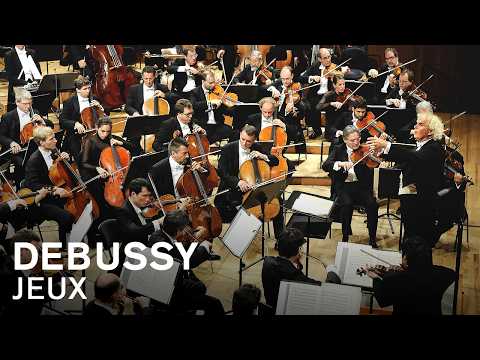
Lucerne Festival 2012: Claude Debussy's Jeux - Danced poem for orchestra | Berliner Philharmoniker
FreeLive


France Musique · published 2026-05-12
Monique Haas interprète la musique de Claude Debssy
2026
Free

France Musique · published 2026-05-08
Une heure et plus, un compositeur : Claude Debussy
2026
Free

France Musique · published 2026-04-10
Quelle musique entendez-vous sur "Un soir de carnaval" d'Henri Rousseau ?
2026
Free

 Play video
YouTube · published 2025-08-05 · 48m
Samson François- Recital of Claude Debussy
202548m
FreeFull concertLongLive
 Play video
Philharmonie de Paris · published 2025-07-24 · 7m
Claude Debussy – Quatuor à cordes en sol mineur | 30 ans du Quatuor Ysaÿe – Concert d’adieu (2014)
20147m
FreeLive
 Play video
Philharmonie de Paris · published 2025-05-20 · 9m
Ensemble intercontemporain – Pierre Boulez | Danses pour harpe et cordes – Claude Debussy (2001)
20019m
FreeLive
 Play video
YouTube · published 2025-04-27 · 1h 38m
Festival Claude Debussy, Concert du 04/04/1962, Orchestre National de la RTF, D.E.Inghelbrecht
19621h 38m
FreeFull concertLongLive
 Play video
YouTube · published 2024-08-04 · 1h 30m
Claude Debussy 24 preludes | Hristo Kazakov (Live Recital)
20241h 30m
FreeFull concertLongLive
 Play video
YouTube · published 2024-07-18 · 12m
Prélude à l'après-midi d'un faune (Claude Debussy) // Danish National Symphony Orchestra (live)
2024Symphony12m
FreeLive
 Play video
YouTube · published 2023-08-03 · 27m
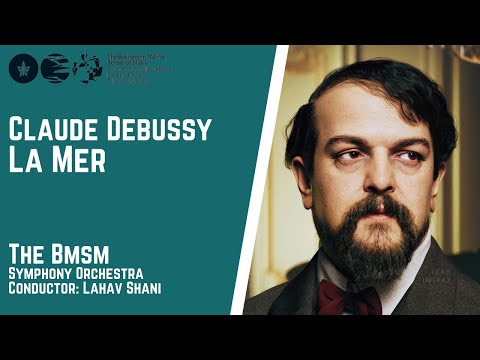
La mer - Claude Debussy - The BMSM Symphony Orchestra conducted by Lahav Shani
2023Symphony27m
FreeLongLive
 Play video
YouTube · published 2023-07-18 · 24m
Claude Debussy "La mer" Detroit Symphony Orchestra; Jader Bignamini, conductor
2023Symphony24m
FreeLongLive
 Play video
YouTube · published 2023-06-02 · 10m
Prelude to The Afternoon of a Faun, Claude Debussy DCS 2022-23 Symphony Concert 3
2022Symphony10m
FreeLive
 Play video
YouTube · published 2022-08-06 · 10m
Rhapsody for saxophone and Orchestra by Claude Debussy - (live performance) - Jason Xu Saxophone
202210m
FreeLive
 Play video
YouTube · published 2021-07-19 · 10m
Prelude to the Afternoon of a Faun / Claude Debussy / James Gaffigan / Oslo Philharmonic
202110m
FreeLive
 Play video
YouTube · published 2021-06-04 · 28m
Claude Debussy: La Mer | BYU Philharmonic [November 15, 2018]
FreeLongLive
 Play video
YouTube · published 2020-02-13 · 23m
Claude Debussy - Fantaisie for Piano and Orchestra, L. 73 (1890) [Score-Video]
202023m
FreeLongLive
 Play video
YouTube · published 2019-08-01 · 1h 13m
Meredith College Music Celebrating Debussy: Recital of Music by Claude Debussy
20191h 13m
FreeFull concertLongLive
 Play video
YouTube · published 2019-07-28 · 1h 4m
Claude Debussy et Live Coding - Concert de commémoration au théâtre des Cordeliers de Romans
20191h 4m
FreeFull concertLongLive
 Play video
YouTube · published 2018-08-07 · 1h 7m
Recital Claude Debussy, Javier Bezzato, Piano
20181h 7m
FreeFull concertLongLive
 Play video
YouTube · published 2015-08-08 · 39m
Claude Debussy: Le Martyre de Saint Sébastien (Lucerne Festival Orchestra, Claudio Abbado)
FreeLongLive
 Play video
YouTube · published 2015-08-08 · 26m
Claude Debussy: La Mer (Lucerne Festival Orchestra, Claudio Abbado)
FreeLongLive
 Play video
YouTube · published 2014-02-14 · 18m
Evgeni Koroliov - Claude Debussy Préludes - Live Concert - HD
201418m
FreeLive
Saved playlist songs
Tracks from your saved Spotify playlist that are attributable to Claude Debussy.
No Spotify playlist is seeded yet.
No attributable tracks for this person in your saved playlist songs yet.