Charles-Valentin Alkan
Your profile, built from Spotify + Wikipedia/Wikidata + your indexed library.
Born / died
1813-1888
Movement
Romantic
Location
Born in Paris
Friends / contemporaries
Franz Liszt, Frederic Chopin, Claude Debussy +3 more

Charles-Valentin Alkan was one of the great composer/pianists of the nineteenth century and a major influence on many subsequent musicians.Spotify
He wrote some of the most unusual and technically difficult music of his time, an output that no less an authority than Ferruccio Busoni called "the greatest achievement in piano music after Liszt." Alkan was an extraordinary prodigy: he entered the Paris Conservatoire when he was 6 years old and won first prizes for solfège at age 7, for piano at 11, for harmony at 14, and for organ at 21. He quickly made a name for himself in the Paris salons as a gifted young pianist and played some London concerts in 1833 to great acclaim.Spotify
From 1829 to 1836, he was a part-time teacher at the Paris Conservatoire, but he never joined the regular staff. Alkan was well known in intellectual circles -- he counted among his friends Victor Hugo, George Sand, and Frédéric Chopin -- but he was always something of an introvert and misanthrope; at age 25 he dropped out of society, the first of his frequent and sometimes lengthy withdrawals. Over the next 35 years he appeared in public only rarely; not very much is known about his life in those years.Spotify
Only in 1873 did he make a return to the concert stage, playing a series of Petits concerts at the Salle Erard (where he also taught classes in the afternoons). Alkan was devoted to his Jewish faith and was quite a scholar on the subject. One curious, but untrue, legend has it that he died when, as he reached for a copy of the Talmud on top of a large shelf, the bookcase fell over and he was crushed to death.Spotify
Alkan published his first music at age 14; ultimately his catalog extended to 76 opus numbers, most of them works for solo piano. The earliest of his compositions were in the familiar forms of the day: opera paraphrases and collections of studies that showed off his unusual facility. His compositions started to get more ambitious in the 1840s -- the harmonies bolder, the rhythms more irregular -- and many of the works called for extravagant, nearly superhuman technique.Spotify
These works range from larger works like the Grande sonate "Les quatre âges," Op. 33 (1848), to shorter pieces like Le chemin de fer, Op. 27 (1844), the first musical portrait of the railroad, and the humorous and peculiar Funeral March for a Dead Parrot.Spotify
Perhaps his most ambitious opus is the set of Twelve Études in all the minor keys, Op. 39 (1857). The 12 pieces aggregate to form (in order) a four-movement symphony, a three-movement concerto, a set of variations, an overture, and three independent pieces.Spotify
They are very demanding of a performer -- pianist Raymond Lewenthal has called them "a ride in Hell." The first movement of the concerto alone contains 1,343 measures (more than the entirety of Beethoven's Hammerklavier Sonata) and lasts half an hour. Alkan played his own works very rarely in public. He did however play a range of music unusual for his time, including the then-unfashionable late Beethoven sonatas, various Schubert sonatas, and much Baroque music.Spotify
His playing style was noted for its clarity, its restraint in rhythm and dynamics, and its intellectual quality. Alkan and his music were largely neglected during his lifetime, and he was nearly forgotten upon his death. But with the attention of Ferruccio Busoni, Kaikhosru Sorabji, Egon Petri, and other giants of the early-to-middle twentieth century, as well as the later advocacy via recordings of Petri, Lewenthal, and Ronald Smith, Alkan's position in music history has been assured.Spotify
role: composer · 90%era: Romanticmovement: Romantic1813–1888
Movement
Romantic
How this movement sounds
rubatochromatic harmonybig climaxesricher timbrelong lyrical linesnarrative feel
Romantic listening cues: heightened emotion, longer lyrical melodies, and more freedom with rubato (flexible timing) in performance.
Harmony is often more chromatic, with colorful chords and side-steps that create tension and release over longer spans. You may hear more delayed resolutions and more 'yearning' harmonic motion.
Dynamics and texture often expand: thicker sonorities, bigger climaxes, and a strong sense of narrative or character (even in purely instrumental music).
In piano music, listen for the use of pedaling and resonance to create a halo around harmony; in orchestral music, listen for richer timbre and denser voicing (inner lines matter).
A useful trick: follow the bass line. In Romantic music it often shapes the drama, pulling the harmony through longer arcs rather than short phrase punctuation.
How Charles-Valentin Alkan sounds
rubatorich harmonylong melodybig dynamicscoloristic pedal
Romantic music tends to foreground emotion and color: long singing melodies, flexible tempo (rubato), and harmony that stretches and sighs.
You often hear thicker textures, wider dynamic range, and a more "orchestral" use of the piano with deep bass and resonant pedaling.
Look for heightened contrast and personal voice: the same musical gesture can feel intimate one moment and heroic the next.
Wikipedia
Charles-Valentin Alkan (French: [ʃaʁl valɑ̃tɛ̃ alkɑ̃]; 30 November 1813 – 29 March 1888) was a French composer and virtuoso pianist.Wikipedia
At the height of his fame in the 1830s and 1840s he was, alongside his friends and colleagues Frédéric Chopin and Franz Liszt, among the leading pianists in Paris, a city in which he spent virtually his entire life. Alkan earned many awards at the Conservatoire de Paris, which he entered before he was six.Wikipedia
His career in the salons and concert halls of Paris was marked by his occasional long withdrawals from public performance, for personal reasons. Although he had a wide circle of friends and acquaintances in the Parisian artistic world, including Eugène Delacroix and George Sand, from 1848 he began to adopt a reclusive life style, while continuing with his compositions – virtually all of which are for the keyboard. During this period he published, among other works, his collections of large-scale studies in all the major keys (Op.Wikipedia
8–10), which are often considered among his masterpieces and are of great musical and technical complexity. Alkan emerged from self-imposed retirement in the 1870s to give a series of recitals that were attended by a new generation of French musicians. Alkan's attachment to…Wikipedia
Interview highlights
Built from indexed interview/masterclass transcripts (podcasts / YouTube). Quotes are direct excerpts with source links.
Interview highlights for Charles-Valentin Alkan from 2 sources. Quotes below are direct excerpts; open the source link for context.
Topics that recur (auto): Music, Alan, Musical, World, Works, Piano, Alcan, Time.
Source: youtube_captions · dV7vhhzEqhc · 0:19 · published 2025-01-30 · Open source
Source: youtube_captions · FlpxhpRrAGg · 20:00 · published 2024-10-13 · Open source
Source: youtube_captions · dV7vhhzEqhc · 0:23 · published 2025-01-30 · Open source
Source: youtube_captions · FlpxhpRrAGg · 29:37 · published 2024-10-13 · Open source
Source: youtube_captions · dV7vhhzEqhc · 12:23 · published 2025-01-30 · Open source
Source: youtube_captions · FlpxhpRrAGg · 0:38 · published 2024-10-13 · Open source
Transcript sources (2)
Study resources & scores
Curated study material and indexed score links related to Charles-Valentin Alkan.
No related study resources yet. As more lectures, transcripts, and scores are indexed, they will show up here.
Local matches
Matches your current indexed library (videos table). This will be sparse until connectors run.
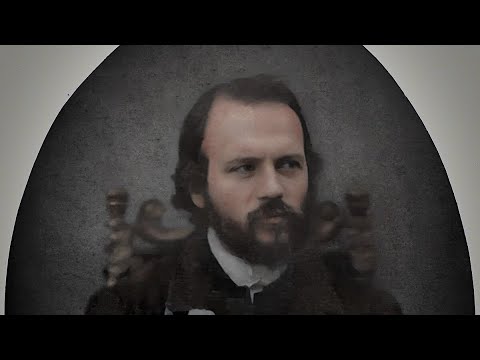 Play video
YouTube · published 2025-08-05 · 33m
Charles-Valentin Alkan - Opus 47 - Sonate de Concert for Cello and Pianoforte in E Major
202533m
FreeLongLive
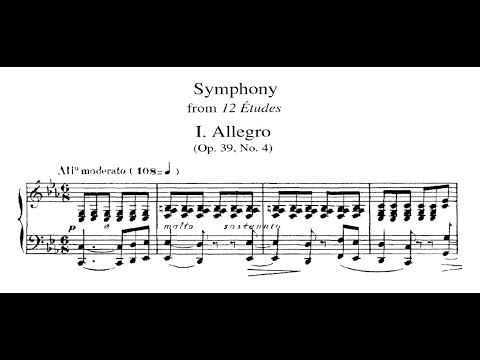 Play video
YouTube · published 2024-02-12 · 26m
Charles-Valentin Alkan - Op.39 No. 4-7: Symphony for Solo Piano (Hamelin)
2024SymphonyOp.26m
FreeLongLive
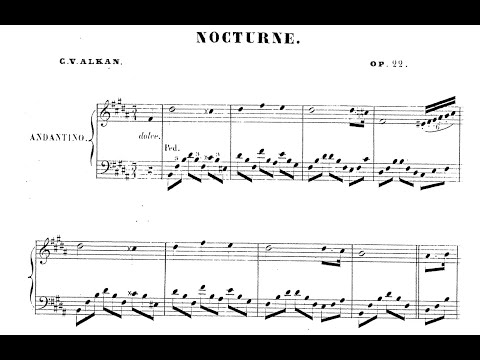 Play video
YouTube · published 2023-08-06 · 59m
Classical Gems - Concert No.6 'Charles-Valentin Alkan' (Volume II)
202359m
FreeFull concertLongLive
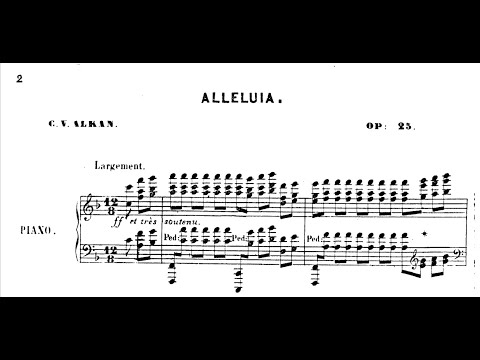 Play video
YouTube · published 2023-08-06 · 58m
Classical Gems - Concert No.6 'Charles-Valentin Alkan' (Volume I)
202358m
FreeFull concertLongLive
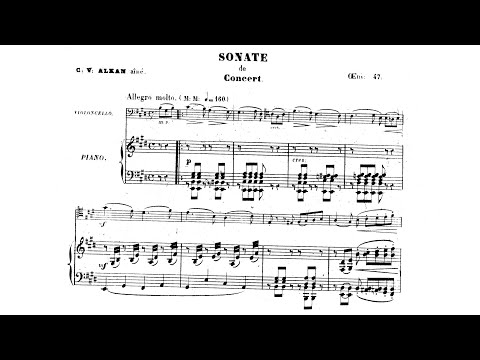 Play video
YouTube · published 2022-07-28 · 33m
Charles-Valentin Alkan - Sonate de Concert in E Major for Cello and Piano, Op. 47
2022Op.33m
FreeLongLive
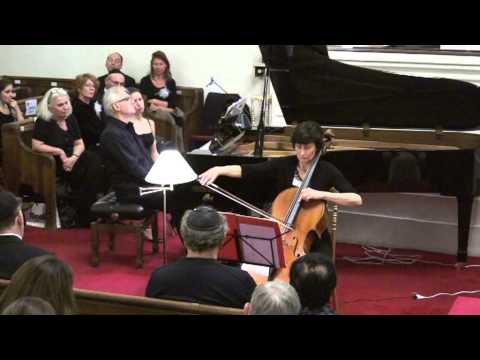 Play video
YouTube · published 2014-06-05 · 36m
Charles-Valentin Alkan : Sonate de Concert pour violoncelle et piano
FreeLongLive
Saved playlist songs
Tracks from your saved Spotify playlist that are attributable to Charles-Valentin Alkan.
No Spotify playlist is seeded yet.
No attributable tracks for this person in your saved playlist songs yet.