César Franck
Your profile, built from Spotify + Wikipedia/Wikidata + your indexed library.
Born / died
1822-1890
Movement
Romantic
Location
Worked in Paris
Friends / contemporaries
Antoine Reicha, Charles-Valentin Alkan, Claude Debussy +3 more

César Franck was born in Belgium but established his career as a composer, organist, and influential teacher in France, most prestigiously at the Paris Conservatoire and at the church of Sainte-Clotilde.Spotify
His music was heavily influenced by Liszt and Wagner, as in his Symphony in D minor, one of his most famous compositions. Franck's organ pieces are among the most celebrated Romantic works for that instrument, though his symphonic poems, chamber music (particularly the Sonata for Violin in A), and sacred choral settings are also regularly performed.Spotify
Franck was born in Liège (in the French region, which in 1830 became part of a new state, Belgium), on December 10, 1822. He was a keyboard player of extraordinary ability who had a short stint as a touring piano virtuoso before moving to Paris and throwing himself into musical studies. In addition, he was an organist at several major churches during his career, and his skills on the organ accounted in great part for his compositional interest in that instrument; his organ compositions stand at the apex of the Romantic organ repertoire.Spotify
For much of his life, Franck was organist at the Paris churches of Saint-Jean-Saint-François and then Sainte-Clotilde, and in 1872 he became a professor at the Paris Conservatoire. He led a group of young composers, among them d'Indy, Duparc, and Dukas, who found much to admire in his highly individual, post-Romantic style, with its rich, innovative harmonies, sometimes terse melodies, and skilled contrapuntal writing. This group, sometimes known as "la bande à Franck," steered French composition toward symphonic and chamber music, finally breaking the stranglehold of the more conservative opera over French music.Spotify
Individual and instantly recognizable though Franck's music was, it owes a debt to Liszt and Wagner, especially to the latter's Tristan und Isolde and several other late works. He tended to use rather quick modulations, an inheritance from Wagner, and shifting harmonies. There is a Germanic ponderousness in some of his compositions and a mixture of paradoxical elements so typical of the composer, such as moments of peace and serenity that barely conceal an undercurrent of disquiet.Spotify
These elements were used to great advantage in the Symphony in D minor of 1888, where Franck also adapts the Lisztian-Wagnerian predilection toward cyclical structure and melodic motto to an abstract symphonic form. Another characteristic of Franck's music is extended homophonic writing, as exemplified in his choral symphonic poem Psyché. Franck was a man of strong religious convictions throughout his life, which often motivated him to compose works based on biblical texts or on other church sources, yet his choral works were slightly less successful than his organ works.Spotify
However, his religious, solo vocal piece Panis Angelicus (1872) is highly popular and frequently recorded. Franck's most lastingly successful and recognizable composition is his Violin Sonata in A (1886), which shares characteristics with the Symphony and has been transcribed for a multitude of other instruments. Franck died in Paris on November 8, 1890.Spotify
By the turn of the century, he had become the leading figure associated with the "old school" in France, while Debussy came to represent the "progressive" forces.Spotify
~ TiVo Staff, Rovi
role: composer · 65%instrument: pianoera: Romanticmovement: Romantic1822–1890
Movement
Romantic
How this movement sounds
rubatochromatic harmonybig climaxesricher timbrelong lyrical linesnarrative feel
Romantic listening cues: heightened emotion, longer lyrical melodies, and more freedom with rubato (flexible timing) in performance.
Harmony is often more chromatic, with colorful chords and side-steps that create tension and release over longer spans. You may hear more delayed resolutions and more 'yearning' harmonic motion.
Dynamics and texture often expand: thicker sonorities, bigger climaxes, and a strong sense of narrative or character (even in purely instrumental music).
In piano music, listen for the use of pedaling and resonance to create a halo around harmony; in orchestral music, listen for richer timbre and denser voicing (inner lines matter).
A useful trick: follow the bass line. In Romantic music it often shapes the drama, pulling the harmony through longer arcs rather than short phrase punctuation.
How César Franck sounds
rubatorich harmonylong melodybig dynamicscoloristic pedal
Romantic music tends to foreground emotion and color: long singing melodies, flexible tempo (rubato), and harmony that stretches and sighs.
You often hear thicker textures, wider dynamic range, and a more "orchestral" use of the piano with deep bass and resonant pedaling.
Look for heightened contrast and personal voice: the same musical gesture can feel intimate one moment and heroic the next.
Wikipedia
César Auguste Jean Guillaume Hubert Franck (French: [sezaʁ oɡyst ʒɑ̃ ɡijom ybɛʁ fʁɑ̃k]; 10 December 1822 – 8 November 1890) was a French Romantic composer, pianist, organist, and music teacher born in present-day Belgium.Wikipedia
He was born in Liège (which at the time of his birth was part of the United Kingdom of the Netherlands). He gave his first concerts there in 1834 and studied privately in Paris from 1835, where his teachers included Anton Reicha.Wikipedia
After a brief return to Belgium, and a disastrous reception of an early oratorio Ruth, he moved to Paris, where he married and embarked on a career as teacher and organist. He gained a reputation as a formidable musical improviser, and travelled widely within France to demonstrate new instruments built by Aristide Cavaillé-Coll. In 1859, he became titular organist at the church Sainte-Clotilde, a position he retained for the rest of his life.Wikipedia
He became professor at the Paris Conservatoire in 1872; he took French nationality, a requirement of the appointment. After acquiring the professorship, Franck wrote several pieces that have entered the standard classical repertoire, including symphonic, chamber, and keyboard works for pipe organ and piano. As a teacher and composer he had a vast following of composers and other musicians.Wikipedia
His pupils included Ernest Chausson, Vincent d'Indy, Henri Duparc, Guillaume Lekeu, Albert Renaud, Charles…Wikipedia
Study resources & scores
Curated study material and indexed score links related to César Franck.
No related study resources yet. As more lectures, transcripts, and scores are indexed, they will show up here.
Local matches
Matches your current indexed library (videos table). This will be sparse until connectors run.

France Musique · published 2026-09-17
Autour de midi, la playlist : Jonathan Fournel en concerto et en musique de chambre
2026Concerto
FreeFull concert

France Musique · published 2026-09-11
La symphonie en ré mineur de César Franck par Carlo Maria Giulini
2026Symphony
Free
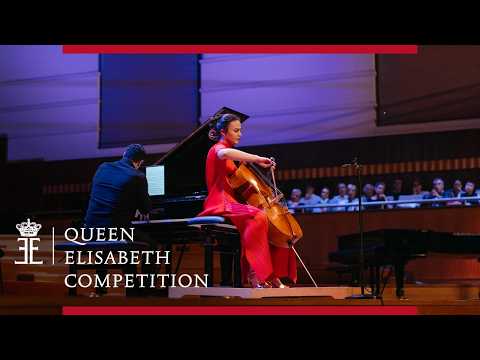 Play video
YouTube · published 2026-09-09 · 28m
César Franck Sonata in A major FWV 8 | Clara Dietlin - Queen Elisabeth Competition 2026
2026Sonata28m
FreeLongLive


France Musique · published 2026-08-01
Lucas Debargue et Victor Julien-Laferrière en duo à La Roque d'Anthéron
2026
FreeFull concert

France Musique · published 2026-07-12
César Franck par Grigory Sokolov, Samson François et Michel Plasson
2026
FreeFull concert
 Play video
YouTube · published 2026-06-06 · 42m
03-César Franck, Symphony in D minor
2026Symphony42m
FreeLongLive
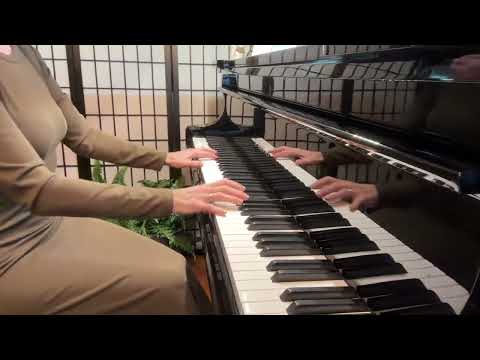 Play video
YouTube · published 2026-05-26 · 53m
César Franck, Johann Sebastian Bach | Practice Goes Live – May 19
202653m
FreeFull concertLongLive
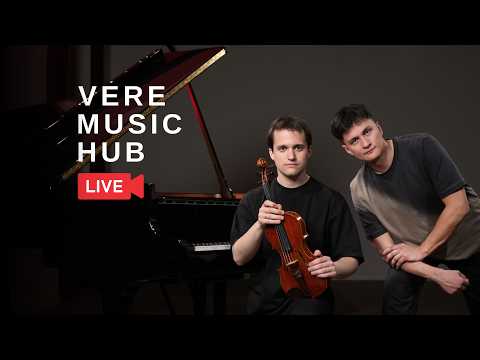 Play video
YouTube · published 2026-05-01 · 20m
LIVE! César Franck. Akim Zvarych (violin), Oleksandr Chornyi (piano)
202620m
FreeLongLive
 Play video
YouTube · published 2026-04-27 · 29m
(Must Watch) BLUVENDUO - Classical Guitar Concert | Franz Schubert, César Franck
202629m
FreeLongLive
 Play video
YouTube · published 2026-04-24 · 24m
César Franck: Monumentale Klaviermusik, Folge 2 - Prélude, Choral et Fugue (live 2001)
FreeLongLive

 Play video
YouTube · published 2026-01-12 · 21m
César Franck: Prélude, Chorale et Fugue, FWV 21. Liana Paniyeva live from Boston
FreeLongLive
 Play video
YouTube · published 2026-01-12 · 11h 31m
César Franck International Piano Competition Live Stream 21/12/2025
202511h 31m
FreeFull concertLongLive
 Play video
YouTube · published 2026-01-12 · 7h 7m
César Franck International Piano Competition Live Stream 20/12/2025
20257h 7m
FreeFull concertLongLive
 Play video
YouTube · published 2026-01-12 · 1h 47m
César Franck International Piano Competition Live Stream 19/12/2025
20251h 47m
FreeFull concertLongLive
 Play video
YouTube · published 2025-11-08 · 39m
César Franck: Symphony in D Minor - Ken-David Masur
FreeLongLive
 Play video
YouTube · published 2025-07-31 · 38m
César Franck, Symphony conducted by Pierre Monteux (live, 1958).
1958Symphony38m
FreeLongLive
 Play video
YouTube · published 2025-07-15 · 30m
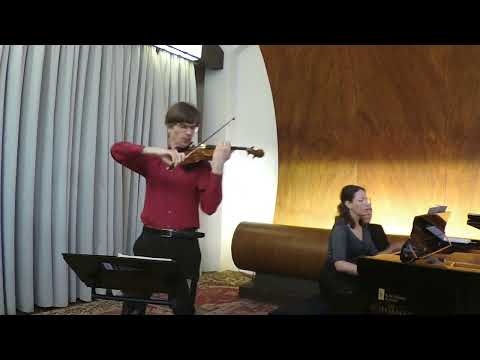
César Franck - Violin Sonata, A.Lifland (violin) and A.Sigalova (piano) in live concert
2025Sonata30m
FreeLongLive
 Play video
YouTube · published 2025-02-11 · 51m
The Complete Major Organ Works of César Franck, Recital #1
202551m
FreeFull concertLongLive
 Play video
YouTube · published 2025-02-11 · 45m
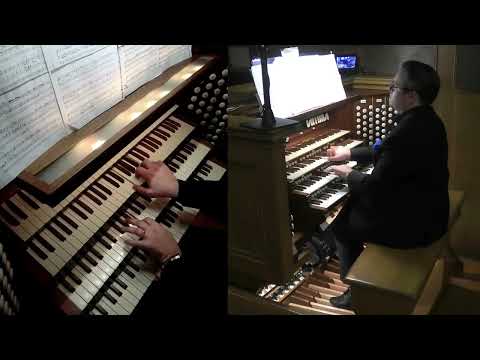
The Complete Major Organ Works of César Franck, Recital #4
202545m
FreeFull concertLongLive
 Play video
YouTube · published 2024-08-05 · 44m
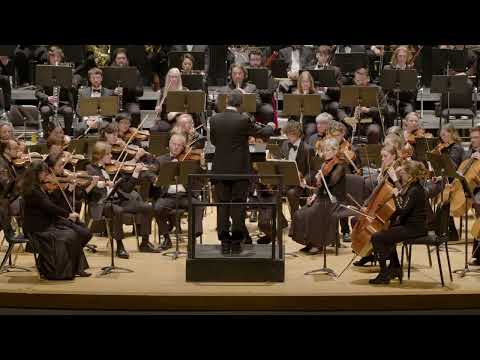
Symphony in D Minor, op. 48 - César Franck. Fall Concert 2023, Corvallis-OSU Symphony Orchestra
2023SymphonyOp.44m
FreeLongLive
 Play video
YouTube · published 2024-07-16 · 49m
The Complete Major Organ Works of César Franck, Recital #5
202449m
FreeFull concertLongLive
 Play video
YouTube · published 2024-07-15 · 51m
The Complete Major Organ Works of César Franck, Recital #2
202451m
FreeFull concertLongLive
 Play video
YouTube · published 2023-08-06 · 57m
Concert Symphonique - Hommage à César Franck
202357m
FreeFull concertLongLive
 Play video
YouTube · published 2023-08-02 · 1h 6m
César Franck Happy 200th Birthday Concert presenting Chase Olson, Nataly Pak and Angela Kraft Cross
20231h 6m
FreeFull concertLongLive
 Play video
YouTube · published 2023-08-01 · 1h 40m
César Franck et le franckisme en Belgique. Conférence-concert au Palais des Académies à Bruxelles
20231h 40m
FreeFull concertLongLive
 Play video
YouTube · published 2023-07-27 · 1h 4m
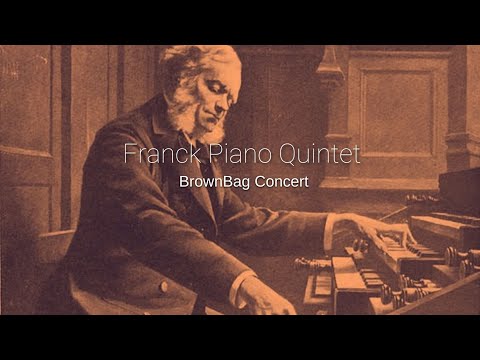
Brownbag Concert: César Franck’s Piano Quintet
20231h 4m
FreeFull concertLongLive
 Play video
YouTube · published 2022-08-06 · 1h 1m
Recollection: César Franck’s songs – concert by Tassis Christoyannis and Jeff Cohen
FreeFull concertLongLive
 Play video
YouTube · published 2022-08-06 · 1h 27m
🔴 LIVE NYC St. Patrick's Cathedral Concert Series: Evening of César Franck with Choir and Organ
20221h 27m
FreeFull concertLongLive
 Play video
YouTube · published 2022-08-06 · 21m
Live Recital: Armen Babakhanian | Prélude, Choral et Fugue | César Franck
202221mFugue
FreeLongLive
 Play video
YouTube · published 2021-08-06 · 45m
César Franck - Symphony in D minor (Orchestre de Paris, Louis Langrée)
2021Symphony45m
FreeFull concertLongLive
 Play video
YouTube · published 2021-08-04 · 30m
Columbia Music Performance Program - César Franck's Violin Sonata
2021Sonata30m
FreeLongLive
 Play video
YouTube · published 2021-07-31 · 23m
Jorge Bolet Live Recording from 1972. César Franck's Prélude, Aria, et Final.
1972Aria23m
FreeLongLive
 Play video
YouTube · published 2021-07-18 · 36m
César Franck: Symphony in d minor, Yoav Talmi, Symphony of Galicia (SOG), Spain. Live concert 1999
FreeLongLive
 Play video
YouTube · published 2021-06-06 · 1h 2m
César Franck, Restrained Pioneer: Lecture Recital—Pablo Martínez
20211h 2m
FreeFull concertLongLive
 Play video
YouTube · published 2021-04-09 · 1h 19m
New Year Music Festival, Stiftfestival & Classical NOW! in Studio 150: Hommage aan César Franck
20211h 19m
FreeFull concertLongLive
 Play video
YouTube · published 2021-02-12 · 36m
César Franck: Symphony, D minor – Concerts Lamoueaux (Incredible)
FreeLongLive
 Play video
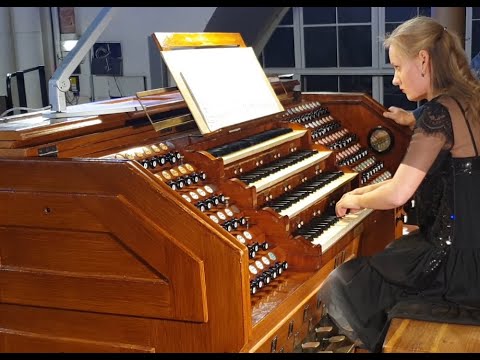
YouTube · published 2021-02-12 · 11m
Liene Andreta Kalnciema live at Riga Cathedral. César Franck: Prélude, fugue et variation, Op. 18
2021Op.11mFugue
FreeLive
 Play video
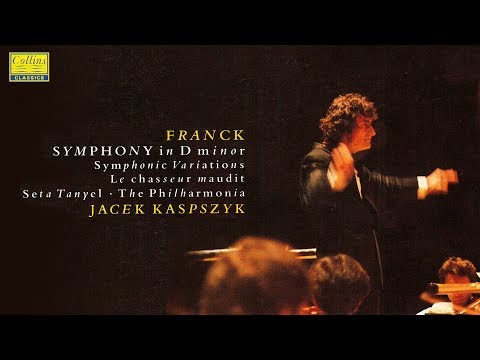
YouTube · published 2020-02-13 · 1h 9m
César Franck: Symphony in D minor - Symphonic Variations - Le chasseur maudit (FULL ALBUM)
FreeFull concertLongLive
 Play video
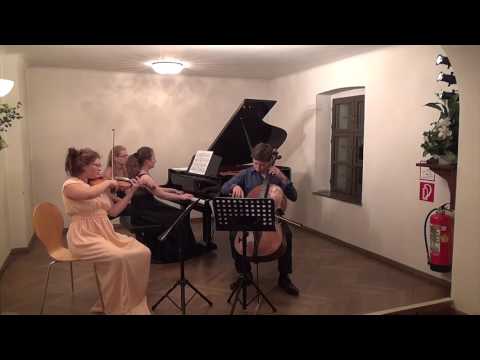
YouTube · published 2017-05-27 · 30m
colluvio CHAMBER MUSIC Academy 2016. César FRANCK: Piano Trio op. 1, no. 1, VIENNA concert
2016TrioOp.30mChamber_music
FreeLongLive
 Play video
YouTube · published 2016-02-14 · 13m
César Franck: Choral b minor - László Révész, Live in concert - HQ digital recording
FreeLive
 Play video
YouTube · published 2012-07-23 · 11m
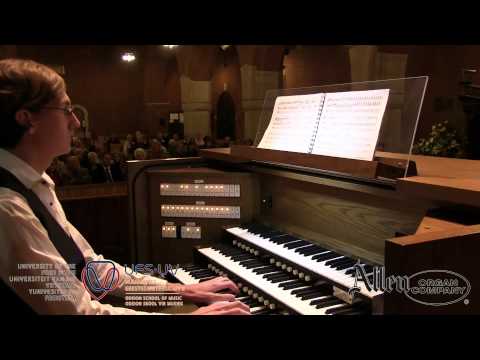
OSM CONCERT HALL Lourie Coetzee: César Franck - Grande Pièce Symphonique
201211m
FreeLive
Saved playlist songs
Tracks from your saved Spotify playlist that are attributable to César Franck.
No Spotify playlist is seeded yet.
No attributable tracks for this person in your saved playlist songs yet.