Arthur Rubinstein
Your profile, built from Spotify + Wikipedia/Wikidata + your indexed library.
Born / died
1887-1982
Movement
Romantic
Location
Born in Łódź
Friends / contemporaries
Anton Webern, Charles-Valentin Alkan, Igor Stravinsky +3 more

Warm, lyrical, and aristocratic in his interpretations, Artur Rubinstein performed impressively into extremely old age, and he was a keyboard prodigy almost from the time he could climb onto a piano bench.Spotify
He came from a mercantile rather than a musical family, but fixated on the piano as soon as he heard it. At age three he impressed Joseph Joachim, and by the age of seven he was playing Mozart, Schubert, and Mendelssohn at a charity concert in his hometown.Spotify
In Warsaw, he had piano lessons with Alexander Róóycki; then in 1897 he was sent to Berlin to study piano with Heinrich Barth and theory with Robert Kahn and Max Bruch, all under Joachim's general supervision. In 1899 came his first notable concerto appearance in Potsdam. Soon thereafter, just barely a teenager, he began touring Germany and Poland.Spotify
After brief studies with Paderewski in Switzerland in 1903, Rubinstein moved to Paris, where he met Ravel, Dukas, and Jacques Thibaud, and played Saint-Saëns' G minor concerto to the composer's approval. That work would remain a flashy Rubinstein vehicle for six decades, and it was the concerto he offered in his American debut with the Philadelphia Orchestra in New York's Carnegie Hall in 1906. His under-prepared American tour was not especially well-received, though, so he withdrew to Europe for further study.Spotify
Rubinstein became an adept and sensitive chamber musician and accompanist; his 1912 London debut was accompanying Pablo Casals, and during World War I he toured with Eugène Ysaÿe. He gave several successful recitals in Spain during the 1916-1917 season, and soon toured Latin America. Along the way he developed a great flair for Hispanic music; Heitor Villa-Lobos went so far as to dedicate to Rubinstein his Rudepoêma, one of the toughest works in the repertory.Spotify
Although Rubinstein would later be somewhat typecast as a Chopin authority, his readings of Falla, Granados, and Albéniz would always be equally idiomatic. Rubinstein's international reputation grew quickly, although he was by his own account a sloppy technician. In the mid-1930s he withdrew again and drilled himself in technique.Spotify
By 1937 he reemerged as a musician of great discipline, poise, and polish -- qualities he would mostly retain until his farewell recital in London in 1976, at the age of 89. Rubinstein's temperament had sufficient fire for Beethoven but enough poetry for Chopin; his tempos and dynamics were always flexible, but never distorted. His 1960s recordings for RCA of nearly all Chopin's solo piano music have been considered basic to any record collection since their release, and his version of Falla's Nights in the Gardens of Spain is another classic, as are his various late collaborations with the Guarneri Quartet.Spotify
Rubinstein became a naturalized American citizen in 1946, but he maintained residences in California, New York, Paris, and Geneva; two of his children were born in the United States, one in Warsaw, and one in Buenos Aires. He had married Aniela Mlynarska in 1932, but womanizing remained integral to his reputation as an irrepressible bon vivant. He maintained that the slogan "wine, women, and song" as applied to him meant 80 percent women and only 20 percent wine and song.Spotify
Still, there was a serious side to his life. After World War II, he refused ever again to perform in Germany, in response to the Nazi extermination of his Polish family. Rubinstein became a strong supporter of Israel; in gratitude, an international piano competition in his name was instituted in Jerusalem in 1974.Spotify
His honors included the Gold Medal of the Royal Philharmonic Society of London, the U.S. Medal of Freedom (1976), and membership in the French Legion of Honor.Spotify
role: unknown · 20%era: Romanticmovement: Romantic1887–1982
Movement
Romantic
How this movement sounds
rubatochromatic harmonybig climaxesricher timbrelong lyrical linesnarrative feel
Romantic listening cues: heightened emotion, longer lyrical melodies, and more freedom with rubato (flexible timing) in performance.
Harmony is often more chromatic, with colorful chords and side-steps that create tension and release over longer spans. You may hear more delayed resolutions and more 'yearning' harmonic motion.
Dynamics and texture often expand: thicker sonorities, bigger climaxes, and a strong sense of narrative or character (even in purely instrumental music).
In piano music, listen for the use of pedaling and resonance to create a halo around harmony; in orchestral music, listen for richer timbre and denser voicing (inner lines matter).
A useful trick: follow the bass line. In Romantic music it often shapes the drama, pulling the harmony through longer arcs rather than short phrase punctuation.
How Arthur Rubinstein sounds
rubatorich harmonylong melodybig dynamicscoloristic pedal
Romantic music tends to foreground emotion and color: long singing melodies, flexible tempo (rubato), and harmony that stretches and sighs.
You often hear thicker textures, wider dynamic range, and a more "orchestral" use of the piano with deep bass and resonant pedaling.
Look for heightened contrast and personal voice: the same musical gesture can feel intimate one moment and heroic the next.
Wikipedia
Arthur Rubinstein OMRI (Polish: Artur Rubinstein; 28 January 1887 – 20 December 1982) was a Polish and American pianist.Wikipedia
Widely regarded as one of the greatest pianists of his day, he received international acclaim for his interpretations of classical music compositions, particularly Chopin. Rubinstein played in public for eight decades with a vast repertoire consisting of Beethoven, Brahms, Mozart, Schubert, Liszt, Tchaikovsky, Saint-Saëns, and Schumann, amongst others.Wikipedia
Study resources & scores
Curated study material and indexed score links related to Arthur Rubinstein.
No related study resources yet. As more lectures, transcripts, and scores are indexed, they will show up here.
Local matches
Matches your current indexed library (videos table). This will be sparse until connectors run.

France Musique · published 2026-10-07
Arthur Rubinstein, un amour clandestin en pension
2026
Free
 Play video
YouTube · published 2026-09-20 · 32m
Dvořák "Dumky" Trio | Jinhyung Park (2nd Prize) | 18th Arthur Rubinstein Competition
2026Trio32m
FreeLongLive
 Play video
YouTube · published 2026-09-19 · 1h 0m
Chopin Sonata No. 3 & Scriabin | Roman Fediurko (3rd Prize) | 18th Arthur Rubinstein Competition
2026Sonata1h 0m
FreeFull concertLongLive

France Musique · published 2026-09-15
"Arthur Rubinstein" par Emilie Munera
2026
Free

France Musique · published 2026-09-07
Sur les pas d'Arthur Rubinstein : la vie comme "un roman d'aventures"
2026
Free

France Musique · published 2026-09-05
Emilie Munera "Arthur Rubinstein" (Le mot et le reste)
2026
Free

France Musique · published 2026-06-19
Le récital imaginaire d'Arthur Rubinstein
2026
FreeFull concert
 Play video
Carnegie Hall · published 2025-06-24 · 2m
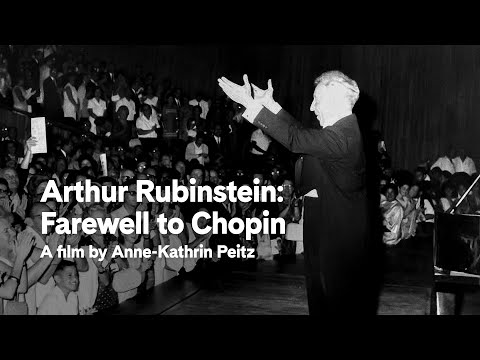
Arthur Rubinstein: Farewell to Chopin (excerpt) | Carnegie Hall+
Free
 Play video
YouTube · published 2022-03-14 · 26m
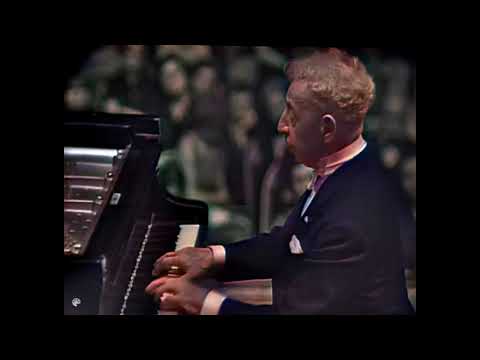
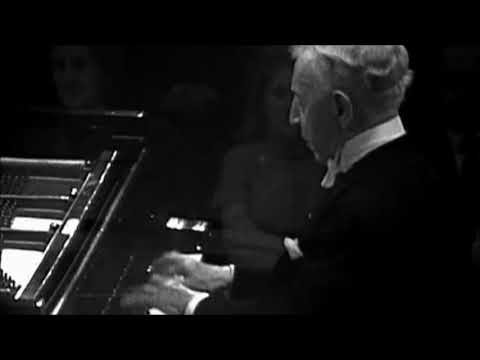
Arthur Rubinstein Live Recital Warsaw 1966. Schumann Carnaval Op 9. AI Colorize, 1080p 60fps.
196626m
FreeLongLive
 Play video
YouTube · published 2022-03-14 · 1h 17m
Arthur Rubinstein - all Chopin recital - Milan, 1970
19701h 17m
FreeFull concertLongLive
 Play video
YouTube · published 2021-02-12 · 34m
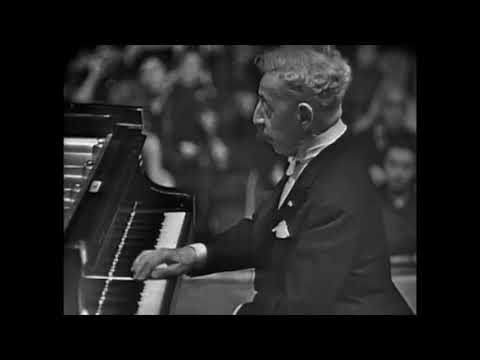
Arthur Rubinstein Live in 1966: Schubert's Sonata in B-flat Major, D. 960 [Remaster - 2020]
1966Sonata34m
FreeLongLive
 Play video
YouTube · published 2020-03-14 · 1h 2m
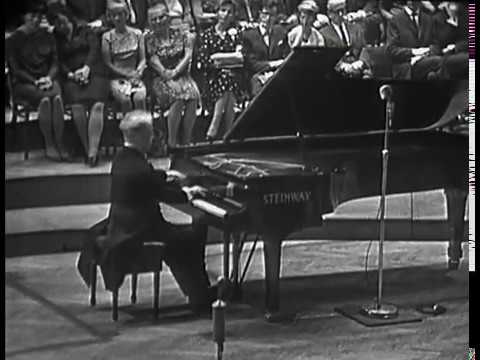
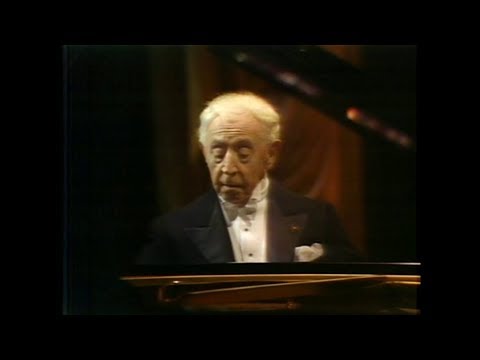
Arthur Rubinstein Live Recital Warsaw 1966. Schubert B flat Sonata D960 and Schumann Carnaval Op 9
1966Sonata1h 2m
FreeFull concertLongLive
 Play video
YouTube · published 2018-03-15 · 1h 44m
Arthur Rubinstein - The Last Recital for Israel, 1975 (Beethoven, Schumann, Debussy, Chopin)
19751h 44m
FreeFull concertLongLive
 Play video
YouTube · published 2018-02-13 · 26m
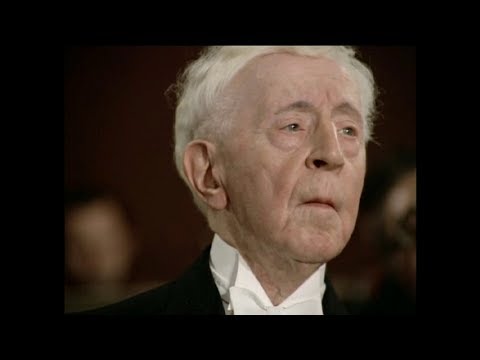
Arthur Rubinstein - Saint-Saëns: Piano Concerto No.2 - London Symphony Orch. - André Previn (1975)
FreeLongLive
 Play video
YouTube · published 2017-03-15 · 1h 34m
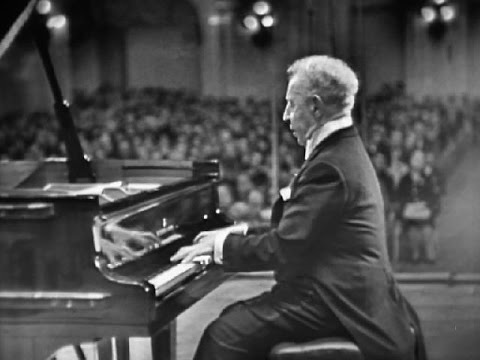
Arthur Rubinstein - Live in Moscow, 1964 - Chopin, Schumann, Debussy, Villa-Lobos
19641h 34m
FreeFull concertLongLive
 Play video
YouTube · published 2014-03-16 · 45m
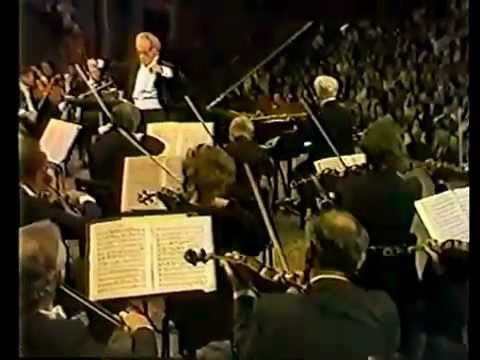
Arthur Rubinstein. Beethoven piano concerto no 5 Emperor [FULL] [LIVE] in Jerusalem
2014Concerto45m
FreeFull concertLongLive
Saved playlist songs
Tracks from your saved Spotify playlist that are attributable to Arthur Rubinstein.
No Spotify playlist is seeded yet.
No attributable tracks for this person in your saved playlist songs yet.