Anton Webern
Your profile, built from Spotify + Wikipedia/Wikidata + your indexed library.
Born / died
1883-1945
Movement
Romantic
Location
Born in Vienna
Friends / contemporaries
Johannes Brahms, Bedrich Smetana, Charles-Valentin Alkan +3 more

Anton (von) Webern was one of the key figures in the so-called Second Viennese School.Spotify
A pupil of Schoenberg, he became known for his concise and highly individual atonal and serial compositions. In many ways he was more influential than his teacher: in the postwar years leading figures in the avant-garde like Boulez, Stockhausen, and Dallapiccola, found more substance in his music and forms than in those of Schoenberg.Spotify
Hence, one often heard -- and still hears -- the term "post-Webern serialism." His mature style was relatively straightforward, featuring simple harmonies and transparent textures, silent pauses, and brevity of expression. While his influence and stature are acknowledged and his music often played, Webern has landed no work in the standard repertory. Much of his music is viewed as difficult and intellectual by the public, though it is in fact comparatively quite approachable, much less challenging than the works of Boulez, Cage, and others.Spotify
Webern's family moved to Graz in 1890, then four years later to Klagenfurt, where he would attend the gymnasium for his general education. He showed talent early on and studied both piano and cello with Edwin Komauer during his early years in Klagenfurt. He graduated from the gymnasium in 1902 and enrolled at the University of Vienna.Spotify
There he studied under Graedener, Adler, and Navratil. In 1904, however, he began his most serious period of study, when he became a pupil of Schoenberg. Schoenberg was then, and remained for some time to come, one of the most progressive figures in musical composition, being among the first to write entirely atonal music, and then finalizing his serial technique in the 1920s.Spotify
Webern now became a close friend of Alban Berg, also one of Schoenberg's pupils. During these years of study, Webern began to focus on vocal composition, turning out several sets of songs. He also wrote some important chamber works, including the String Quartet (1905).Spotify
In 1908, Webern launched a career as a conductor, taking a position at Bad Ischl. He was not particularly successful in this new endeavor, but acquired subsequent posts at Teplitz, Danzig, Stettin, and Prague, this last assignment ending in 1918, when he returned to Vienna. During these years Webern had continued to write song collections (for example, Four Songs, Op.Spotify
13; 1917), as well as chamber music (Sonata for Cello and Piano; 1914). After the war, Webern, along with Berg, took part in Schoenberg's Society for Private Musical Performances, an organization dedicated to the performance of modern works. After this, he returned to conducting, but for the most part garnered only secondary posts, such as director of the Vienna Workers' Chorus (1922-1934), which he fulfilled concurrently with other positions.Spotify
He did manage, however, to obtain regular conducting appearances on Austrian Radio. In 1926, he took on a teaching post at the Jewish Cultural Institute for the Blind. After the Nazis came to power, Webern's work with the Vienna Workers' Chorus was ended, and four years later, his relationship with Austrian Radio was terminated.Spotify
He composed three important choral works -- the Cantatas Nos. 1, 2, and 3 -- in the period 1938-1944, and in 1940 he produced his orchestral composition Variations, Op. 30.Spotify
Webern's death nearly a half year after the end of the war in Europe occurred in a freak incident in Mittersill (near Salzburg) when an American soldier mistakenly shot him while he was on an extended excursion to visit his daughter.Spotify
role: composer · 65%instrument: conductorera: Romanticmovement: Romantic1883–1945
Movement
Romantic
How this movement sounds
rubatochromatic harmonybig climaxesricher timbrelong lyrical linesnarrative feel
Romantic listening cues: heightened emotion, longer lyrical melodies, and more freedom with rubato (flexible timing) in performance.
Harmony is often more chromatic, with colorful chords and side-steps that create tension and release over longer spans. You may hear more delayed resolutions and more 'yearning' harmonic motion.
Dynamics and texture often expand: thicker sonorities, bigger climaxes, and a strong sense of narrative or character (even in purely instrumental music).
In piano music, listen for the use of pedaling and resonance to create a halo around harmony; in orchestral music, listen for richer timbre and denser voicing (inner lines matter).
A useful trick: follow the bass line. In Romantic music it often shapes the drama, pulling the harmony through longer arcs rather than short phrase punctuation.
How Anton Webern sounds
rubatorich harmonylong melodybig dynamicscoloristic pedal
Romantic music tends to foreground emotion and color: long singing melodies, flexible tempo (rubato), and harmony that stretches and sighs.
You often hear thicker textures, wider dynamic range, and a more "orchestral" use of the piano with deep bass and resonant pedaling.
Look for heightened contrast and personal voice: the same musical gesture can feel intimate one moment and heroic the next.
Wikipedia
Anton Webern was an Austrian composer, conductor, and musicologist whose modernist music was among the most radical of its milieu in its lyrical, poetic concision and use of then novel atonal and twelve-tone techniques.Wikipedia
His approach was typically rigorous, inspired by his studies of the Franco-Flemish School under Guido Adler and by Arnold Schoenberg's emphasis on structure in teaching composition from the music of Johann Sebastian Bach, the First Viennese School, and Johannes Brahms. Webern, Schoenberg, and their colleague Alban Berg were at the core of what became known as the Second Viennese School.Wikipedia
Interview highlights
Built from indexed interview/masterclass transcripts (podcasts / YouTube). Quotes are direct excerpts with source links.
Interview highlights for Anton Webern from 4 sources. Quotes below are direct excerpts; open the source link for context.
Topics that recur (auto): Piece, Music, Notes, Note, Actually, Then, First, Other.
Source: youtube_captions · -Q9VcGvyIzY · 7:18 · published 2024-10-12 · Open source
Source: youtube_captions · REg65BVL4rA · 3:18 · published 2018-06-04 · Open source
Source: youtube_captions · rXX60ptT5nA · 0:22 · published 2016-10-27 · Open source
Source: youtube_captions · FK1iqTTrphM · 5:19 · published 2017-10-28 · Open source
Source: youtube_captions · -Q9VcGvyIzY · 10:25 · published 2024-10-12 · Open source
Source: youtube_captions · REg65BVL4rA · 2:05 · published 2018-06-04 · Open source
Transcript sources (4)
Study resources & scores
Curated study material and indexed score links related to Anton Webern.
No related study resources yet. As more lectures, transcripts, and scores are indexed, they will show up here.
Local matches
Matches your current indexed library (videos table). This will be sparse until connectors run.

France Musique · published 2026-06-10
Berg, Schönberg et Webern selon Herbert von Karajan
2026
Free
 Play video
YouTube · published 2024-07-31 · 33m
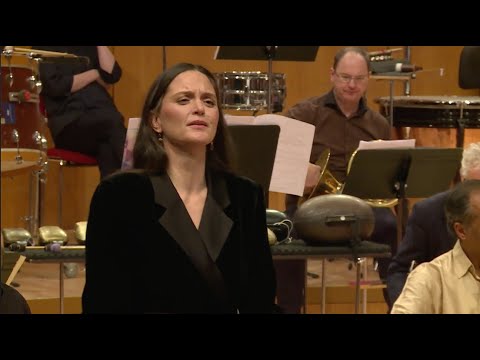
Anton Webern Portrait Concert | Caroline Melzer, Enno Poppe, Ensemble Modern
202433m
FreeLongLive
 Play video
YouTube · published 2022-07-18 · 29m
Berg: Concerto for violin and orchestra - Louis Krasner, violino; Anton Webern, direttore
FreeLongLive
 Play video
YouTube · published 2019-03-15 · 13m
Anton Webern : Im Sommerwind, idyll for large orchestra after a poem by Bruno Wille (1904)
FreeLive
 Play video
YouTube · published 2019-02-13 · 10m
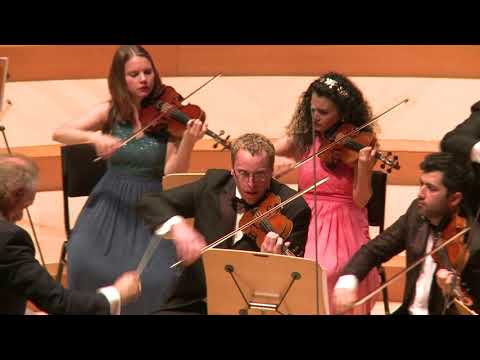
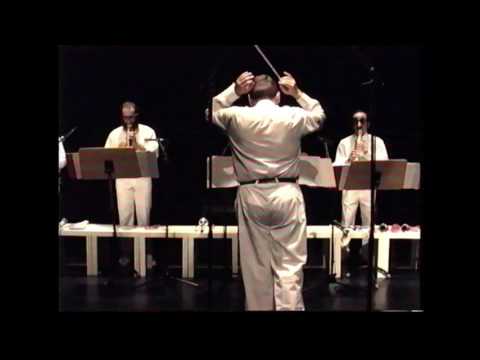
Anton Webern - Langsamer Satz, arr. for String Orchestra (iPalpiti/Schmieder)
201910m
FreeLive
 Play video
YouTube · published 2018-03-15 · 14m
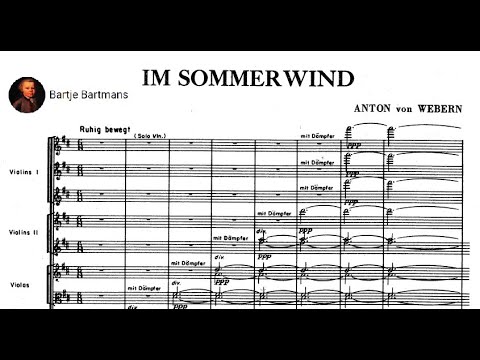
Symphony op.21 (Anton Webern) [Ensemble JER, 1997]
1997SymphonyOp.14m
FreeLive
 Play video
YouTube · published 2017-03-15 · 15m
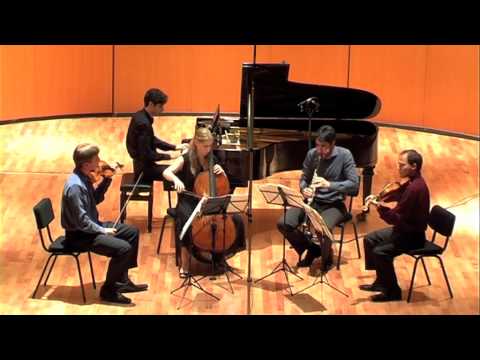
Anton Webern - Im Sommerwind (1904) Chicago/Haitink Live
201715m
FreeLive
 Play video
YouTube · published 2014-03-16 · 21m
Israeli Chamber Project | Schoenberg: Chamber Symphony No.1, Op.9 (Arranged by Anton Webern)
2014SymphonyOp.21m
FreeLongLive
Saved playlist songs
Tracks from your saved Spotify playlist that are attributable to Anton Webern.
No Spotify playlist is seeded yet.
No attributable tracks for this person in your saved playlist songs yet.