Anton Bruckner
Your profile, built from Spotify + Wikipedia/Wikidata + your indexed library.
Born / died
1824-1896
Movement
Romantic
Location
Lived in St. Florian Monastery, Vienna
Friends / contemporaries
Franz Liszt, Johannes Brahms, Anton Webern +3 more

Although Anton Bruckner wrote a great deal of sacred choral music (including not only his grandly conceived Mass No.Spotify
3, but also his more intimate Mass No. 2 and his astringent motets, which fuse Renaissance and 19th century techniques), he is best known for his symphonies: two unnumbered apprentice works, eight completed mature symphonies, and the first three movements of a Ninth. (The finale has been reconstructed by several hands, but most performances include just the movements Bruckner completed.) The symphonies, influenced to some extent by Wagner and identified with his school by the Viennese public, are monumental: expansive in scale, rigorous (if sometimes gigantist) in formal design, and often elaborate in their contrapuntal writing.Spotify
Their sonorities are stately and organ-like; the Viennese critic Graf wrote that Bruckner "pondered over chords and chord associations as a medieval architect contemplated the original forms of a Gothic cathedral." Despite occasional folk influences in the scherzos, his symphonies are uniformly high-minded, even religious, in spirit. Together, they form the weightiest body of symphonies between Schubert (whom he greatly admired) and Mahler. Bruckner was born in the town of Ansfelden, Austria, on September 4, 1824, the son of a schoolmaster/church musician and the eldest of 11 children.Spotify
His first music teacher was his father, and at ten, he was deputized for his father as organist at church and made his first attempts at composition. At 13, the year of his father's death, he was accepted as a choirboy at St. Florian, which, however far afield he would travel, was to become his lifelong spiritual home.Spotify
He spent the first years of his career as a choirmaster for a group of monks and teaching in various parishes, one of which was close to Enns, where he studied with Leopold von Zenetti beginning in 1843. In 1845 he returned to St. Florian as organist and teacher and remained there for the next decade.Spotify
He next began studying composition and counterpoint with Simon Sechter, primarily by mail. Until this point, Bruckner's output consisted mostly of sacred choral music and organ pieces, but now he would start to expand his horizons. He passed exams at the Vienna Conservatory in 1861, and then, the 37-year-old student approached cellist/conductor Otto Kitzler for lessons in form and orchestration.Spotify
Around the same time, he created his first large works, including a Symphony in D minor that he later derisively named "die Nullte," the Symphony No. 0. Kitzler had introduced Bruckner to Wagner's Tannhäuser in 1863, and Bruckner was present at the premiere of Tristan und Isolde in 1865.Spotify
He remained a near-fanatical admirer of Wagner, but the extent to which his own vast musical structures were modeled on Wagner's is a matter of debate. His symphonies sometimes show a spirituality similar to his sacred choral works, which he also continued to write. Bruckner landed a teaching post at the Vienna Conservatory in 1868, but always retained something of his original rustic character.Spotify
An often-repeated anecdote tells how he gave a tip to the aristocratic conductor Hans Richter after a successful rehearsal of his Symphony No. 4, telling Richter to go and buy himself a beer. Musical life in cosmopolitan Vienna at the time was split between two schools, the Wagnerians and the Brahmsians.Spotify
The resulting criticism of his music from the Brahms faction, plus his own lifelong self-doubt are generally seen as the main reasons for his multiple revisions of many of his major works. Bruckner also gave organ performances throughout Europe in this period, impressing audiences with his improvisations that often produced ideas he would use in the symphonies. The Symphony No.Spotify
7 (1881-1883) was successfully premiered in Leipzig and New York before being revised and performed in Vienna in 1886. The Eighth brought a standing ovation when premiered in Vienna under Richter in 1892, with even Brahms heartily joining the applause. It was dedicated to Emperor Franz Joseph I, who had decorated Bruckner with the Order of Franz Joseph in 1886 and supported the composer in his final year.Spotify
The last years of his life were spent in ill-health and working on the Ninth Symphony, but it would never be completed. Bruckner died in Vienna on October 11, 1896, and was buried in the crypt at St. Florian, below the "Bruckner Organ."Spotify
~ TiVo Staff
role: unknown · 20%era: Romanticmovement: Romantic1824–1896
Movement
Romantic
How this movement sounds
rubatochromatic harmonybig climaxesricher timbrelong lyrical linesnarrative feel
Romantic listening cues: heightened emotion, longer lyrical melodies, and more freedom with rubato (flexible timing) in performance.
Harmony is often more chromatic, with colorful chords and side-steps that create tension and release over longer spans. You may hear more delayed resolutions and more 'yearning' harmonic motion.
Dynamics and texture often expand: thicker sonorities, bigger climaxes, and a strong sense of narrative or character (even in purely instrumental music).
In piano music, listen for the use of pedaling and resonance to create a halo around harmony; in orchestral music, listen for richer timbre and denser voicing (inner lines matter).
A useful trick: follow the bass line. In Romantic music it often shapes the drama, pulling the harmony through longer arcs rather than short phrase punctuation.
How Anton Bruckner sounds
rubatorich harmonylong melodybig dynamicscoloristic pedal
Romantic music tends to foreground emotion and color: long singing melodies, flexible tempo (rubato), and harmony that stretches and sighs.
You often hear thicker textures, wider dynamic range, and a more "orchestral" use of the piano with deep bass and resonant pedaling.
Look for heightened contrast and personal voice: the same musical gesture can feel intimate one moment and heroic the next.
Wikipedia
Joseph Anton Bruckner (; German: [ˈantoːn ˈbʁʊknɐ] ; 4 September 1824 – 11 October 1896) was an Austrian composer and organist best known for his symphonies and sacred music, which includes Masses, Te Deum and motets.Wikipedia
The symphonies are considered emblematic of the final stage of Austro-German Romanticism because of their rich harmonic language, strongly polyphonic character, and considerable length. Bruckner's compositions helped to define contemporary musical radicalism, owing to their dissonances, unprepared modulations, and roving harmonies.Wikipedia
Unlike other musical radicals such as Richard Wagner and Hugo Wolf, Bruckner showed respect, even humility, before other famous musicians, Wagner in particular. This apparent dichotomy between Bruckner the man and Bruckner the composer hampers efforts to describe his life in a way that gives a straightforward context for his music. The German conductor Hans von Bülow described him as "half genius, half simpleton".Wikipedia
Bruckner was critical of his own work and often reworked his compositions. There are several versions of many of his works. His works, the symphonies in particular, had detractors, most notably the influential Austrian critic Eduard Hanslick and other supporters of the German composer Johannes Brahms, who pointed to their large size and use of repetition, as well as to Bruckner's propensity for revising many of his works,…Wikipedia
YouTube (channel bio)
Joseph Anton Bruckner was an Austrian composer and organist best known for his symphonies and sacred music, which includes Masses, Te Deum and motets.YouTube
The symphonies are considered emblematic of the final stage of Austro-German Romanticism because of their rich harmonic language, strongly polyphonic character, and considerable length. Bruckner's compositions helped to define contemporary musical radicalism, owing to their dissonances, unprepared modulations, and roving harmonies.YouTube
Unlike other musical radicals such as Richard Wagner and Hugo Wolf, Bruckner showed respect, even humility, before other famous musicians, Wagner in particular. This apparent dichotomy between Bruckner the man and Bruckner the composer hampers efforts to describe his life in a way that gives a straightforward context for his music. The German conductor Hans von Bülow described him as "half genius, half simpleton".YouTube
Bruckner was critical of his own work and often reworked his compositions. There are several versions of many of his works.YouTube
Study resources & scores
Curated study material and indexed score links related to Anton Bruckner.
No related study resources yet. As more lectures, transcripts, and scores are indexed, they will show up here.
Local matches
Matches your current indexed library (videos table). This will be sparse until connectors run.

France Musique · published 2026-09-14
Les derniers oubliés de l'été - encore quelques disques nouveaux sortis cet été.
2026
Free

France Musique · published 2026-06-19
Anton Bruckner et le chant de stade le plus célèbre du monde
2026
Free

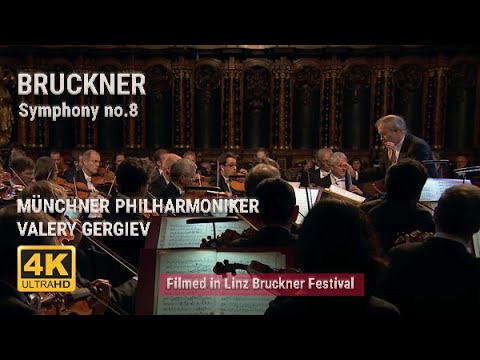 Play video
YouTube · published 2025-02-11 · 1h 26m
Anton Bruckner: Symphony No. 8 in C minor WAB 108
FreeFull concertLongLive
Saved playlist songs
Tracks from your saved Spotify playlist that are attributable to Anton Bruckner.
No Spotify playlist is seeded yet.
No attributable tracks for this person in your saved playlist songs yet.