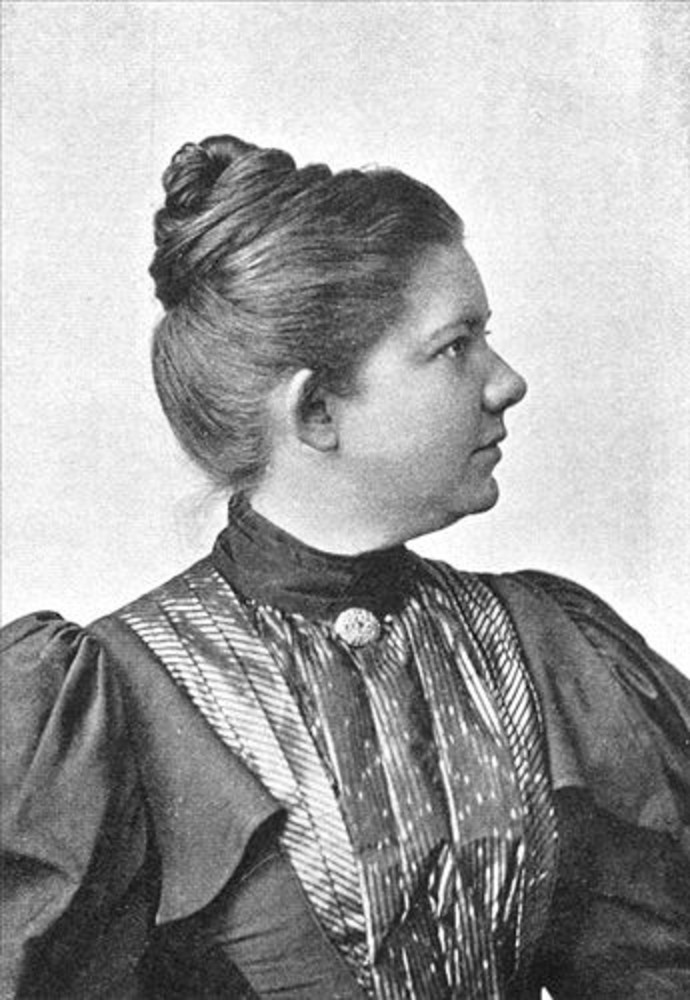
Amy Beach
Your profile, built from Spotify + Wikipedia/Wikidata + your indexed library.
Born / died
1867-1944
Movement
Romantic
Location
Born in Henniker
Friends / contemporaries
Anton Webern, Bedrich Smetana, Charles-Valentin Alkan +3 more
genres: chamber music · followers: 14,458
One of a handful of successful woman composers of the late 19th and early 20th centuries, Amy Marcy Cheney Beach fell into this role almost by accident.Spotify
Her real goal was to be a concert pianist, but her husband forbade such a life for his wife. She was born about two years after the end of the Civil War and lived until the final months of World War II, a period that saw immense changes in music, and women's role in making it, all of which she played a substantial part in changing.Spotify
A music prodigy from the age of one, Amy Cheney taught herself to read at two, and by four she was composing. She studied in the United States, what little formal training she had took place largely in and around Boston, and she learned orchestration on her own, reading Berlioz's treatise of the subject, which she translated herself from the French. She had already begun a successful career as a concert pianist at the age of 16, when she performed with the Boston Symphony Orchestra.Spotify
Her marriage to Dr. Henry Harris Aubrey Beach, however, ended any possibility of a performing career -- it was unheard of in those days for the wife of a prominent and successful physician to engage in public performance for pay. Instead, as a compromise that her husband found acceptable, for the next 25 years, Amy Cheney Beach pursued a career as a composer of songs, chamber pieces, and a handful of large-scale works, including one major symphony.Spotify
Her works were taken very seriously at the time. In 1892, she became the first woman composer to have a work performed by the Handel and Haydn Society of Boston, when it performed her Mass in E flat, and that same year she became the first woman to have a composition performed by the New York Philharmonic. Her music is treated even more reverentially today, in view of its accessibility and contrasting "newness." Beach's "Gaelic" Symphony, for example, sounds very much in the tradition of Brahms, but not quite like any Brahms piece ever heard.Spotify
After the death of her husband in 1910, she resumed her performing career and became a celebrated virtuoso at the piano in Europe, especially in Germany during the years before World War I. Performances of her symphony in Leipzig and Berlin were very well-received, and she was regarded as a major modern composer in Germany. She returned to the United States in 1914 and moved to New York, and spent most of the rest of her life working full-time as a performer and composer.Spotify
In 1932 she completed her opera Cabildo, and she unveiled a very successful piano trio in 1938. In the final 30 years of her life, she was the de facto dean of female composers, and her success paved the way for serious music careers by dozens of women who followed in her wake. Beach's major influences during the first half of her career were Wagner and Brahms, while later on she showed the strong influence of McDowell and Debussy.Spotify
Her songs and chamber works were much better known in America than her orchestral works, but in Europe the Gaelic Symphony found a respectable audience. Beach showed a natural gift for memorable melody in all of her work, and startlingly assured development. She tried to use folk sources where suitable, in the manner of the 19th century romantics, and even much of her original material has the feel of folk.Spotify
~ Bruce Eder, Rovi
role: unknown · 20%era: Romanticmovement: Romantic1867–1944
Movement
Romantic · Wikipedia
Romantic music is a stylistic movement in Western Classical music associated with the period of the 19th century commonly referred to as the Romantic era. It is closely related to the broader concept of Romanticism—the intellectual, artistic, and literary movement that became prominent in Western culture from about 1798 until 1837.
How this movement sounds
rubatochromatic harmonybig climaxesricher timbrelong lyrical linesnarrative feel
Romantic listening cues: heightened emotion, longer lyrical melodies, and more freedom with rubato (flexible timing) in performance.
Harmony is often more chromatic, with colorful chords and side-steps that create tension and release over longer spans. You may hear more delayed resolutions and more 'yearning' harmonic motion.
Dynamics and texture often expand: thicker sonorities, bigger climaxes, and a strong sense of narrative or character (even in purely instrumental music).
In piano music, listen for the use of pedaling and resonance to create a halo around harmony; in orchestral music, listen for richer timbre and denser voicing (inner lines matter).
A useful trick: follow the bass line. In Romantic music it often shapes the drama, pulling the harmony through longer arcs rather than short phrase punctuation.
How Amy Beach sounds
rubatorich harmonylong melodybig dynamicscoloristic pedal
Romantic music tends to foreground emotion and color: long singing melodies, flexible tempo (rubato), and harmony that stretches and sighs.
You often hear thicker textures, wider dynamic range, and a more "orchestral" use of the piano with deep bass and resonant pedaling.
Look for heightened contrast and personal voice: the same musical gesture can feel intimate one moment and heroic the next.
Wikipedia
Amy Marcy Cheney Beach (September 5, 1867 – December 27, 1944) was an American composer and pianist.Wikipedia
She was the first successful American female composer of large-scale art music. Her "Gaelic" Symphony, premiered by the Boston Symphony Orchestra in 1896, was the first symphony composed and published by an American woman.Wikipedia
She was one of the first American composers of her era to succeed without the benefit of European training, and was known as one of the most respected American composers. She was acclaimed for piano concerts she gave, featuring her own music, in the United States and Europe.Wikipedia
Study resources & scores
Curated study material and indexed score links related to Amy Beach.
No related study resources yet. As more lectures, transcripts, and scores are indexed, they will show up here.
Local matches
Matches your current indexed library (videos table). This will be sparse until connectors run.

France Musique · published 2026-05-11
Michelle Merrill et l'ONDIF dans un programme américain avec Stravinsky, Gershwin et Amy Beach
2026
FreeFull concert


Saved playlist songs
Tracks from your saved Spotify playlist that are attributable to Amy Beach.
No Spotify playlist is seeded yet.
No attributable tracks for this person in your saved playlist songs yet.