Frederic Chopin
Your profile, built from Spotify + Wikipedia/Wikidata + your indexed library.
Born / died
1810-1849
Movement
Romantic
Location
Worked in Paris
Friends / contemporaries
Charles-Valentin Alkan, Franz Liszt, Robert Schumann +1 more
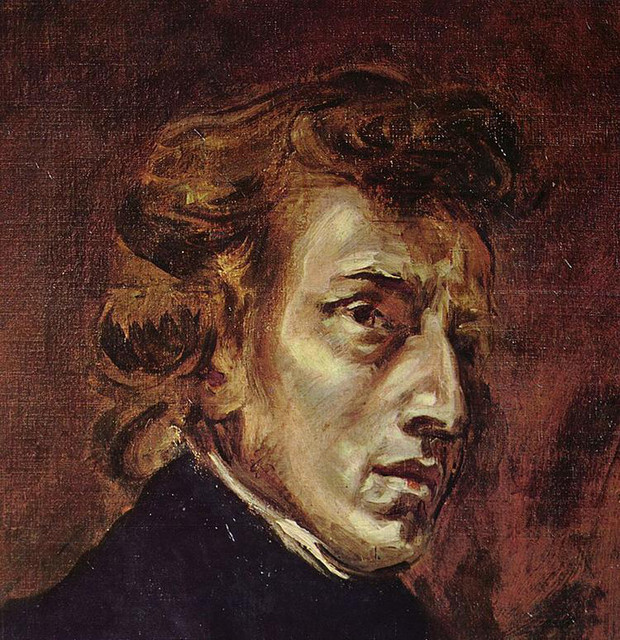
Frédéric Chopin was the most famous composer of Polish origin in the history of Western concert music.Spotify
He was a progressive who revolutionized the harmonic content, the texture, and the emotional quality of the small piano piece, turning light dance forms, nocturnes, and study genres into profound works that were both daring and deeply inward. Born Fryderyk Franciszek Chopin to a French father and a Polish mother, probably on March 1, 1810, he was a native of Zelazowa Wola village west of Warsaw.Spotify
In these rustic surroundings, he was exposed to both the classics of keyboard music (including, significantly, those of Bach), by teachers who immediately recognized him as a prodigy, and to Polish folk music, which would be reflected in a pioneering musical nationalism. He quickly outstripped the talents of most of Warsaw's top piano and composition teachers, and when he graduated from the Main School of Music in 1829, professor Józef Elsner pronounced him a genius. That year, Chopin set out on a tour of Austria, Germany, and France.Spotify
During this period, he wrote his two piano concertos, which contain much of the typical brilliant style of virtuoso piano music of the era, but show the development of a gift for distinctive melody, both ornate and emotionally deep. Chopin returned to Warsaw but departed again, first for Vienna, where he heard news that Poland's uprising against its Russian, Prussian, and Austrian rulers had failed. The Polish national spirit would pervade some of his larger works, including the so-called "Revolutionary" Etude (the Etude in C minor, Op.Spotify
10, No. 12). He was encouraged by composer Robert Schumann, who reviewed his Variations, Op.Spotify
2, with the words "Hats off, gentlemen, a genius!" In 1832, Chopin headed for Paris, in many ways the center of European cultural life, and dazzled the city's musical elite, including Franz Liszt, in a concert at the Salle Pleyel. He immediately found himself in demand as a piano teacher, and soon he decided to settle in Paris, although he always hoped to return to Poland. He performed at aristocratic salons, cultivating then-new genres such as the étude (the word means "study," but in Chopin's hands it became much more), the nocturne, the waltz, and, in a Polish vein, the mazurka and the polonaise.Spotify
After a planned marriage to a Polish girl, Maria Wodzinska, fell through, Chopin met writer Aurore Dudevant, who used the pen name George Sand. The pair began a torrid affair (Sand was married) and traveled together in 1838 to Mallorca, Spain, where they found the local citizenry disapproving of their unconventional relationship and were forced to lodge in a disused monastery. Chopin's creativity was fired, and he would write brilliantly innovative sets of piano music over the next few years.Spotify
However, the weather turned cold in the winter of 1838-1839, and Chopin's health worsened as he and Sand lived in the unheated building; he was probably already suffering from tuberculosis. Back in France, Chopin and Sand took up residence in Paris and in summers at her estate in Nohant, where Chopin composed prolifically and the couple hosted painter Eugène Delacroix and other members of the cream of French artistic society. The romance cooled, though, and finally ended in 1847.Spotify
One factor precipitating the breakup was Sand's negative portrayal of Chopin in her 1846 novel Lucrezia Floriani. Chopin's health was also worsening badly; he found it difficult to perform and could no longer attract crowds as a virtuoso. During political unrest in Paris in 1848, Chopin fled to the British Isles.Spotify
He performed in London (once for Queen Victoria and Prince Albert) and in Glasgow, where he was the subject of romantic interest from Scots noblewoman Jane Stirling. Chopin, however, remarked that he was "closer to the grave than the nuptial bed," and indeed in November of 1848 he gave what would be his last concert, for Polish refugees. He returned to Paris and continued to receive a steady stream of admirers despite what was clearly a terminal illness; singer Pauline Viardot, according to historians Kornel Michałowski and Jim Samson, remarked that "all the grand Parisian ladies considered it de rigueur to faint in his room." Chopin died in Paris on October 17, 1849.Spotify
~ James Manheim, Rovi
role: composer · 90%era: Romanticmovement: Romantic1810–1849
Movement
Romantic
How this movement sounds
rubatochromatic harmonybig climaxesricher timbrelong lyrical linesnarrative feel
Romantic listening cues: heightened emotion, longer lyrical melodies, and more freedom with rubato (flexible timing) in performance.
Harmony is often more chromatic, with colorful chords and side-steps that create tension and release over longer spans. You may hear more delayed resolutions and more 'yearning' harmonic motion.
Dynamics and texture often expand: thicker sonorities, bigger climaxes, and a strong sense of narrative or character (even in purely instrumental music).
In piano music, listen for the use of pedaling and resonance to create a halo around harmony; in orchestral music, listen for richer timbre and denser voicing (inner lines matter).
A useful trick: follow the bass line. In Romantic music it often shapes the drama, pulling the harmony through longer arcs rather than short phrase punctuation.
How Frederic Chopin sounds
rubatocantabile melodybel canto phrasingnocturne intimacywaltz pulsepearly right hand
Chopin often sounds like a singing voice supported by a rippling accompaniment: a long, expressive line over flowing arpeggios.
Listen for flexible tempo (rubato) where the melody breathes freely while the underlying pulse stays felt, plus rich chromatic harmony that leans into tension and release.
His piano writing highlights color and touch: delicate ornaments, quicksilver runs, and moments of intimate softness that can turn suddenly dramatic.
Wikipedia
Frédéric François Chopin (born Fryderyk Franciszek Chopin; 1 March 1810 – 17 October 1849) was a Polish composer and virtuoso pianist of the early Romantic period who wrote primarily for solo piano.Wikipedia
He has maintained worldwide renown as a leading composer of his era whose "poetic genius was based on a professional technique that was without equal in his generation". Chopin was born in Żelazowa Wola and grew up in Warsaw, which in 1815 became part of Congress Poland.Wikipedia
A child prodigy, he completed his musical education and composed his early works in Warsaw before leaving Poland at age 20, less than a month before the outbreak of the November 1830 Uprising; at 21, he settled in Paris. Thereafter he gave only 30 public performances, preferring the more intimate atmosphere of the salon. He supported himself by selling his compositions and giving piano lessons, for which he was in high demand.Wikipedia
Chopin formed a friendship with Franz Liszt and was admired by many musical contemporaries, including Robert Schumann. After a failed engagement to Maria Wodzińska from 1836 to 1837, he maintained an often troubled relationship with the French writer George Sand. A brief and unhappy visit to Mallorca with Sand in 1838–39 proved one of his most productive periods of composition.Wikipedia
In his final years he was supported financially by his admirer Jane Stirling. In poor health most of his life,…Wikipedia
YouTube (channel bio)
Share your videos with friends, family, and the worldYouTube
Interview highlights
Built from indexed interview/masterclass transcripts (podcasts / YouTube). Quotes are direct excerpts with source links.
Interview highlights for Frederic Chopin from 6 sources. Quotes below are direct excerpts; open the source link for context.
Topics that recur (auto): Music, Piano, Then, More, Paris, First, Into, Polish.
Source: youtube_captions · hvo9rdt21rc · 3:15 · published 2024-11-26 · Open source
Source: youtube_captions · CtRLgPZ6Fic · 19:29 · published 2022-11-03 · Open source
Source: youtube_captions · cEbznLc8UJg · 9:28 · published 2023-09-14 · Open source
Source: youtube_captions · MvDHmR9-qrc · 4:24 · published 2025-01-30 · Open source
Source: youtube_captions · qG4u5xLOx3A · 15:59 · published 2026-05-24 · Open source
Source: youtube_captions · lkcRj1g4c5s · 13:54 · published 2026-05-09 · Open source
Transcript sources (17)
Study resources & scores
Curated study material and indexed score links related to Frederic Chopin.
No related study resources yet. As more lectures, transcripts, and scores are indexed, they will show up here.
Local matches
Matches your current indexed library (videos table). This will be sparse until connectors run.
 Play video
YouTube · published 2015-07-20 · 1h 9m
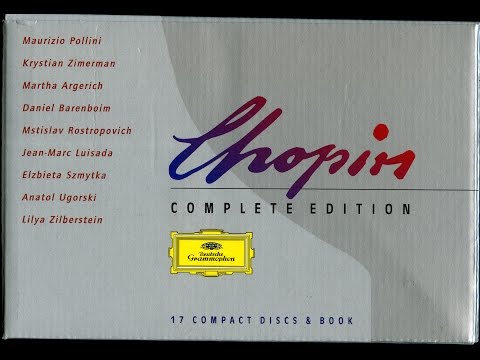
Frederic Chopin Complete Edition Vol I Piano Concertos & Works for Piano and Orchestra 2CDs CD 1
20151h 9m
FreeFull concertLongLive
Saved playlist songs
Tracks from your saved Spotify playlist that are attributable to Frederic Chopin.
No Spotify playlist is seeded yet.
No attributable tracks for this person in your saved playlist songs yet.